

Bonsai Care in December: Winter Placement, Watering, and New Year Display
By December, a bonsai has all but stopped moving. The foliage and shape stay the same from week to week, so it is easy to forget everything except watering. Yet many winter failures happen in exactly this quiet period: a dry pot nobody noticed, a pot that froze after a cold-morning watering, a tree left on display in a heated room.
This guide covers winter placement, watering, and what to watch for when you bring a tree indoors for New Year. It describes winter here in Kagawa on the Seto Inland Sea, with notes for those growing in colder places.
December on the Inland Sea: Little Rain, Drying Wind
Winter around the Seto Inland Sea, Kagawa included, brings less rain and snow than most of Japan. Snow rarely settles on the plains, and clear days follow one another. Daytime highs often climb a little past 10°C, but on clear, still mornings radiative cooling can bring a sharp chill and sometimes frost.
December is also when winter pressure patterns send cold, dry northwesterly winds across the region more often. Little rain and plenty of wind: here, winter is less about cold than about drying out. Regions with heavy snow, or where potting soil freezes, are a different story, and we cover that below.
Placement: Check the Wind Before the Sun
Most people choose a winter spot by thinking about sunlight first. Sun matters, but in December look first at whether the spot is exposed to north or west winds. Winter wind draws moisture not only from the soil but from foliage and branch tips. When pine needle tips turn brown as though scorched, dry winter wind is usually the cause.
Pots that sat on a bench all summer can be lowered to ground level for winter, where the wind is weaker and drying slows. Do not set them directly on concrete or bare earth; slip a slatted board or plank underneath so the base of the pot stays warmer. A wall on the south side of a building, with sun and shelter from the north wind, is close to ideal.
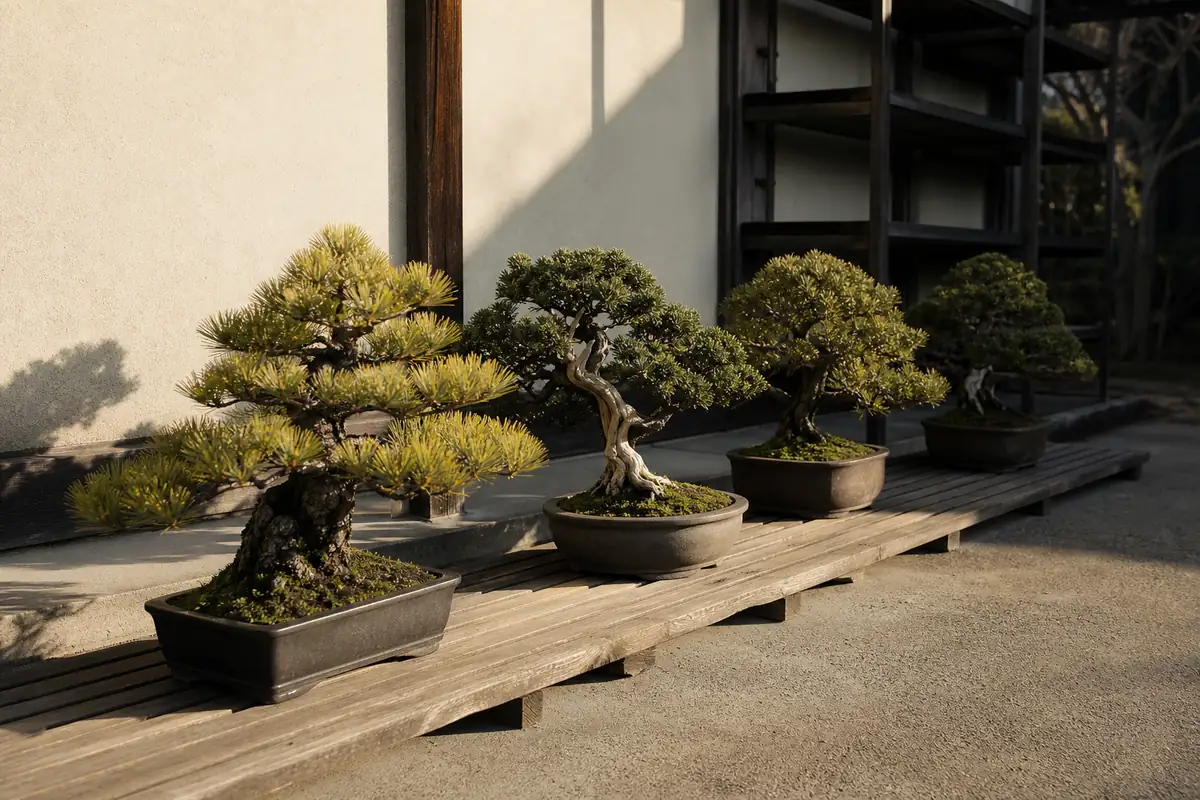
A few hours of morning sun is plenty. The winter sun sits low, so check that a spot which was sunny in summer has not fallen into the shadow of a fence or a neighbor's house.
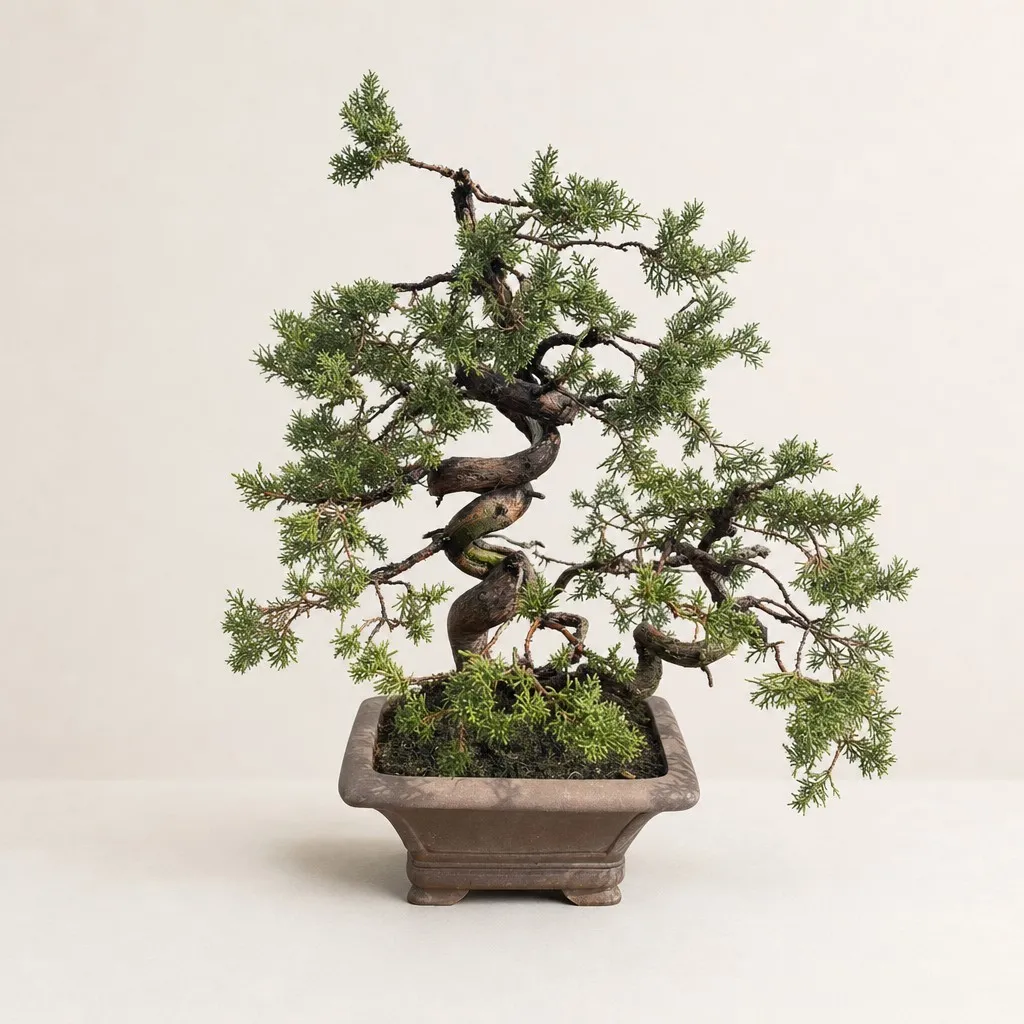
Trees in This Article
Watering: Late Morning, and Only After Checking
In December, water between about 10 a.m. and early afternoon. Early morning is the coldest part of the day, and water left in the pot then stays cold into the night. Evening watering is avoided for the same reason.
Frequency follows the usual rule: water when the soil surface has dried. In a place like Kagawa, a run of sunny, windy days can dry the surface in two or three days even in winter, while after several cloudy or rainy days a pot may stay damp for nearly a week. Rather than watering on fixed days, make a habit of looking at each pot once around midday.
When the Surface Is Hard to Read
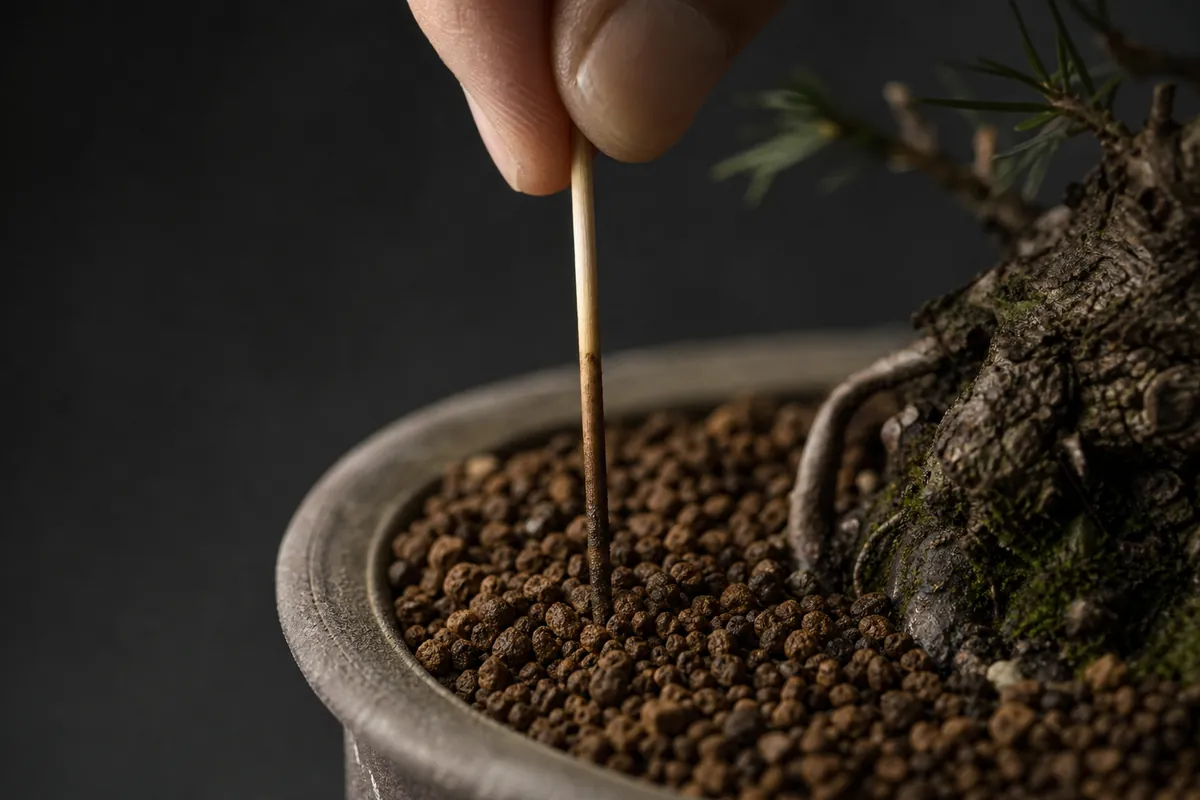
In winter the surface can look dry while the soil beneath is still damp. If you are unsure, push a bamboo skewer into the soil near the rim, leave it a few minutes, and pull it out. If it comes out darkened and damp, hold off. Lifting the pot to compare its weight is especially useful in winter.
When you do water, do not skimp: water until it runs from the drainage holes. In winter you reduce how often you water, not how much each time. More in watering basics.
Most Winter Color Changes Are Nothing to Worry About
Every December we hear from owners worried that a tree has changed color and might be dying. These changes are a normal part of winter:
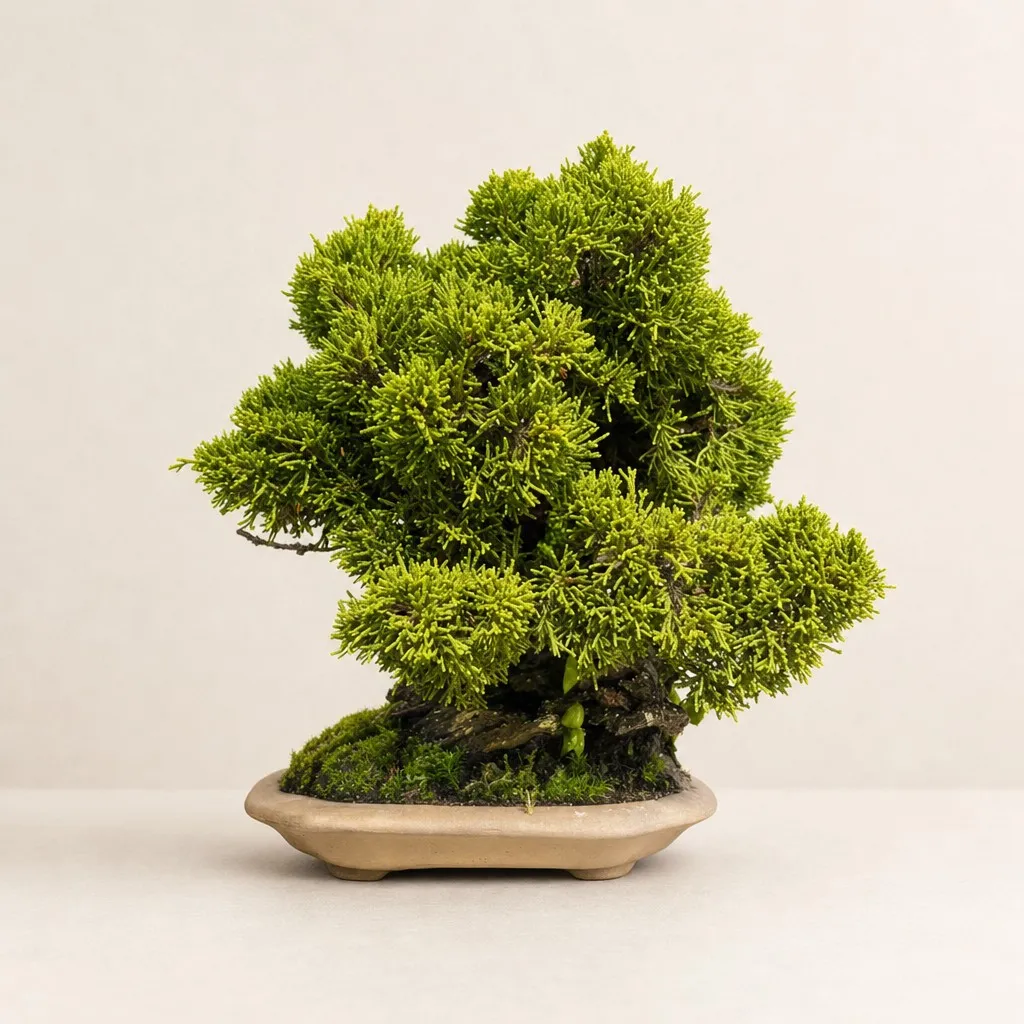
- Shimpaku juniper turning reddish brown or purplish. This is a cold-weather tint, and the foliage turns green again as temperatures rise in spring.
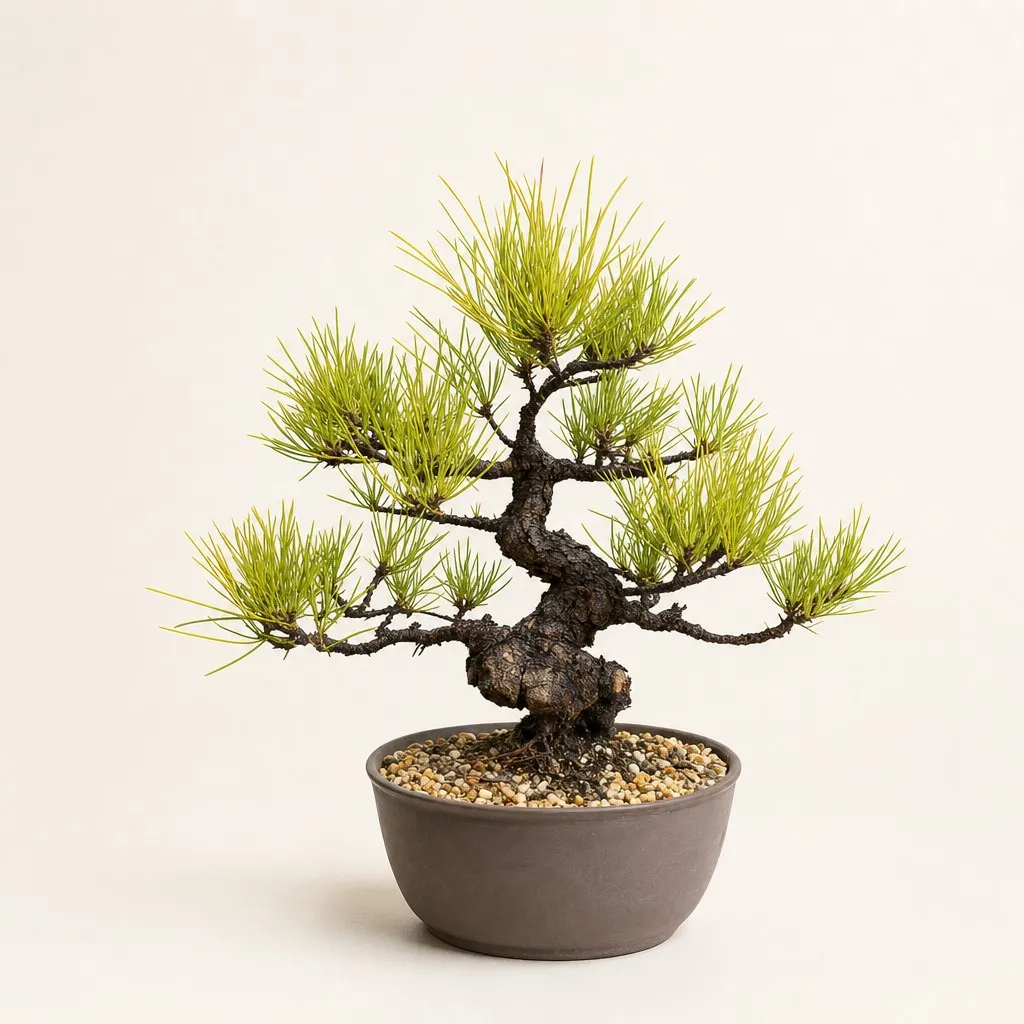
- Inner needles on black or red pine turning yellow. These are last year's needles, finished with their work. If they come away with a gentle tug, remove them.
- Maples standing bare. That is simply dormancy. Plump buds at the branch tips mean all is well.
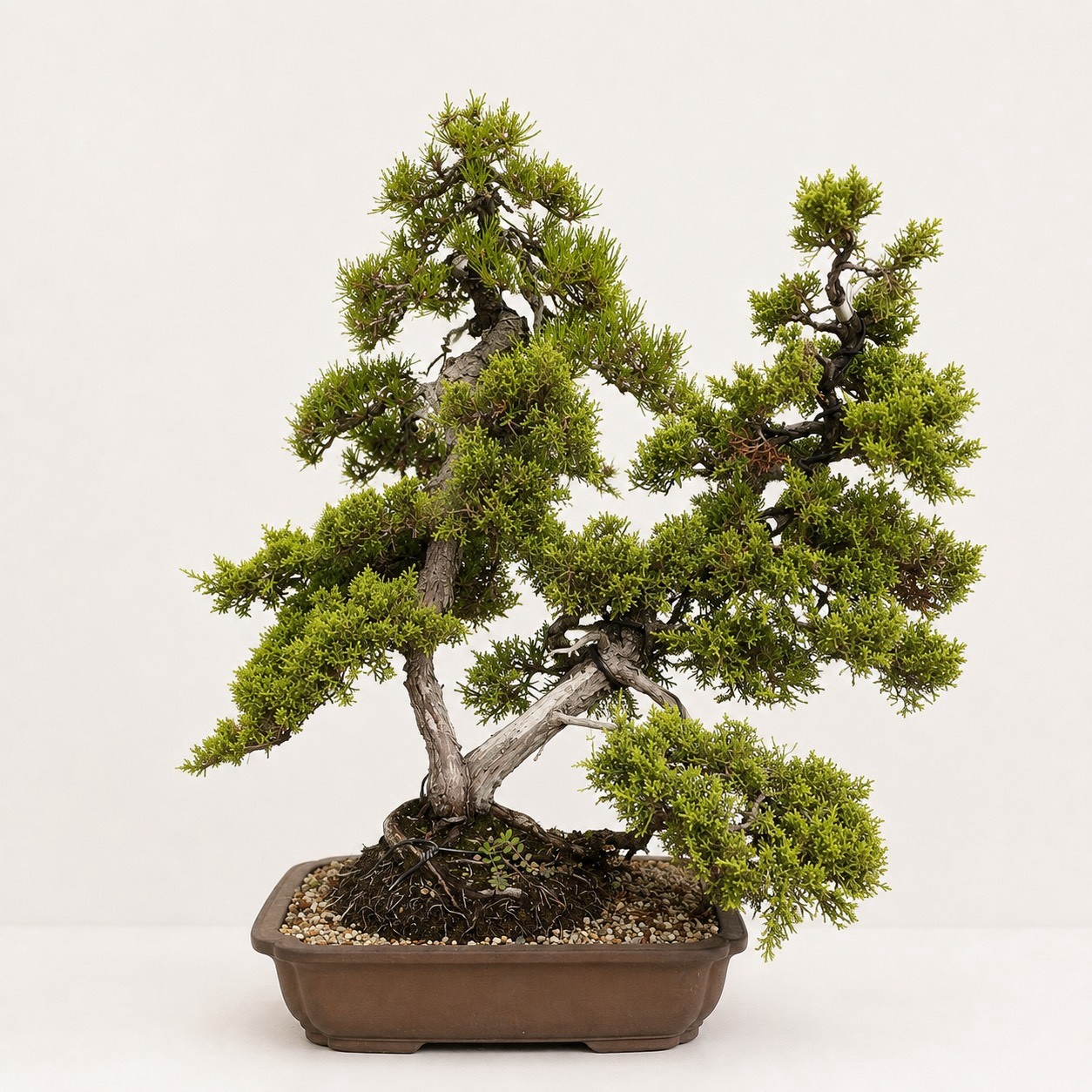
If the newest foliage at the branch tips is browning, or leaves fall at a touch, suspect underwatering or root damage, and see why is my bonsai dying?
New Year Display: Three Days to a Week
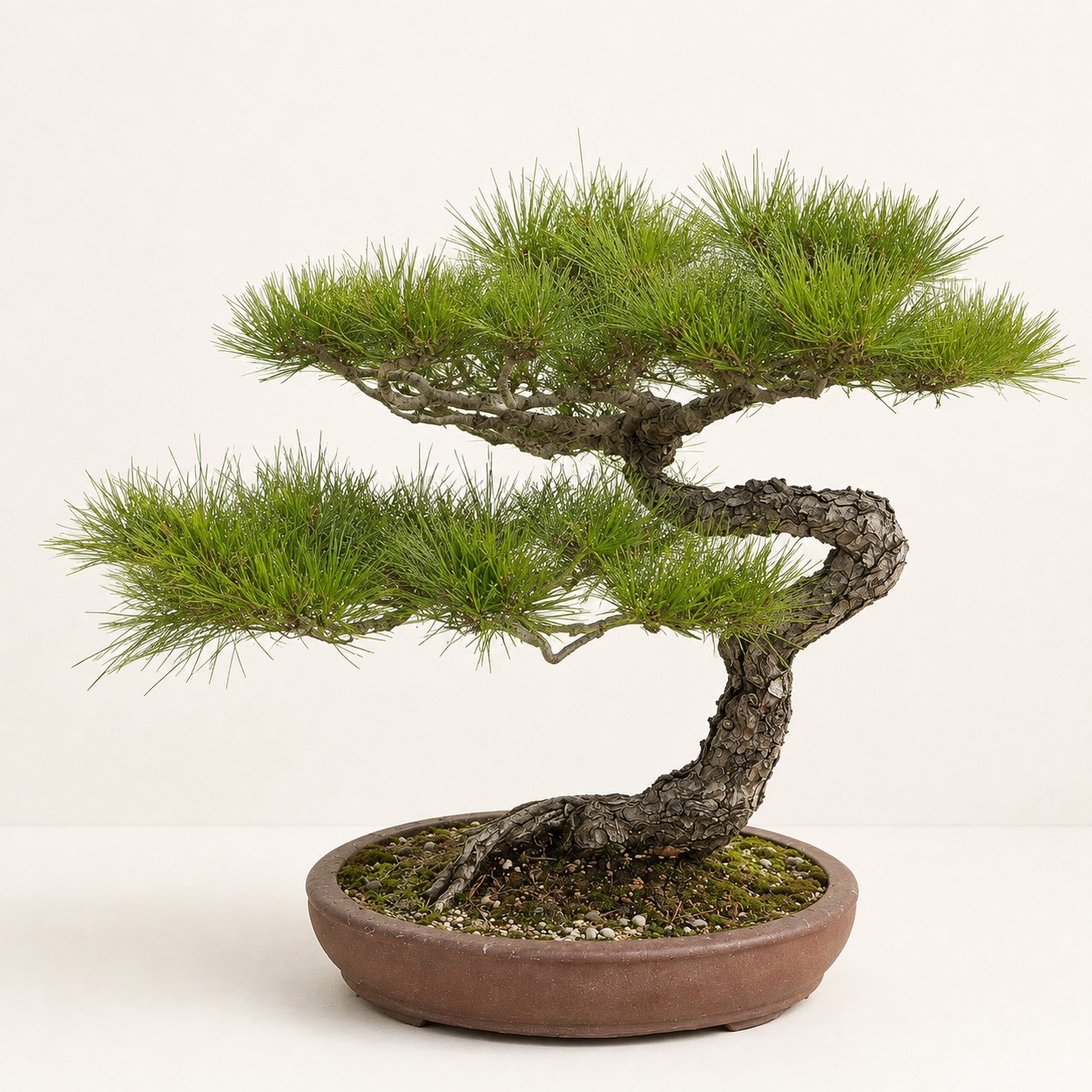
The New Year holidays are when people most want a bonsai indoors, and pine is the tree of the Japanese New Year. A single pot in an alcove or entryway changes the feel of a room.
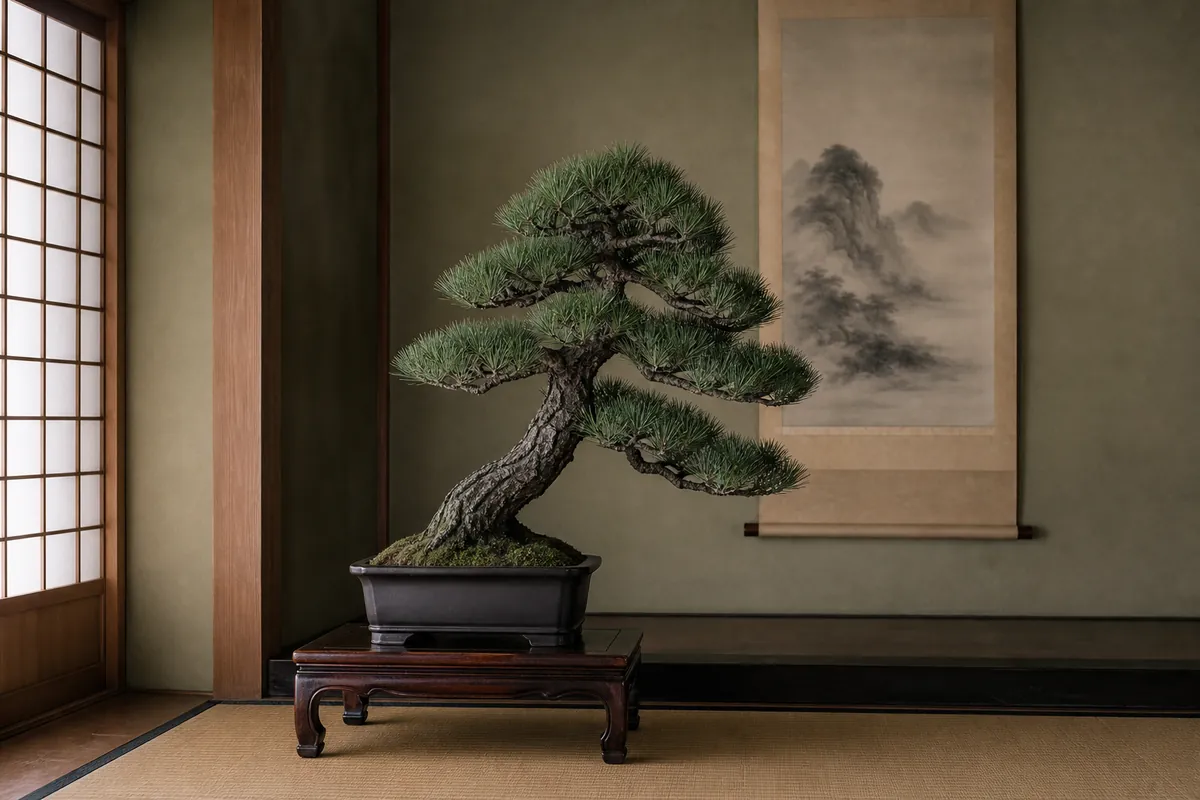
In winter, keep indoor display to about a week at most. In a heated room, a tree can mistake the warmth for spring and start pushing buds, which are then damaged by cold once it goes back outside. Avoid spots in the direct flow of a heater, and avoid the top of the TV.
When display is over, do not move the tree straight from a warm room into a frosty yard. A day or two in a sheltered spot such as under the eaves softens the change in temperature. See displaying and appreciating bonsai for display basics, and can bonsai live indoors? for how long a tree can stay inside.
What Not to Do in December
A winter tree is resting, and letting it rest comes before working on it. Leave these jobs for later:
- Fertilizing. None until spring. Remove any autumn fertilizer cakes still on the soil.
- Repotting. Root work waits until just before buds move, around March.
- Heavy reduction of foliage or branches. Removing pine branches or pruning deciduous trees is safer in January or February, on a day when the cold has eased.
Leftover autumn tasks such as pulling old pine needles or scrubbing off scale insects are fine to continue around midday on mild days.
If You Grow in a Colder Region
Kagawa winters are gentle, but where potting soil can freeze solid, frost protection is needed. If you have just brought home a tree grown in Kagawa to a colder area, keep a closer eye on it in its first winter. On nights forecast to drop below freezing, moving it for the night to the eaves, an unheated entryway, or a shed is one option. See winter care and cold protection for details.
The key to winter bonsai care is simply looking. Even on days you do not water, stand in front of each pot once around midday and check the color of the soil and the state of the foliage. That alone prevents most winter mistakes.
For the month before, see bonsai care in November. If you are looking for a tree to display over New Year, browse our bonsai collection. We ship within Japan only.
Frequently Asked Questions
I'd like to give a bonsai as a year-end or New Year gift. Can you gift-wrap it?
Yes, we offer gift wrapping and can include a message card. We do not offer noshi paper or name printing. We usually ship within 5 business days of confirming payment, within Japan only, so if you want it to arrive before the New Year, please order with time to spare.
My shimpaku's foliage has turned a purplish brown. Is it dying?
That is a natural winter coloring caused by the cold, and it turns green again when spring warms up. However, if even the new growth at the branch tips turns brown and drops when touched, suspect a lack of water or root damage, and see Why bonsai decline and how to revive them.
After displaying a bonsai for New Year, can I put it straight back outside?
Moving it from a warm room straight into frost can damage the tree through the sudden temperature change. Keep it under the eaves or somewhere out of the wind for a day or two before returning it to its usual spot.
Trees in This Article
Each one is one of a kind. The tree in the photos is the one you receive