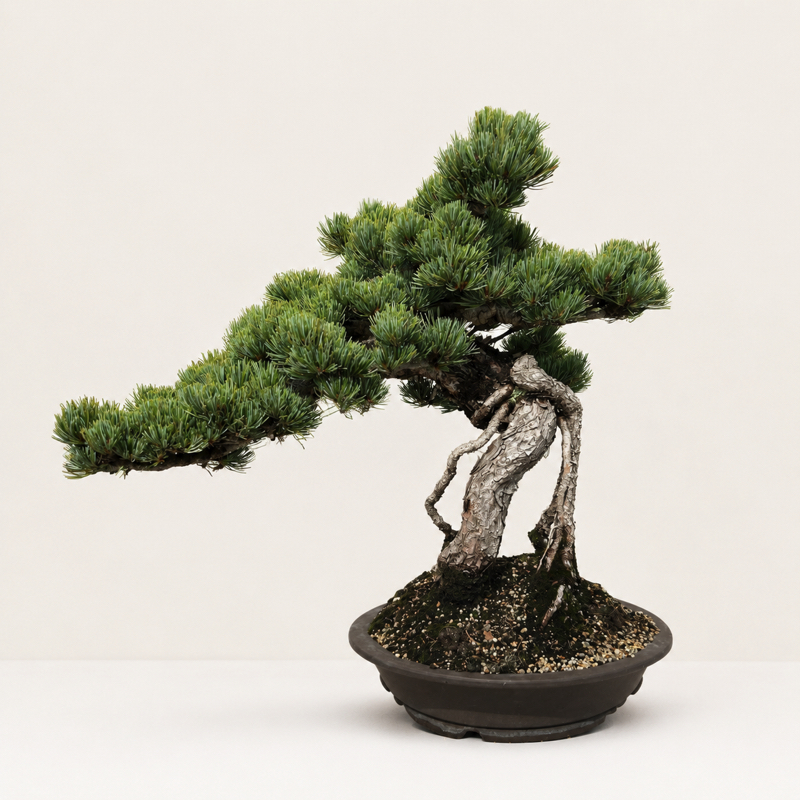


Published Updated
Can Bonsai Live Indoors? How to Think About Placement
"I live in an apartment, so I would need to keep it indoors. Is that alright?" This is one of the questions we hear most often. The short answer is that most bonsai should be grown outdoors and brought inside to be displayed. Here is why, and what that looks like in practice.
Three Reasons Bonsai Need to Be Outdoors
- Light levels. Conifers like black pine, Japanese white pine, and shimpaku juniper need genuinely strong light. A spot by the window may feel bright, but it delivers a small fraction of outdoor sunlight. Starved of light, branches stretch and needles pale.
- Air movement. Still air invites pests and fungal problems. Outdoor breezes also help keep growth compact.
- Seasonal change. Japanese species rely on a period of winter cold to set the rhythm of the following spring. In a climate-controlled room, that seasonal signal never arrives.
How Long You Can Display a Tree Indoors
Displaying your bonsai inside is absolutely part of the tradition. As a rule of thumb, limit it to around three days in dry summer conditions and up to a week in milder winter months, then return the tree to its outdoor spot. Bringing a tree in when guests visit, or to mark a change of season, is much closer to how bonsai have always been enjoyed.
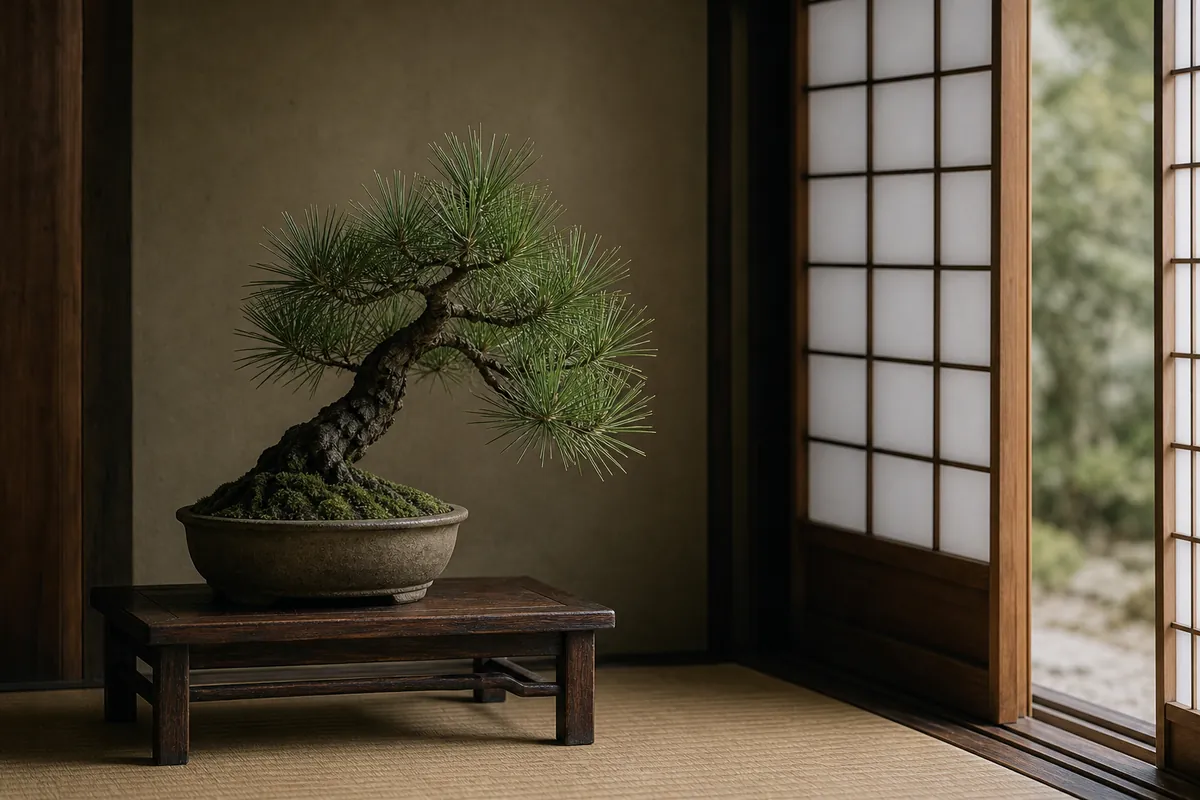
If you own several trees, rotating them every few days lets you keep something on display indefinitely without asking too much of any one tree.
Indoor Spots to Avoid
- Directly in an air conditioning draft: dries foliage out very quickly.
- Rooms with no windows: artificial light alone is not enough.
- Closed-up rooms in summer: interior temperatures climb higher than most people expect.
- On top of a television or appliance: heat, dryness, and nowhere to water.
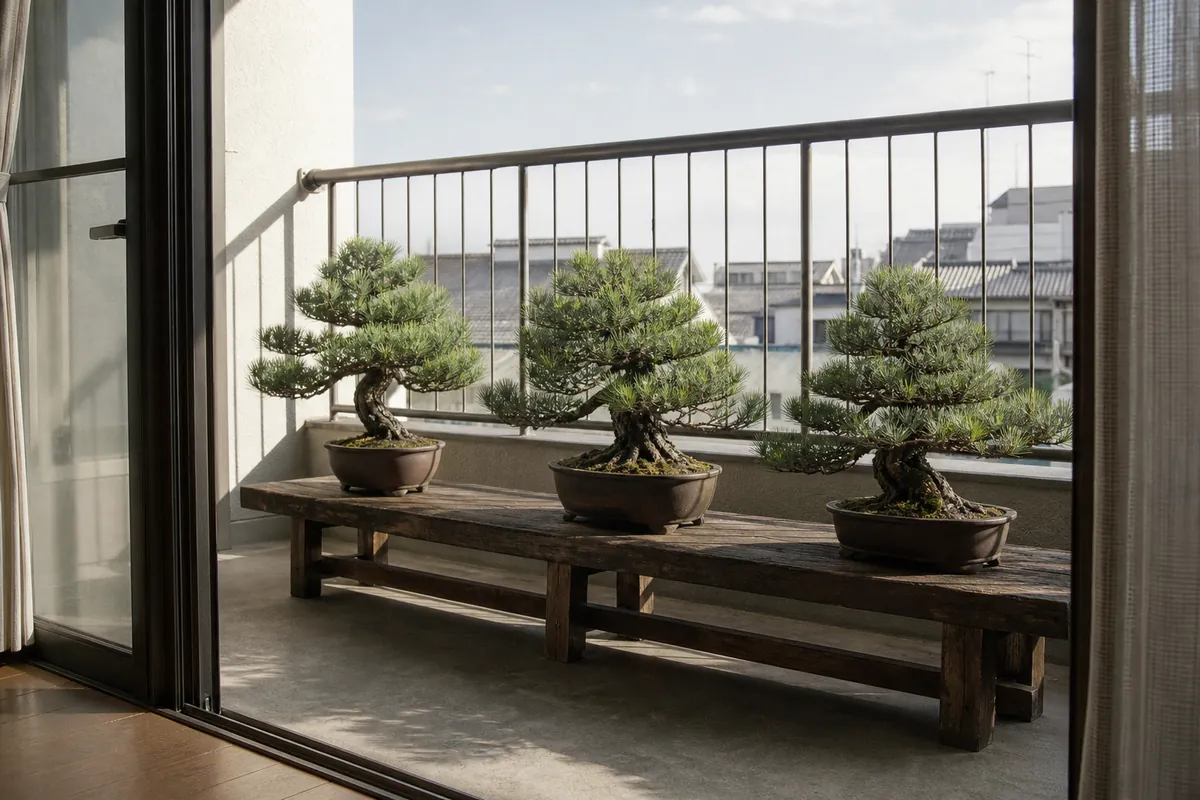
Making a Balcony Work
With a little planning, a balcony makes an excellent home for bonsai.
- Lift pots off the floor onto a stand or bench, away from radiated heat off the concrete.
- Watch how the railing casts shade, since the sun's angle shifts through the year, and move pots accordingly.
- Plan for wind, which can be fierce on upper floors and knock pots over.
- Keep evacuation routes clear, as balconies are often shared space in apartment buildings.
What About Trees Sold as "Indoor Bonsai"?
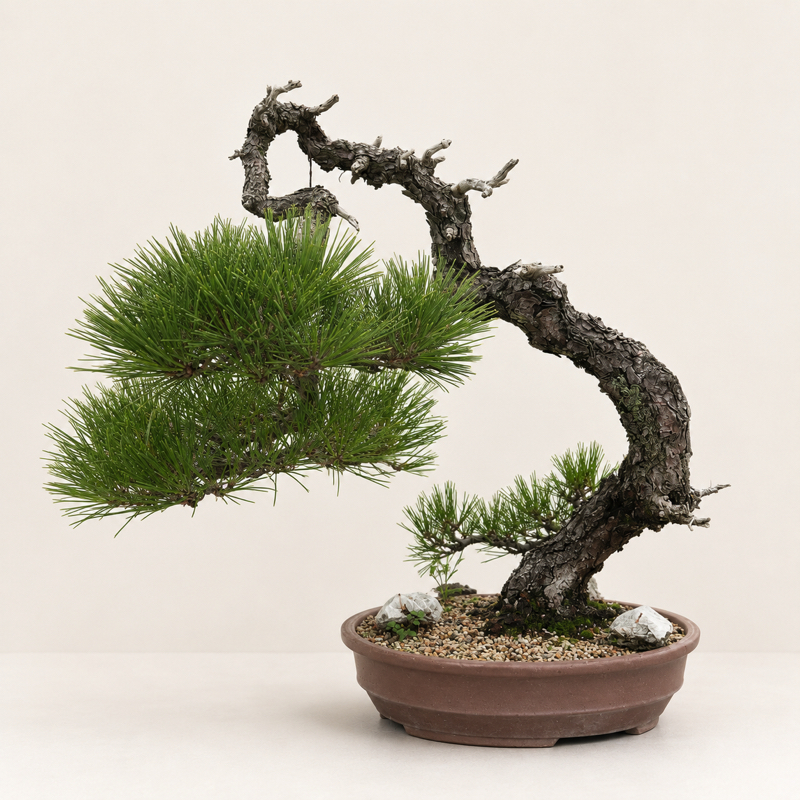
Many plants marketed for indoor growing are tropical or subtropical species such as ficus, trained into a pot. Because they evolved without distinct seasons, they genuinely do well inside. Japanese pines, junipers, and deciduous species are a different proposition: they grow with the seasons. Knowing that distinction saves a lot of confusion when you are shopping. The Nishiki pine in our shop, a pine prized for its rugged corky bark, is likewise a tree to grow outdoors through the seasons.
In Summary
Bonsai are not houseplants, they are outdoor trees that come inside to be admired. If you can secure one spot with sun and airflow, a balcony or an entryway, apartment living is no obstacle at all. For display technique, see displaying and appreciating bonsai, and for the fundamentals of care, the basics of watering. Once you know where your tree will live, compare sizes in our bonsai collection.
Frequently Asked Questions
What should I watch for when moving the tree back outside?
A tree that has been indoors is not used to strong sun, so in midsummer avoid putting it straight into harsh direct light. Leave it in bright shade for about half a day, then return it to its usual spot. Check the soil that day and water thoroughly if it is dry.
How should I water while the tree is on display indoors?
Just as outdoors, water when the soil surface is dry, until water runs out of the drainage holes. Air conditioning dries the soil quickly, so check it every day. Empty any water that collects in the saucer rather than leaving it standing.
If the window is bright, can the tree stay indoors permanently?
We do not recommend it. Light through a window is far weaker than outdoors and the air does not move, so pines and junipers grow leggy and gradually weaken. As a guide, return the tree to its outdoor spot after about three days in summer or about a week in winter.