

Bonsai Care in November: What to Do as Autumn Winds Down
Sometime in early November the morning air turns sharp, and you notice the soil in your pots staying damp far longer than it did a month ago. That raises a few practical questions. When should you stop watering twice a day? How long should fertilizer stay on the soil? What, if anything, needs doing to the tree itself? This guide walks through the month in order, from the first week to the last.
The short version: November is not a month for starting anything new. It is the month when summer routines get converted, one by one, into winter ones.
Where Your Tree Is in November
Conifers such as pines and junipers have finished their autumn growth and are easing toward dormancy. They look much the same, but their roots are drawing noticeably less water than in summer. Deciduous trees such as maple and ginkgo are moving from autumn color to leaf drop.
Here in Kagawa, on the Seto Inland Sea, November brings plenty of clear, dry days, and in the second half of the month the first winter pressure patterns begin to send cold northwesterly winds across the region. Mild sun, drying wind: that combination is what defines care at this time of year.
Change When You Water Before You Change How Often
If you keep watering in the evening out of summer habit, the pot sits cold and wet all night. Your first adjustment in November is to move watering to the morning, roughly between 9 and 11 a.m.
As for frequency, go back to the basic rule: water when the surface of the soil has dried. In early November that usually still means once a day; by late November, once a day on sunny days and every other day after cloudy or rainy weather is a common rhythm. Small or shallow pots, though, can still dry out within a day. The most reliable check is simply to lift the pot and feel its weight.
The classic November mistake is taking the phrase "water less in winter" too literally and cutting back too early. The roots are still working, and on windy days the foliage keeps losing moisture. If the surface is dry, water. For the seasonal logic in more depth, see watering basics.
Clear Away Autumn Fertilizer in Early November
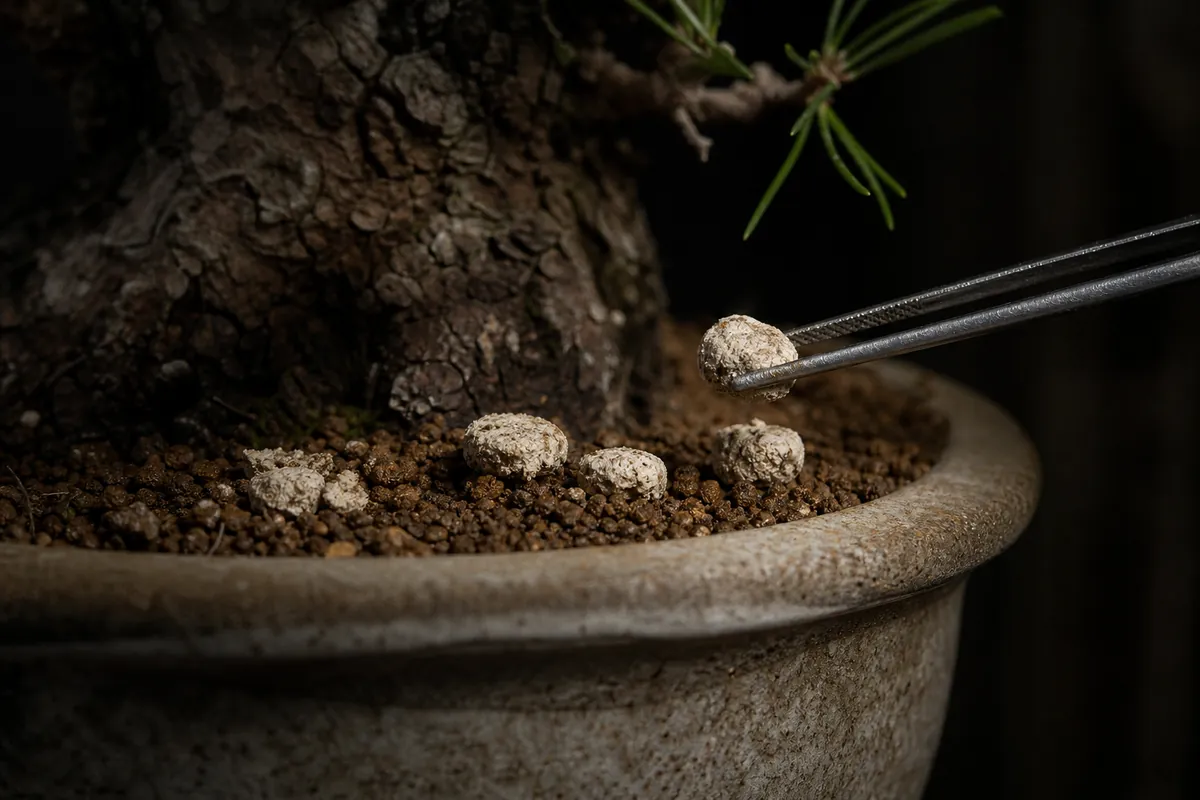
Solid organic fertilizer cakes set out in September and October should come off around the first week or two of November. As temperatures fall, fertilizer breaks down slowly; left on through winter, it can grow mold on the soil surface or release too much at once when spring arrives.
Remove any crumbly residue along with the cakes, then hold off on feeding until spring. Garden trees are sometimes given a winter feeding, but that practice does not carry over to trees in pots. Our guide to fertilizer covers types and timing.
Pines: Thinning Needles to Balance Next Year's Growth
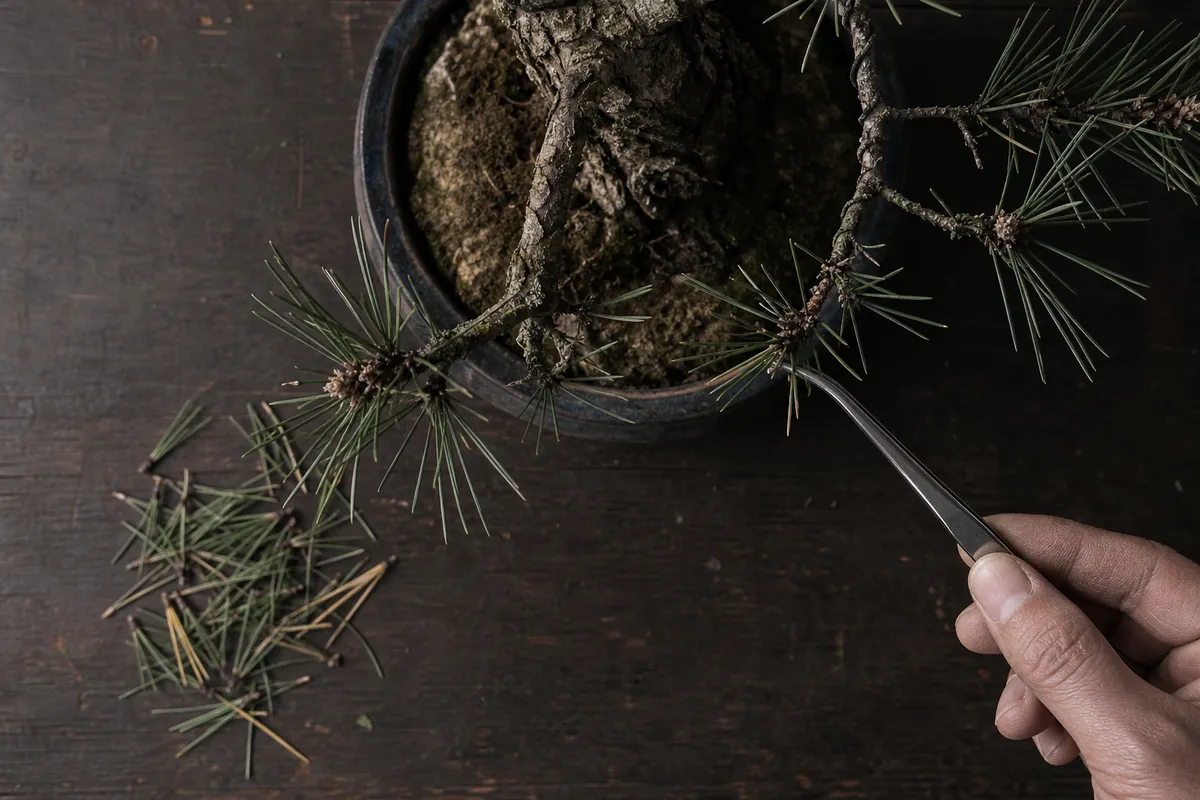
If you keep Japanese black or red pine, November is the time for needle thinning: reducing the amount of foliage at the branch tips so light and air reach the interior of the tree. It is usually done together with removing last year's old needles.
Leave Fewer Needles Where the Tree Is Strong
Vigorous shoots carry the most needles and will push hardest again next year. To even things out, strong shoots are left with only a few pairs of needles, while weak shoots are left largely alone. Use tweezers and pull each needle back toward its base; that way it comes away cleanly without tearing the bark.
There is no need to finish in one sitting. Start with the lower branches and stop halfway if you like. Once the tree is thinned, look at it from the front: with the branch structure visible, it becomes much easier to decide which branches to develop next year and which to hold back. For the full year with black pine, see our black pine care guide.
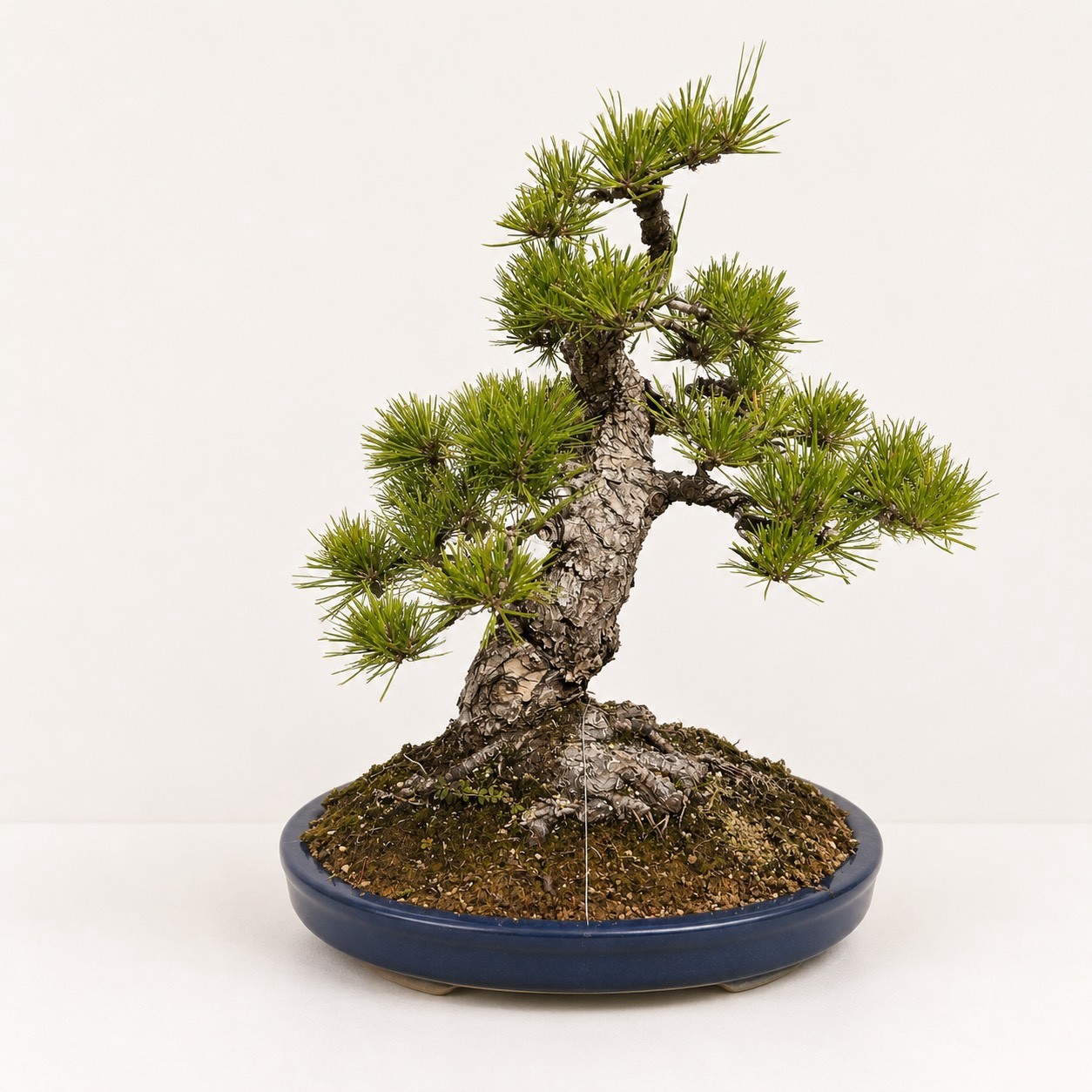
Japanese white pine needs a lighter touch; just tidy away needles that have yellowed. Satsuki azalea set next spring's flower buds back in summer, so pruning one now simply means fewer flowers. Leave it alone and enjoy it.
Deciduous Trees: The Show Begins After the Leaves Fall
Maples, including the Shishigashira variety, are at their peak color in November. Let the leaves drop on their own rather than stripping them. Fallen leaves left lying on the soil stay damp and invite pests and mold, so clear them every two or three days.
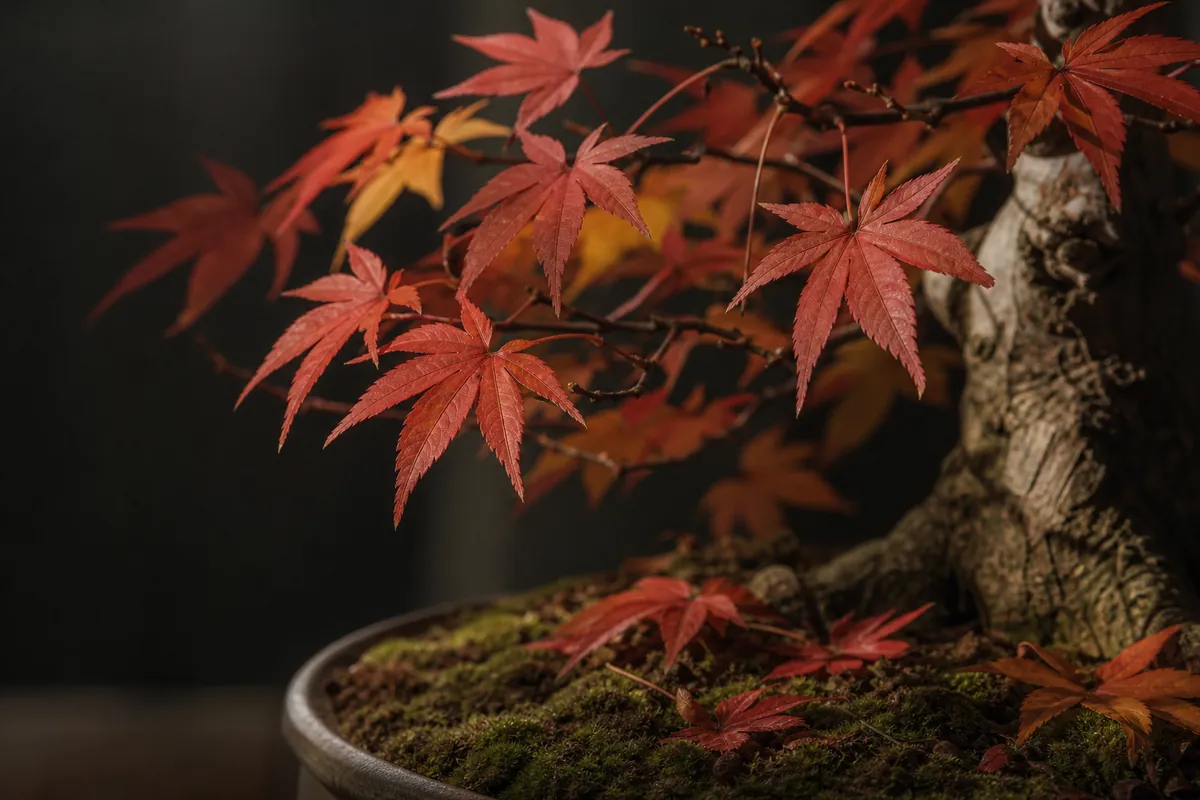
Once the tree is bare, its branch structure is laid out in plain view. Removing crowded or inward-growing branches can wait until the tree is fully dormant. For now, look carefully and decide what you would like to cut; that is plenty for November.
Late November: Scout Your Winter Spot
Before the winter winds set in, check where the tree will spend the coming months. Three things matter:
- Morning sun. The winter sun sits low, and a spot that was bright in summer may now fall in the shadow of a wall or building.
- Shelter from north and west winds. Wind dries the pot and burns needle tips. A spot against a wall, or in the lee of other pots, works well.
- Not too cold underneath. Rather than setting pots straight on concrete, put a slatted board or plank beneath them.
In a mild area like Kagawa, most conifers winter outdoors without fuss. If you live somewhere the soil in a pot can freeze solid, plan for frost protection or for moving trees under the eaves on the coldest nights. Details are in winter care and cold protection.
While You Are At It: Wire and Pests
Check any branches you wired in autumn. Pines thicken in autumn, and wire applied in September can already be marking the bark by November. If it is starting to bite, cut it off and rewire if needed. See wiring basics for technique.
Also look for small white specks where branches meet the trunk. Scale insects stay on the tree through winter; scrub them off with an old toothbrush when you spot them. If you are considering a dormant-season spray, our guide to pests and diseases is a good place to start.
If you are unsure what to do in November, ask yourself whether each summer habit has been switched over. Watering time, fertilizer, winter position: once those three are sorted, winter holds very few surprises.
If You Are Bringing a Tree Home This Month
November is a calm time for a tree to travel, since growth has slowed. When it arrives, let it rest for a few days somewhere bright but out of the wind, then move it to its winter spot. We ship within Japan only; you can browse one-of-a-kind trees from the Kagawa growing region in our bonsai collection.
Frequently Asked Questions
What is the difference between needle thinning and old-needle removal?
Old-needle removal takes off needles older than last year's growth. Needle thinning reduces the current needles on strong branch tips to even out the tree's vigor. The purposes differ, but in November they are usually done together. On white pine, go lighter than on black pine and just tidy up the yellowed old needles.
Should I repot a bonsai that arrives in November right away?
No. Wait until around March, just before the buds start to move. It is fine for the tree to spend the winter in the pot it arrived in. Let it rest for a few days in bright shade out of the wind, then move it to its winter spot.
Can I pick off the maple leaves once they've colored?
Leave the leaves on the branches to fall naturally rather than pulling them. Leaves that land on the soil stay damp and can harbor insects or mold, so clear them every two or three days.