

Giving Bonsai for Oseibo and New Year: Timing, Choosing a Tree, and a Short Note
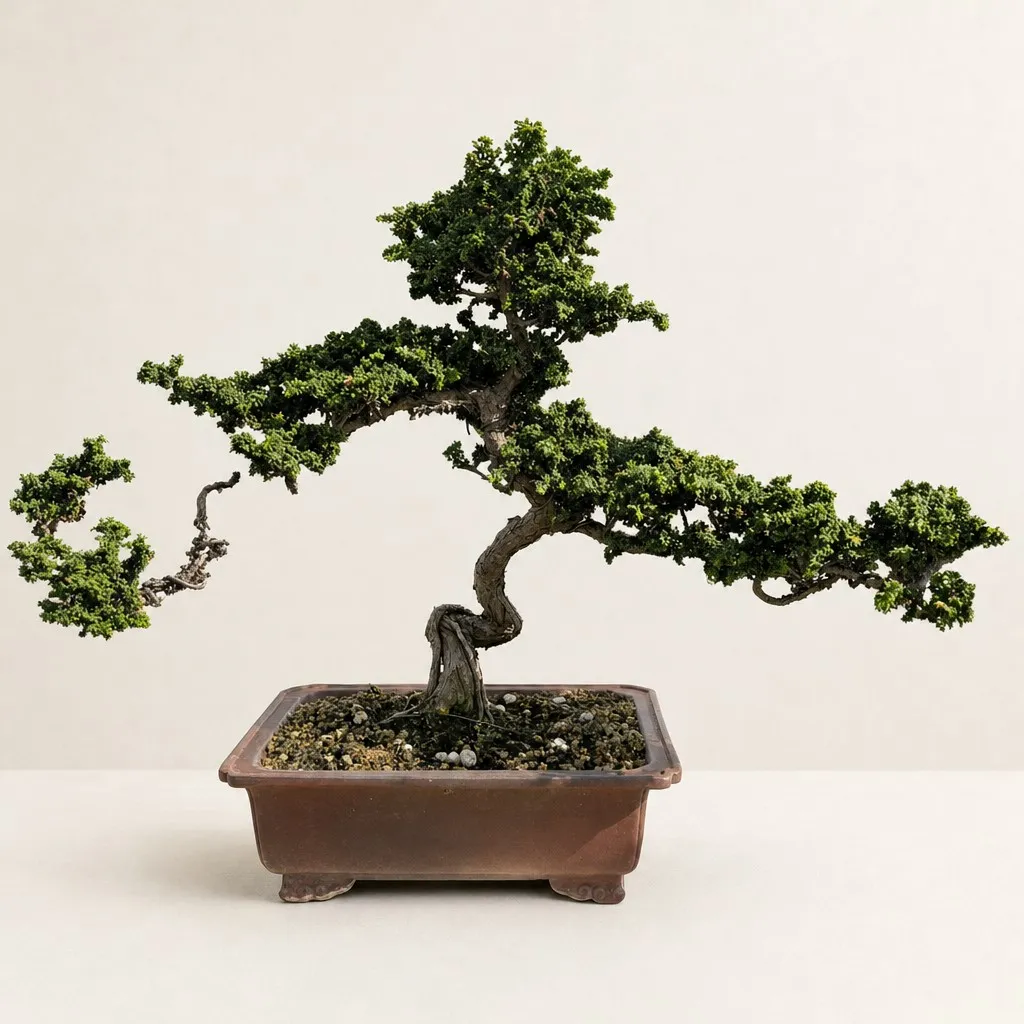
In Japan, the end of the year is a season of gratitude gifts. Many people send the same thing every December, and some start to wonder whether there is something more memorable to give. A bonsai is one answer, and pine in particular, the tree used in kadomatsu New Year decorations, is closely tied to the turn of the year.
A living tree asks for a little more thought than a box of sweets, though. This guide covers when to order, what to do when someone is in mourning, and how to choose a tree that will not become a burden for the person receiving it. It is written for readers sending gifts within Japan; we ship to addresses in Japan only.
First, the Calendar: Oseibo and Onenga
Oseibo is the year-end gift that thanks someone for their support over the past twelve months. It is generally sent between early December and around the 20th. Some regions start in late November, and sending in the last days of December is best avoided, since people are busy or away visiting family.
If you miss the oseibo window, the gift becomes onenga, a New Year gift, given during matsu-no-uchi, the New Year period (until January 7 in most areas, until the 15th in parts of western Japan). Traditionally onenga is handed over in person when you pay a New Year visit. After matsu-no-uchi, the label changes to kanchu omimai, a midwinter greeting, which can be sent until around February 4.
Work Backward From the Delivery Date
We usually ship within five business days of confirming payment, and we email a tracking number when the tree is on its way. Transit time from there depends on the destination.
To have an oseibo gift arrive by mid-December, ordering between late November and the first days of December leaves comfortable room. Carriers are busy at year's end and deliveries can take longer than usual. Every tree we sell is one of a kind, so if one catches your eye, deciding early is the safer course. As the holidays approach, feel free to ask us about year-end shipping dates.
For Onenga, Receive It Yourself and Bring It Along
Timing a delivery for the first days of January is tricky because carriers run reduced holiday schedules. If the tree is meant as onenga, the most reliable approach is to have it delivered to yourself before the year ends and carry it with you on your New Year visit. Until then, keep it outdoors in a sunny spot and care for it as usual.
Gift Wrapping and a Message Card
When ordering a tree as a gift, select gift wrapping at checkout and we will add a message card (a gift wrapping fee applies). Please note that we do not provide noshi paper or name inscriptions.
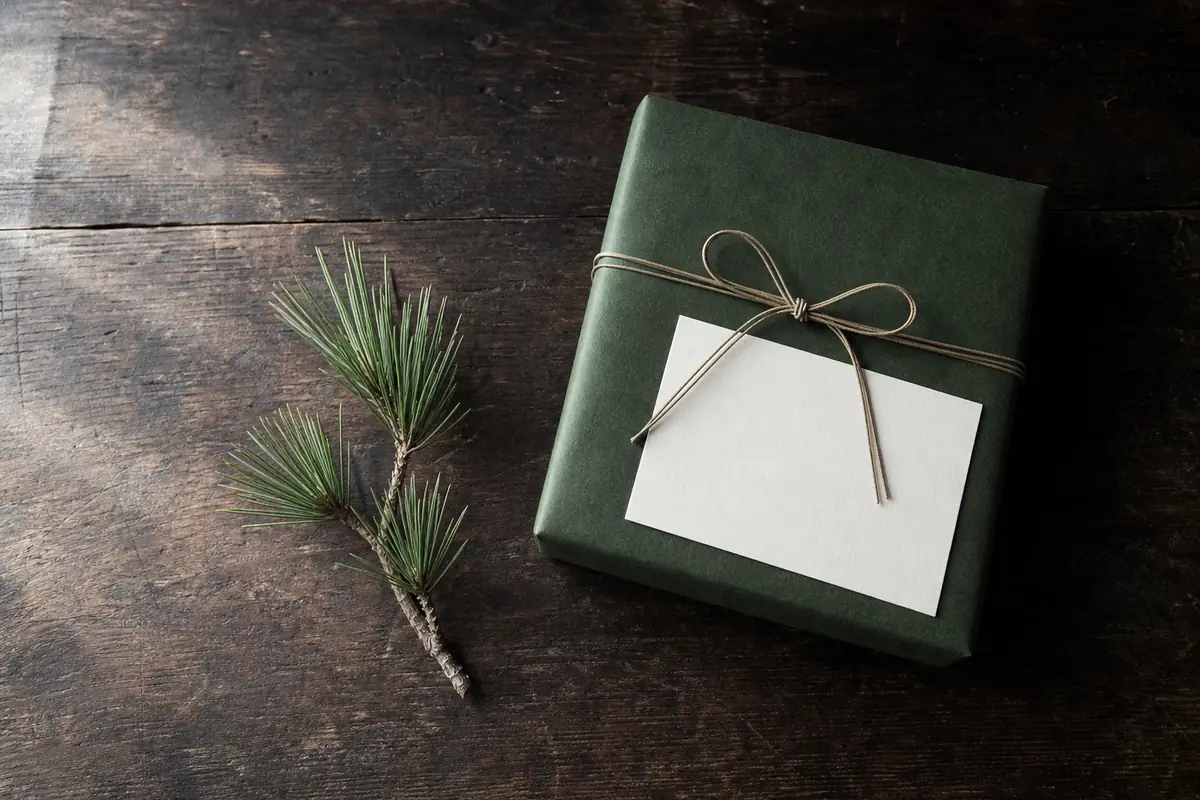
The name of the gift changes with the timing. It also makes a natural opening line for the message card:
- Arriving before the new year: 御歳暮 (oseibo)
- Arriving during matsu-no-uchi: 御年賀 (onenga)
- Arriving after matsu-no-uchi: 寒中御見舞 (kanchu omimai)
When Either Side Is in Mourning
Because oseibo expresses thanks rather than celebration, it is generally considered fine to send even if the giver or the recipient is in mourning. Avoid the first forty-nine days after a death; sending later as a kanchu omimai is the considerate choice. Onenga celebrates the new year, so it is not given to someone in mourning.
Choosing a Tree That Will Not Be a Burden
The thing to avoid is leaving the recipient wondering where on earth to put it, or worrying about letting it die. Three questions help.
Do They Have Somewhere Outdoors?
Bonsai live outside and come indoors only for display. Someone with a garden or a sunny apartment balcony will be fine. If you cannot picture a spot for it, choosing a different gift may be the kinder option. For more on indoor display, see can bonsai live indoors?
Pick a Species That Shrugs Off Winter
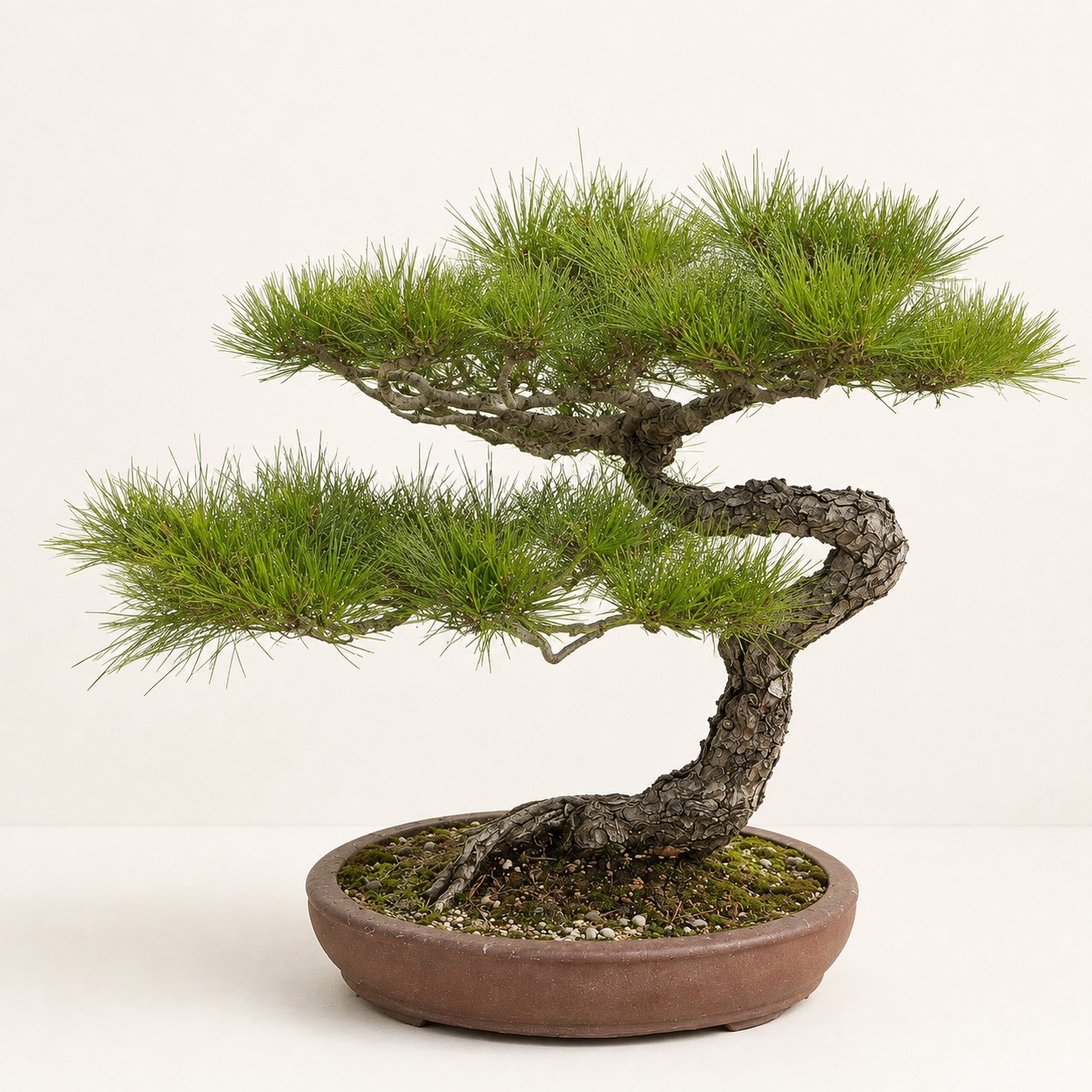
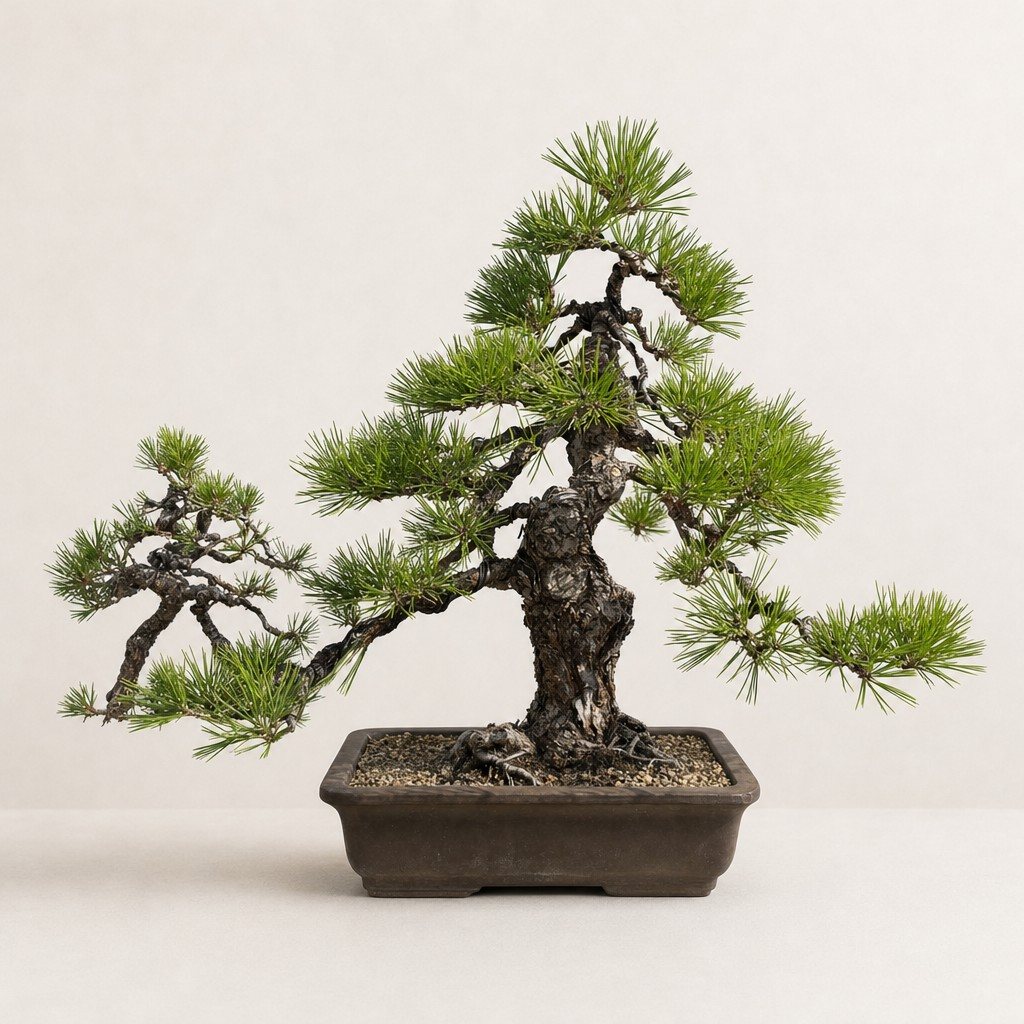
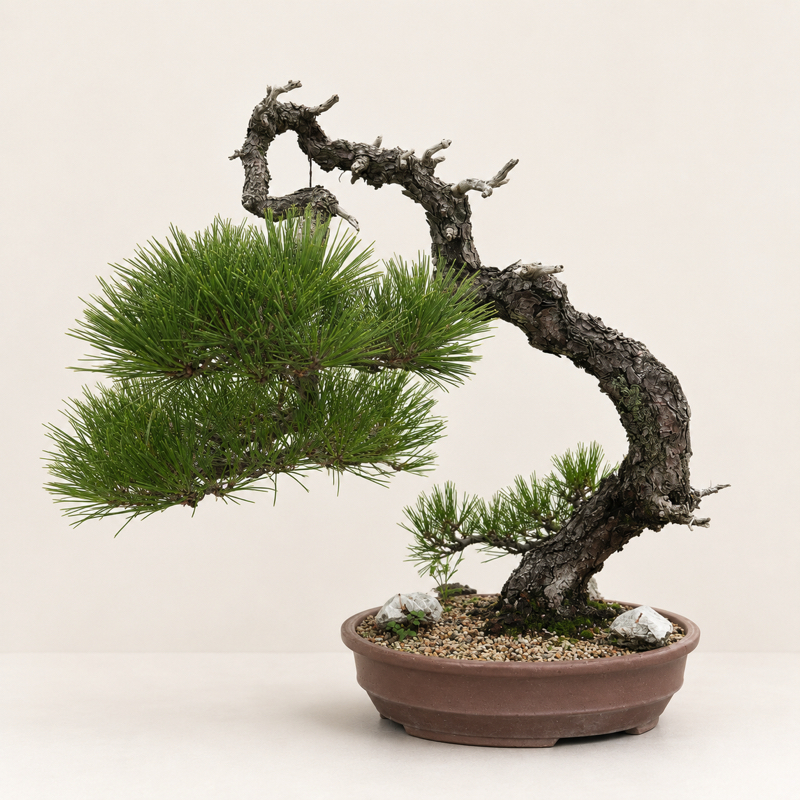
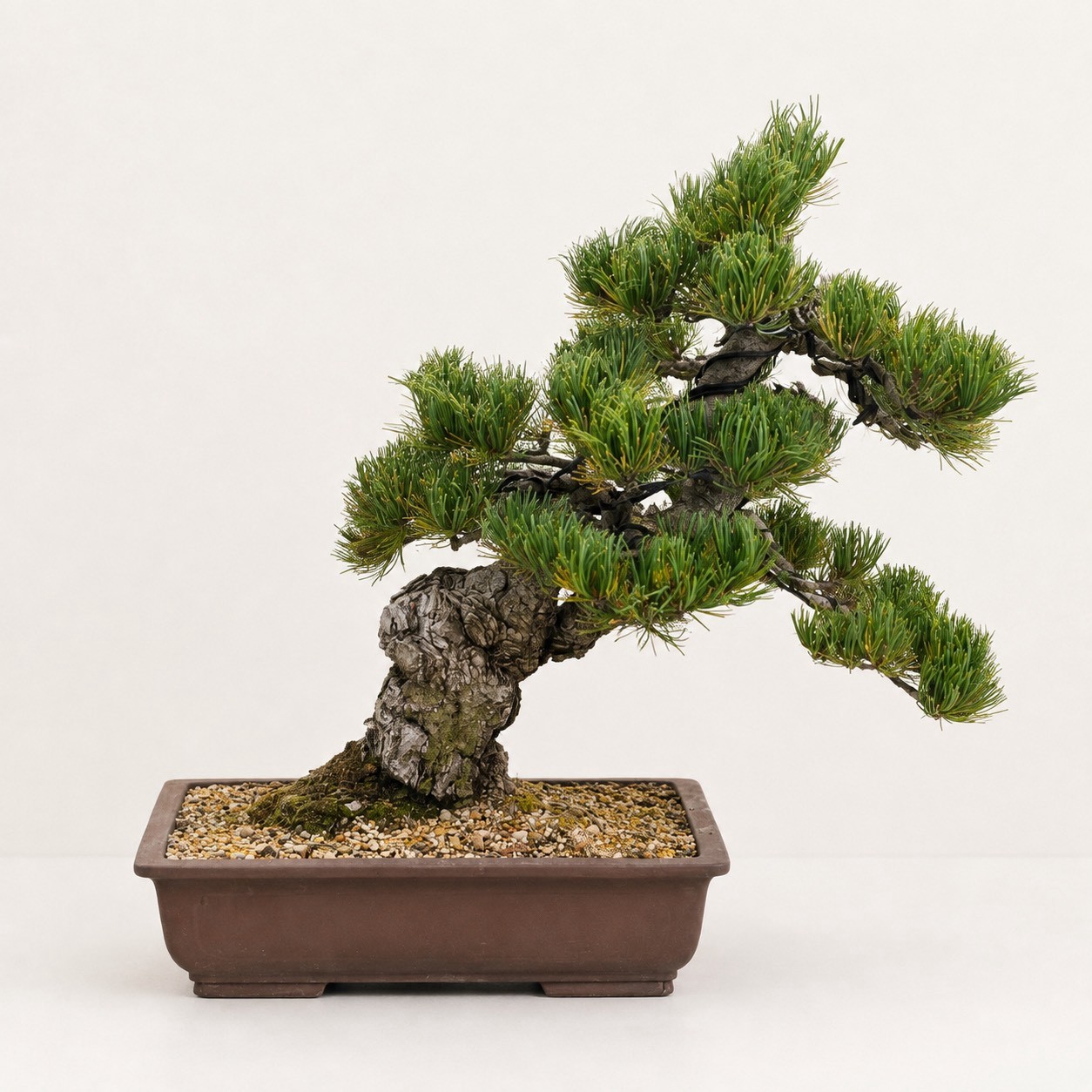
A gift arriving in December or January should be a cold-hardy conifer. Japanese black pine is tough and forgives the occasional late watering. Japanese white pine has short needles and holds its shape well, so it suits someone who will not fuss over it. Deciduous maples arrive bare in winter; without a note saying they will leaf out in spring, the recipient may think the tree has died. From our shop, a Nishiki pine with rugged corky bark or a thick-trunked, slanting Japanese white pine would suit a winter gift.
Think About Weight
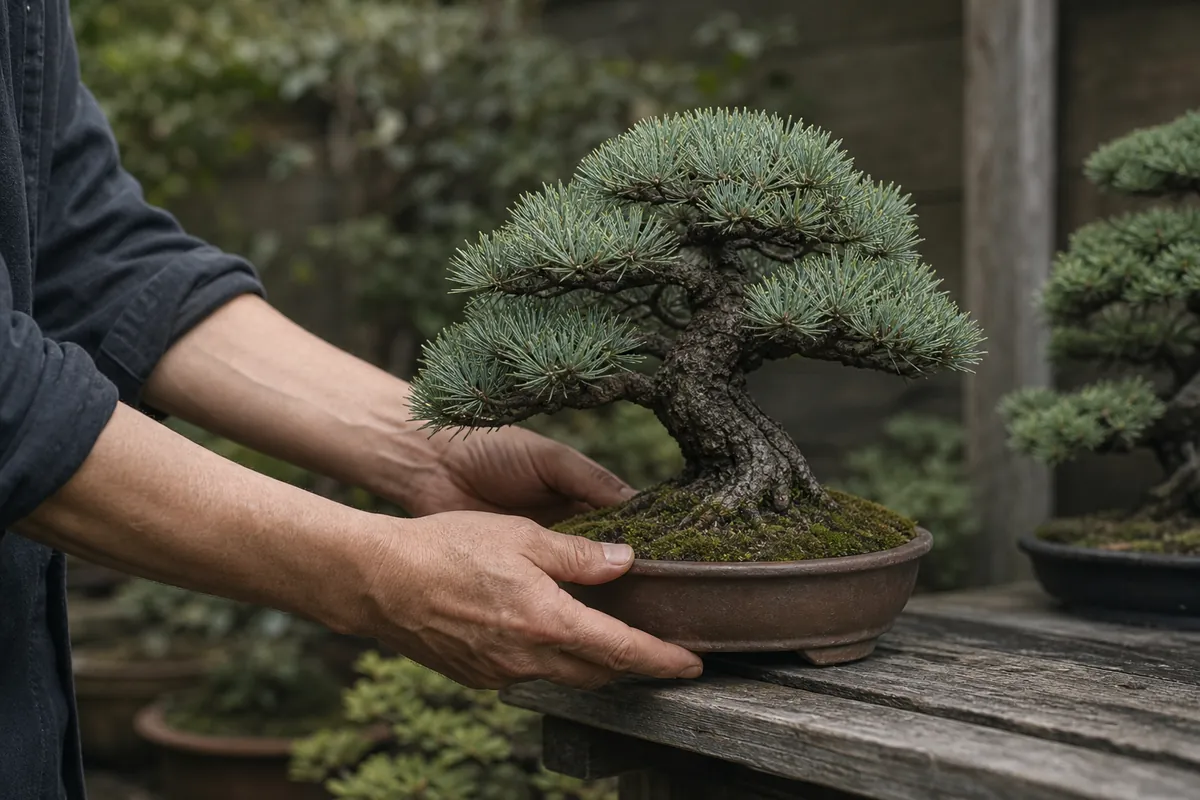
Pots are heavier than they look. Especially for an older recipient, choose something they can lift comfortably, since the tree will be moved now and then. Product pages show size guidelines; if anything is unclear, just ask.
The Note: Thanks First, Then One Line of Care
Start the message card with thanks. Then add why you chose the tree and a single line about care, so the recipient feels confident from day one. For example:
"Thank you for all your help this year. To welcome the new year, I am sending you a pine from Kagawa. Keep it outdoors in the sun, and water thoroughly when the soil surface dries."
"Thank you for always looking out for me. I chose a white pine with wishes for your long and healthy life. In winter, water it during the warmest part of the day."
There is no need for a long explanation. Our guides to watering and winter care are there if the recipient wants more.
One more thing recipients often wonder about is what to do the moment the box is open. A line at the bottom of the card, such as "Take it out of the box, let it rest for a day somewhere bright but out of the wind, then move it into the sun," is enough to put their mind at ease.
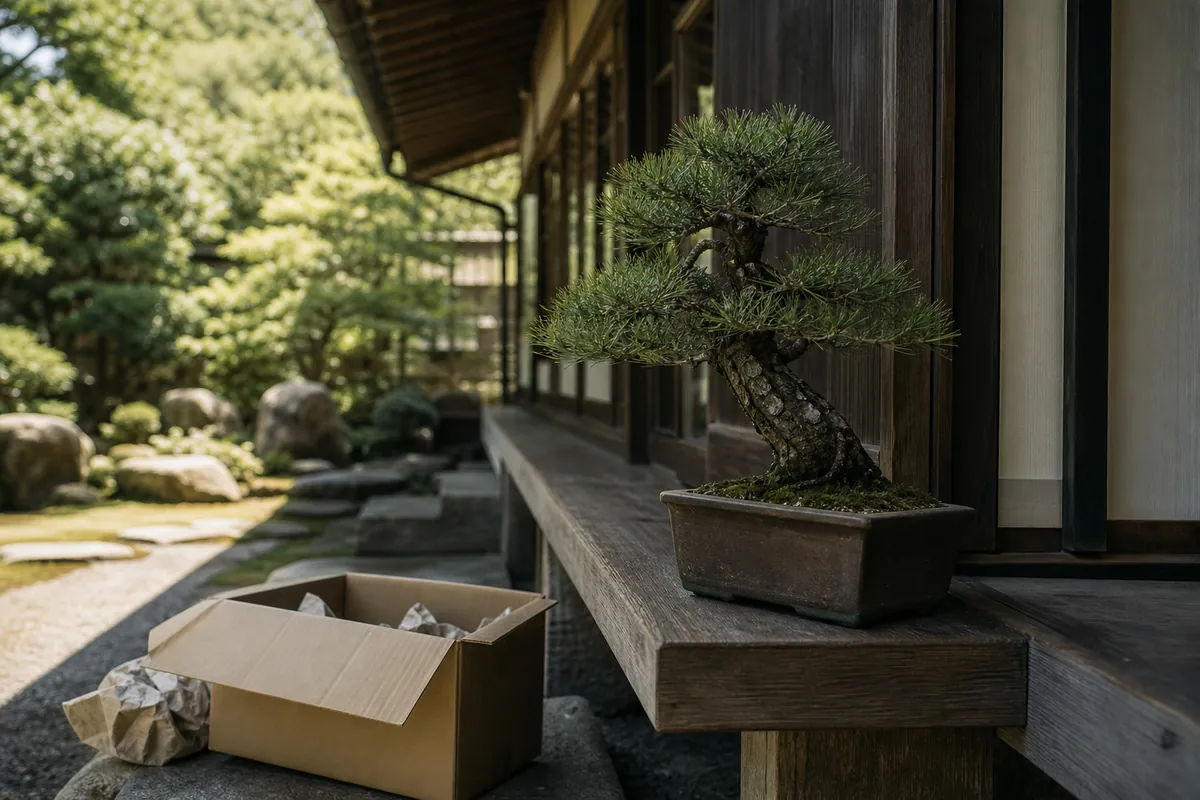
A year-end gift becomes a tree that sees in the new year at someone else's home. Plan for it to arrive before the year ends, and it can take its place in their alcove or entryway for the New Year holidays.
More on Bonsai as Gifts
For birthdays, milestone celebrations, and other occasions, see giving bonsai as a gift. If you are looking for a tree for the season, browse our bonsai collection.
Frequently Asked Questions
Can you add noshi paper marked as a year-end gift?
We do not offer noshi gift paper or adding a name. Choosing gift wrapping lets you include a message card, and opening the card with "Oseibo" (year-end gift) or "Onenga" (New Year gift) makes the purpose clear.
Will a late-December order still arrive in time?
We ship within five business days of confirming payment, but carriers are busy at the end of the year and delivery can take longer than usual. To arrive by mid-December, ordering between late November and early December is a good guide. If it will not make it, you can send it after the new year as an Onenga or a midwinter greeting instead.
Can the recipient keep the bonsai indoors over the New Year holidays?
A few days on display is fine. Do not leave it there, though: even in winter, return it to its outdoor spot after about a week. A long stay in a heated room dries the soil and upsets the rhythm of spring budding that winter cold sets.