
Japanese Red Pine Bonsai (Akamatsu): How It Differs From Black Pine, Best Styles and Care
When people think of pine bonsai, Japanese black pine and white pine usually come to mind first, but Japanese red pine, called akamatsu, has a loyal following too. Like black pine it carries its needles in pairs, yet side by side the two look completely different.
This article covers how to recognize a red pine bonsai, what makes it attractive, the styles that suit it, and where its care differs from black pine.
Red Pine or Black Pine? How to Tell Them Apart
Red pine grows mostly on mountain ridges and in inland forests. Black pine, common on the coast, has long been called the "male pine" in Japan, while red pine, with its gentler look, is known as the "female pine". There are three things to check.
- Needles: red pine needles are thin and soft and barely prick when touched. Black pine needles are thick, stiff and sharp.
- Bark: on red pine, the upper trunk and branches are reddish brown with thin, flaking bark, while the base becomes rough and darker with age. Black pine bark is grey-black all over and cracks into thick plates.
- Winter buds: red pine buds are reddish brown; black pine buds are whitish.
What Makes a Red Pine Bonsai Attractive
The charm of red pine is lightness and softness. Its fine needles spread airily, so the line of the trunk shows between the branches and the tree never looks heavy. The shift from reddish bark higher up to the darker, rougher base is a sight unique to red pine.
Put simply, a black pine bonsai shows strength through a thick trunk and rough bark, while a red pine shows refinement through the beauty of its trunk line and open space. For black pine, see Japanese black pine moyogi.
Styles That Suit Red Pine
Literati (bunjin)
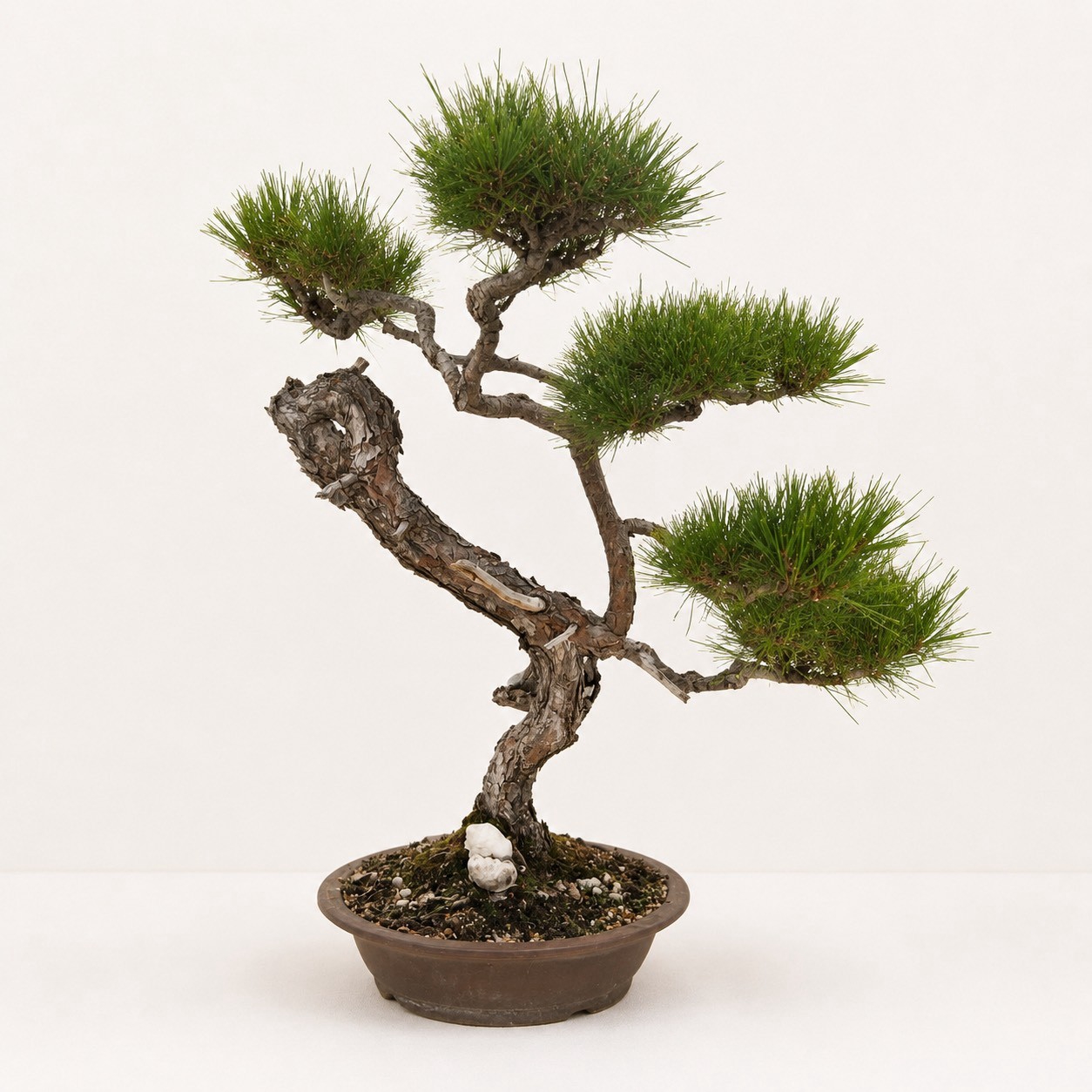
The style said to suit red pine best is literati, or bunjin. A long, slender trunk rises gracefully with few branches and foliage gathered near the top, echoing a lone red pine standing on a mountain ridge. The thin trunk and soft needles of red pine match the lightness of this style.
Informal upright (moyogi)
Red pine is also often grown as an informal upright, with a trunk that curves as it rises. Compared with black pine moyogi it is slimmer, and the curves look lighter. See what is moyogi for how to read the style.
Other styles
Red pine is also grown in slanting and twin-trunk styles. Whatever the style, red pine is usually shaped to show the trunk line rather than packing in branches and foliage. See bonsai styles explained for an overview.
Where Its Care Differs From Black Pine
The basics of placement and watering are the same as for black pine: keep it outdoors in a sunny, airy spot and water thoroughly when the soil dries. Beyond that, keep these points in mind for red pine.
- Do not overwater: red pine naturally grows on well-drained ridges and dislikes soil that is always wet. Use free-draining soil and water thoroughly only once it has dried.
- Go easy on strong techniques: red pine is less vigorous than black pine. Cutting the new shoots hard in early summer, as is done with black pine, can weaken it, so do it only on a strong tree; when in doubt, simply pinch the shoots in spring.
- Avoid shade: in poor light, inner branches die back easily.
See bonsai watering basics for watering, and pruning and pinching basics for timing.
What to Look for When Choosing a Red Pine
- The trunk line: in red pine the trunk line is the star. Check that the curves flow naturally and that the trunk seems to rise easily.
- Needle color and density: needles should be bright green and gathered moderately at the branch tips. A tree that is yellowish overall or sparse inside may be losing vigor.
- Red bark: reddish bark higher up is where red pine character shows.
- The pot: a literati red pine usually suits a small round pot, an informal upright an oval one.
Red Pines From Our Shop
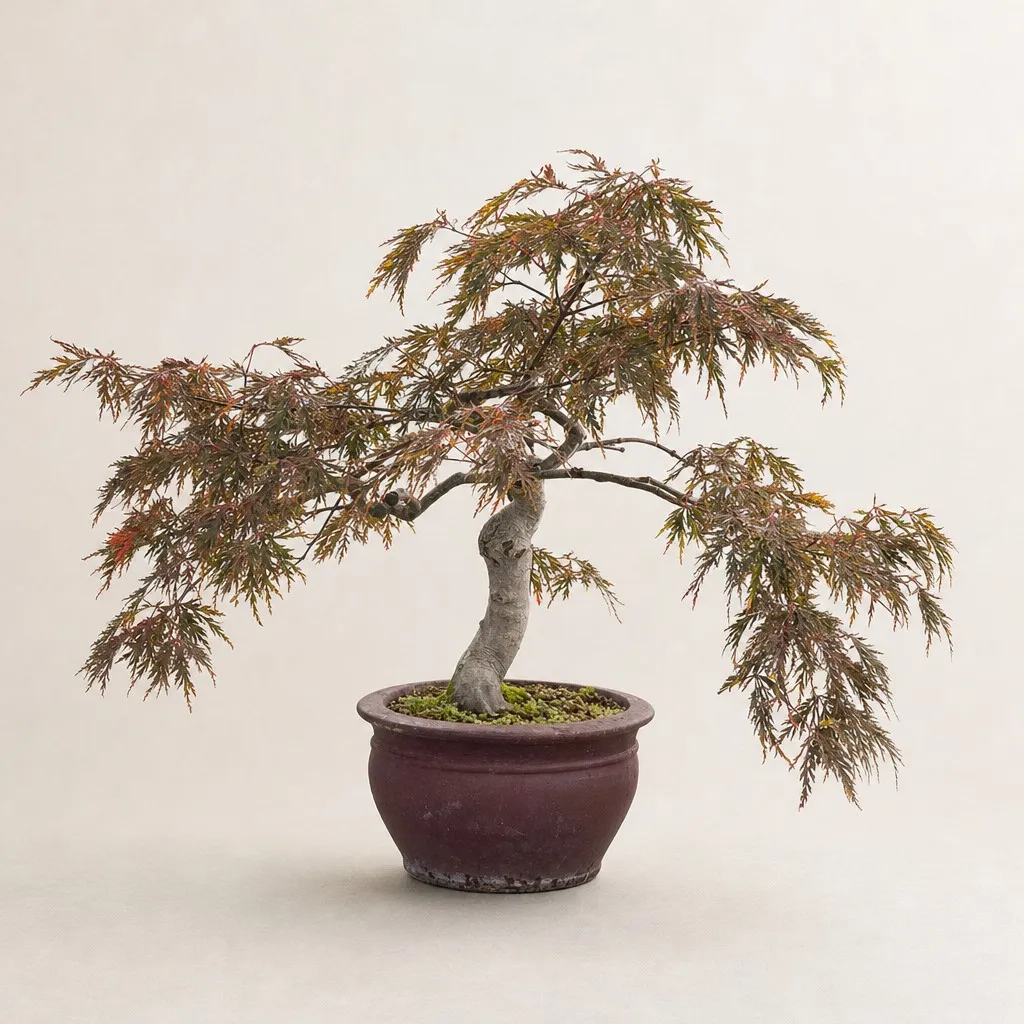
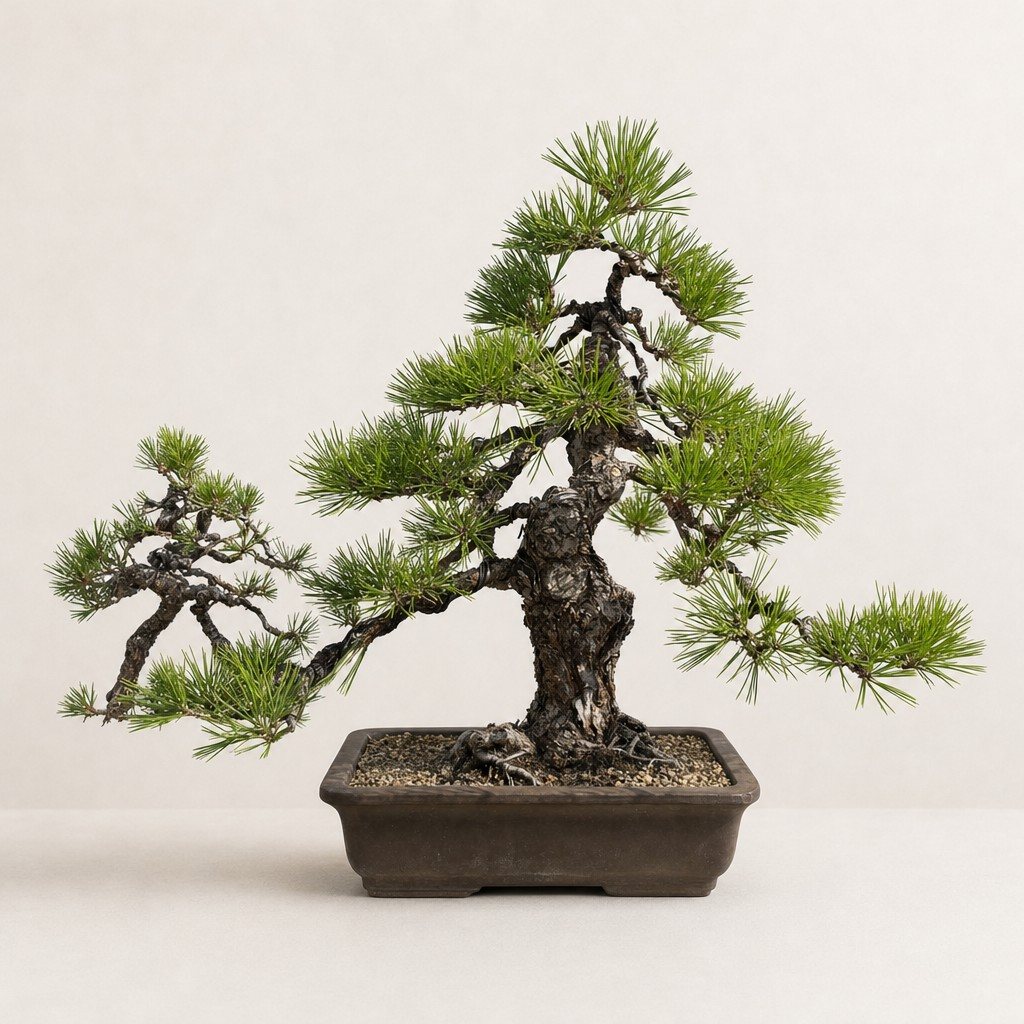
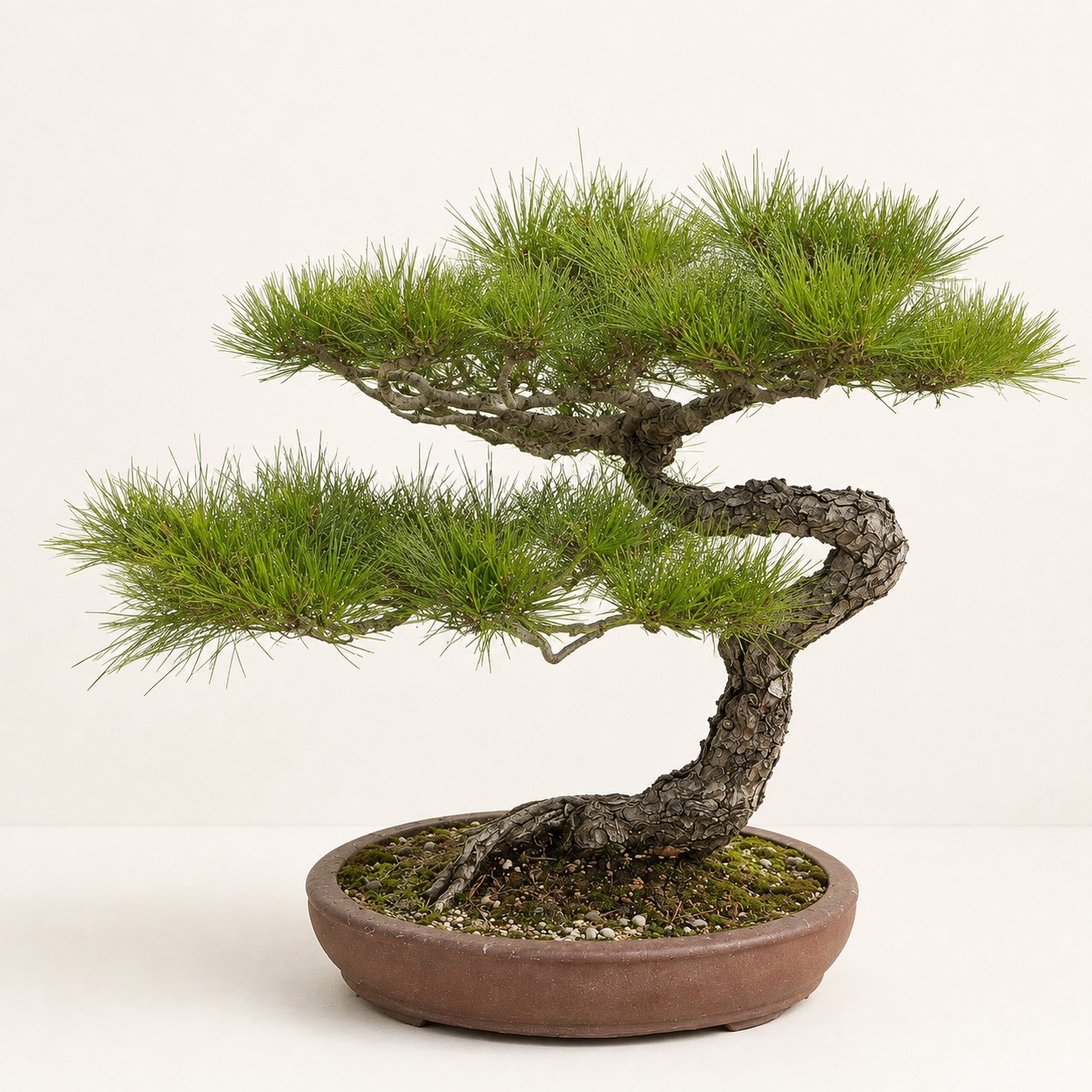
Here are some red pines we have delivered in the past. They have all been sold, but the photos may help you choose. When new red pines arrive, we will show them in our bonsai collection. We ship within Japan only.
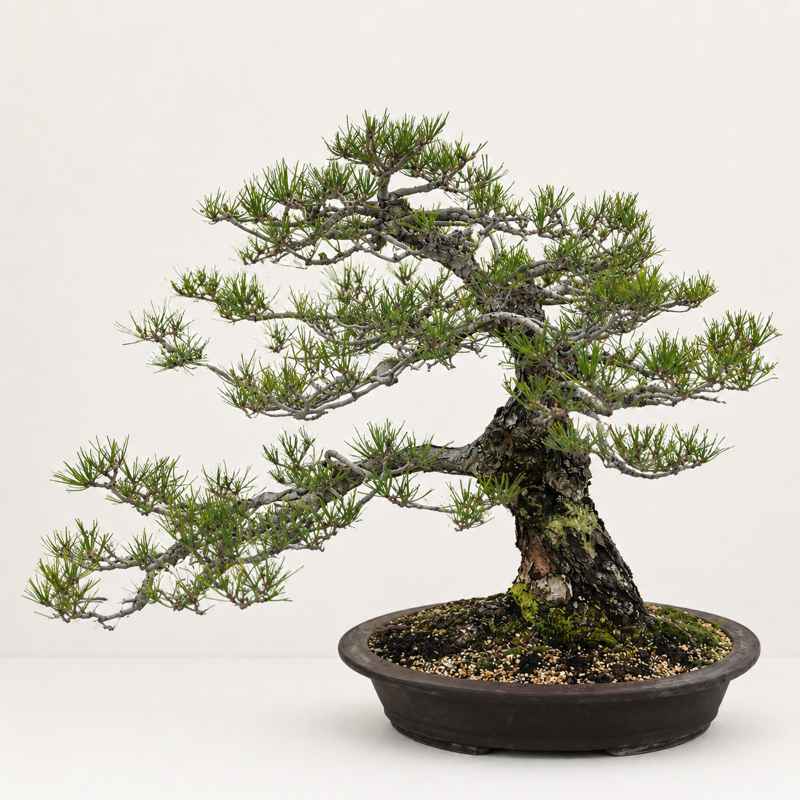
When you look at a red pine, follow the line of the trunk that shows between the needles rather than the needles themselves. Where is the slender trunk heading? A tree whose path feels right to the eye is a good red pine.
Frequently Asked Questions
Which is easier for a beginner, red pine or black pine?
Both are hardy pines grown outdoors, but black pine tolerates overwatering and strong techniques better, so it is easier for a first-time grower. If you choose red pine, be especially careful to use free-draining soil and water only once it dries.
Can I keep a red pine bonsai indoors?
Red pine is also an outdoor tree. Bring it inside to display for guests for a day or two at most, then return it outdoors. See displaying and appreciating bonsai.
Is a dark base on a red pine a sign of weakness?
No. With age, a red pine trunk roughens and darkens from the base upward. The contrast with the reddish upper trunk is, if anything, a sign of age worth admiring.