

Published Updated
Bonsai Basics: Tips for Watering
Of all the routines involved in bonsai care, watering is both the most fundamental and the most nuanced. It's not simply a matter of giving your tree "enough" water — the ideal frequency and technique change depending on the season, the species, and where the tree is placed. In this guide, we'll walk through everything from the basic watering rule to seasonal frequency guides and the most common mistakes beginners make.
The Golden Rule: "Water Thoroughly Once Dry"
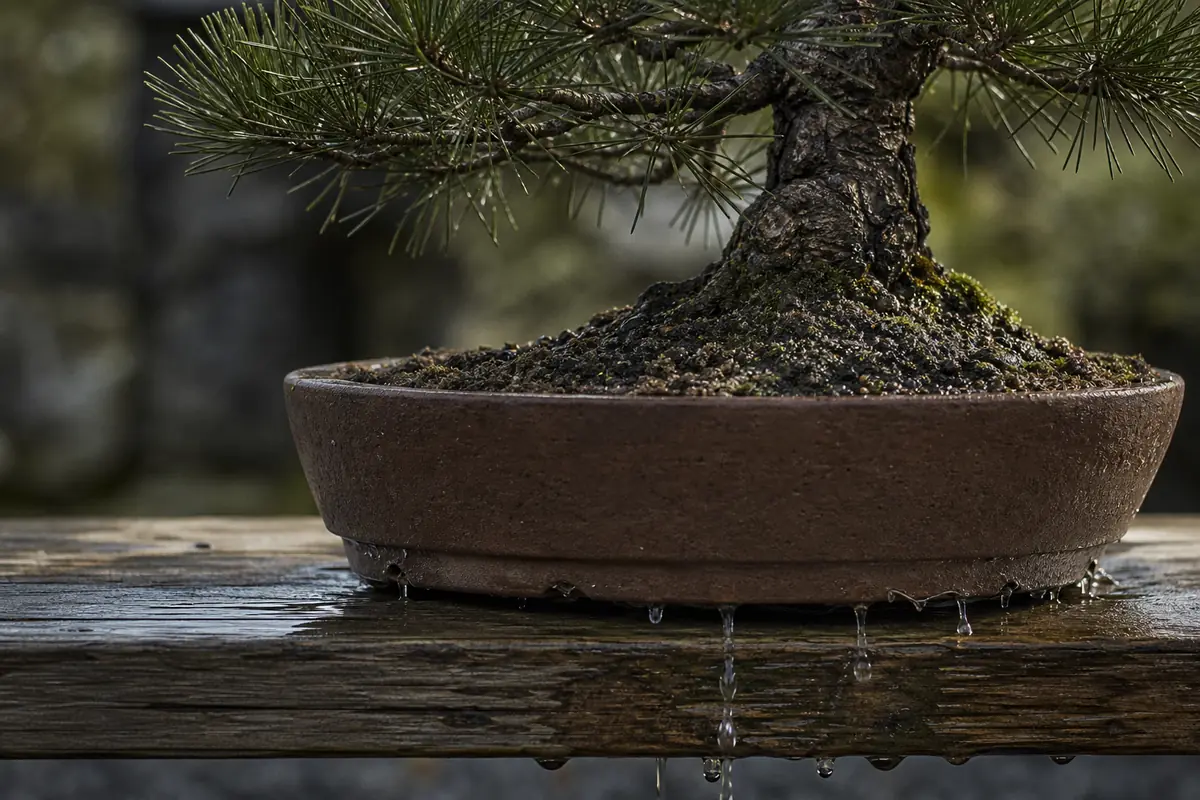
The single most important principle in bonsai watering is this: once the surface of the soil is dry, water thoroughly until it flows out of the drainage holes. Rather than giving small amounts frequently, it's better to soak the entire root ball fully each time you water — this is key to developing a healthy root system. As the photo below shows, keep going until water runs out of the drainage holes.
Watering Frequency by Season
Bonsai are sensitive to outdoor conditions, so watering frequency needs to change with the seasons. Use the guide below as a starting point.
- Spring & Autumn: Growth is active during these seasons. Water once a day, ideally in the morning.
- Summer: Water evaporates quickly, so water twice a day (morning and evening). Avoid watering under strong midday sun, as warmed water can damage the roots.
- Winter: Growth slows down considerably. Water sparingly, roughly every 2–3 days after the soil surface has dried.
Three Keys to Watering Correctly
- Water until it drains from the bottom of the pot — don't just dampen the surface; make sure water reaches all the way through the root ball.
- Pour gently and evenly over the whole surface — a watering can with a fine shower nozzle helps water reach the soil near the trunk as well.
- Be mindful of timing — morning is generally best. Soil that stays damp overnight can encourage root rot and mold.
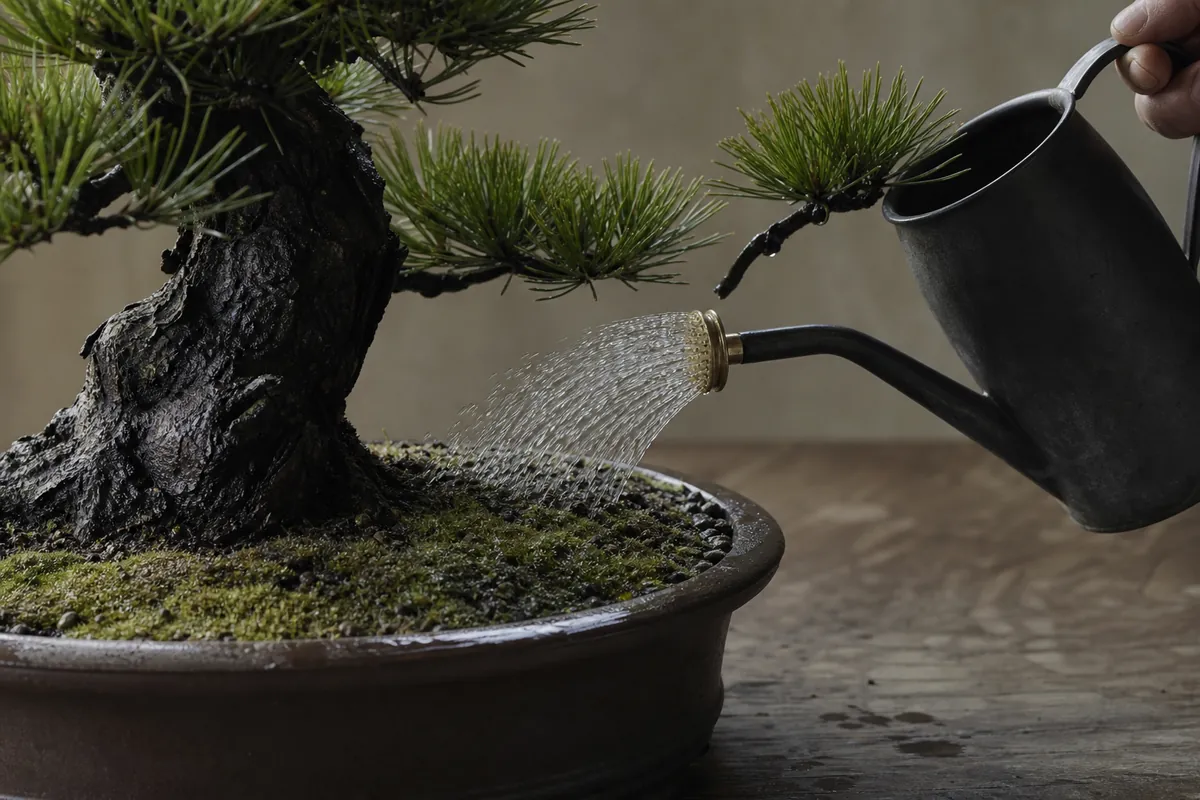
Trees with moss around the base need an especially gentle stream, since a strong flow washes moss and soil away. A tree like our Japanese black pine (informal upright, mossy base) is best watered slowly through a fine shower, letting the water soak in through the moss.
Spotting the Signs of Under- and Over-Watering
Signs of Under-Watering
Curling leaf tips and a loss of leaf shine are common signs your tree needs water. A soil surface that has turned pale and dry is another good indicator.
Signs of Over-Watering (Root Rot)
If the soil stays constantly wet, leaves turn yellow, or you notice an unpleasant smell near the base of the trunk, root rot from overwatering may be the cause. Adjust your watering frequency and move the tree somewhere with better air circulation.
A Simple Trick to Make Watering Easier
If checking the soil by touch every time feels like a hassle, try lifting the pot to gauge its weight instead. A dry pot feels noticeably lighter, while a well-watered one feels heavier. Over time, you'll be able to tell when it's time to water just from the look and feel of the pot.
If you're ever unsure, try lifting the pot — a dry pot will feel noticeably lighter.
Watering is the most frequent task in bonsai care, and also a daily chance to look closely at your tree. Once you have the basics from this guide, watch your own tree and find the rhythm that suits it. For the next step in care, see our guide to pruning and pinching basics. For adjusting watering in winter, see our winter care and cold protection guide, and if the leaves look off, see our guide on reviving a struggling bonsai.
Frequently Asked Questions
What should I do if I'm away for a few days, such as during travel?
Water thoroughly before you leave and move the tree to a bright, shaded spot away from direct sunlight — this is usually enough for 2–3 days. For longer trips, consider a self-watering device or automatic irrigation.
Do I still need to water on rainy days?
If your tree is outdoors and getting sufficiently wet from the rain, no extra watering is needed. However, if it's placed somewhere sheltered, such as under an eave, check the soil condition before deciding.
Is tap water okay to use?
Ordinary tap water is perfectly fine — there's no need for anything special. Following the right frequency and technique for each season matters far more than the type of water you use.