

Pinching vs. Cutting Pine Candles: Two Ways to Handle New Growth
Read about pine bonsai for long and you will run into a cluster of similar terms: candle pinching, candle cutting, bud selection, and in Japanese, metsumi, mekiri, mekaki, tekiga. All of them concern new growth, yet the timing, the tools, and the goal are completely different. Mix them up and a black pine grows leggy, or a white pine fails to push a single bud until the following year.
This guide sorts out the vocabulary first, then compares pinching and cutting on three counts: timing, method, and which species each suits. At the end there is a note on what you can do now, in November.
Sorting Out the Terms
In spring, a pine's new shoot looks like a candle before its needles open, which is exactly why English speakers call it a candle; in Japanese bonsai it is called midori. The various terms differ in when the candle is dealt with and how much of it is removed.
- Pinching (metsumi, or midori-tsumi): in spring, snapping off part of an extending candle with your fingers to limit its length.
- Candle cutting (mekiri): in early summer, cutting the year's new shoot off at its base so that a second flush of buds replaces it. Done only on certain pines, such as black and red pine.
- Bud selection (mekaki): reducing several buds at one point to about two. Done after candle cutting, or as buds emerge in spring.
- Tekiga: in vegetable and fruit growing, removing surplus buds. When used in bonsai, it usually means the same as pinching, so read the surrounding text.
Pinching: Holding Back Spring Vigor
Pinching is done just before the candles finish extending, roughly April to May. In a mild area like Kagawa, candles start moving in mid-April; colder regions run later. Go by the length of the candle and whether the needles have started to open, not by the calendar.
Grip the candle between your fingertips and snap off the tip. How much you leave depends on vigor: strong candles are taken back hard, to half or less, while weak ones are pinched lightly or left alone. The key is not to make them all the same length.
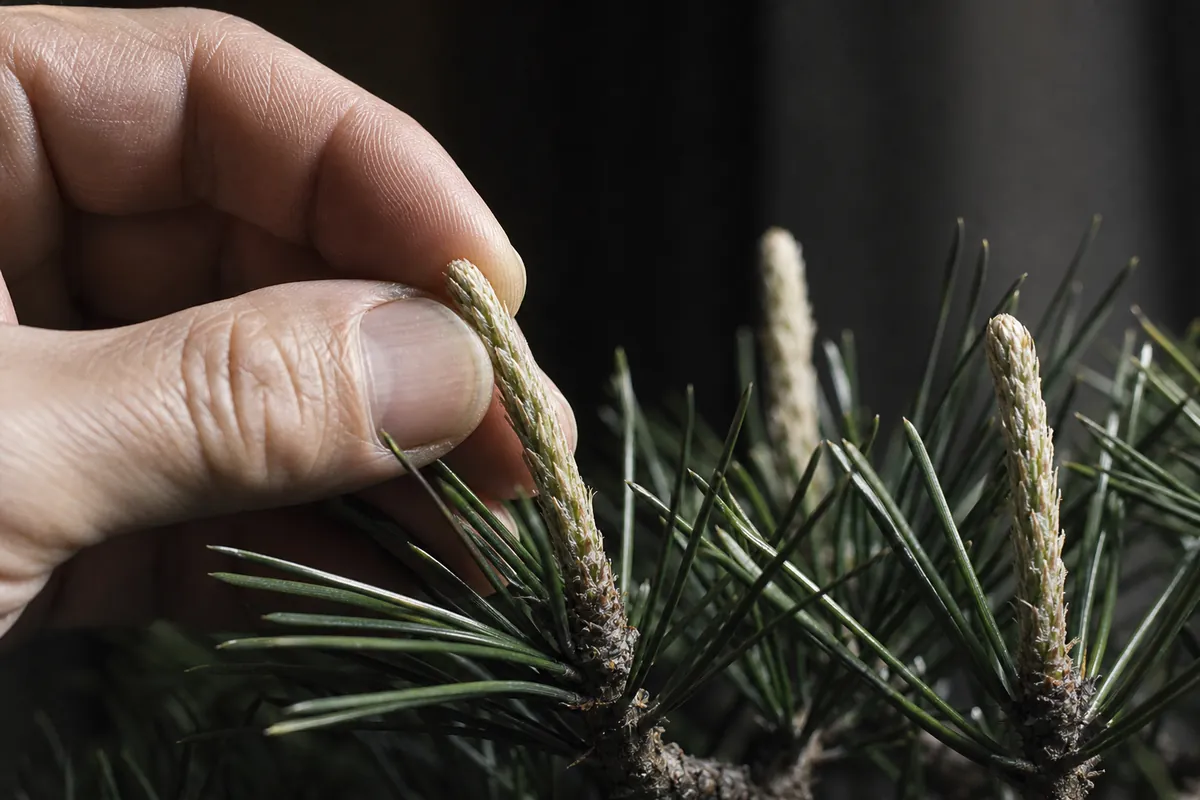
Scissors are avoided because they slice through the young needles packed inside the candle, leaving cut ends that turn brown and unsightly. Snapped by hand, the candle parts naturally between needles.
The purpose is to stop growth where the tree is strong and send energy to where it is weak. Pines push hardest at the top and the outside, and left alone the lower branches gradually weaken and die. Think of pinching as correcting that imbalance a little every year.
Candle Cutting: Resetting New Growth in Early Summer
Candle cutting means removing the spring's new shoots at their base in June to early July. Over the summer a second flush of buds appears around each cut. Because those buds have a shorter season to grow, their needles stay short and their branching is finer. The short, tight needles you see on black pine bonsai are the result of doing this year after year.
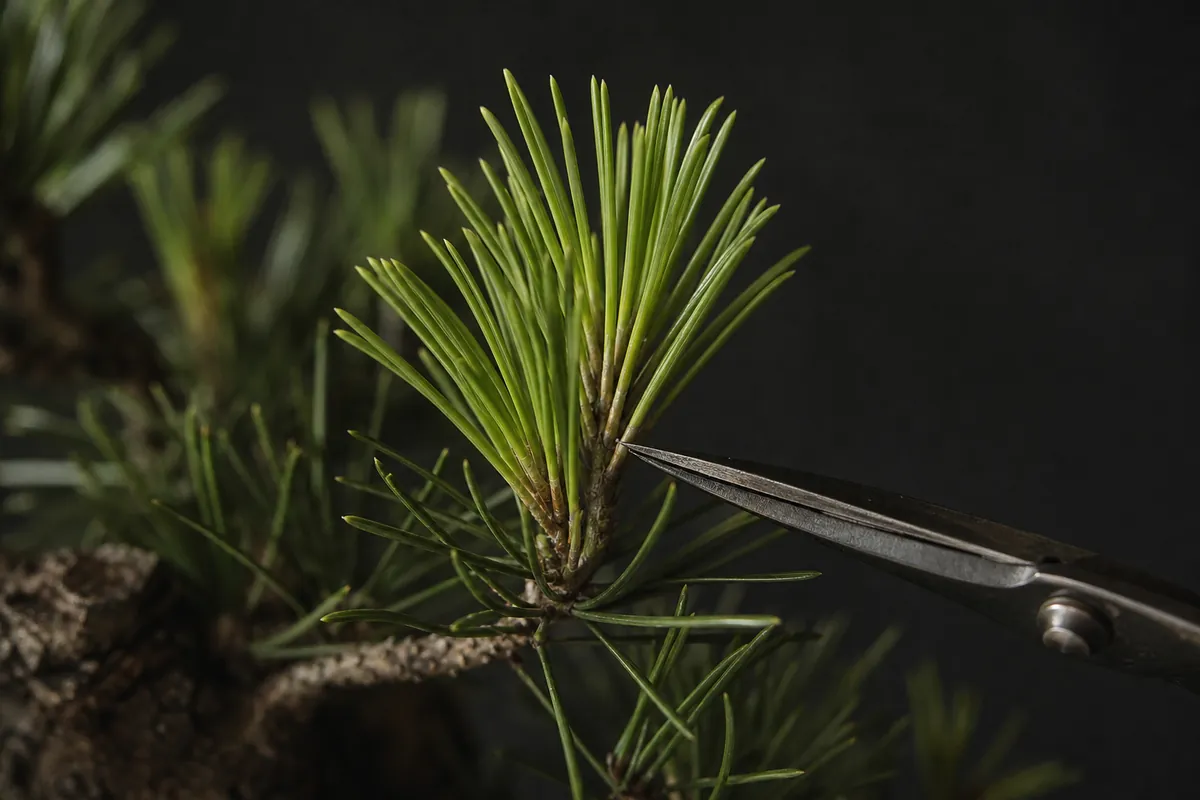
Cut Weak Areas First
Rather than cutting the whole tree in one day, the usual approach is to cut weak branches first and strong branches a week to ten days later. Buds cut earlier have more time for the second flush to grow; those cut later grow less, and that difference evens out the tree's strength. Use bonsai scissors and cut just above the base of the new shoot, leaving a tiny stub.
All you need is a pair of fine-tipped bonsai scissors. Right after cutting, clear resin will bead up at the cut; that is a normal reaction, and there is no need to wipe it off or apply anything. Avoid rainy days and the heat of midday; an overcast day or early morning gives the cuts a better chance to settle.
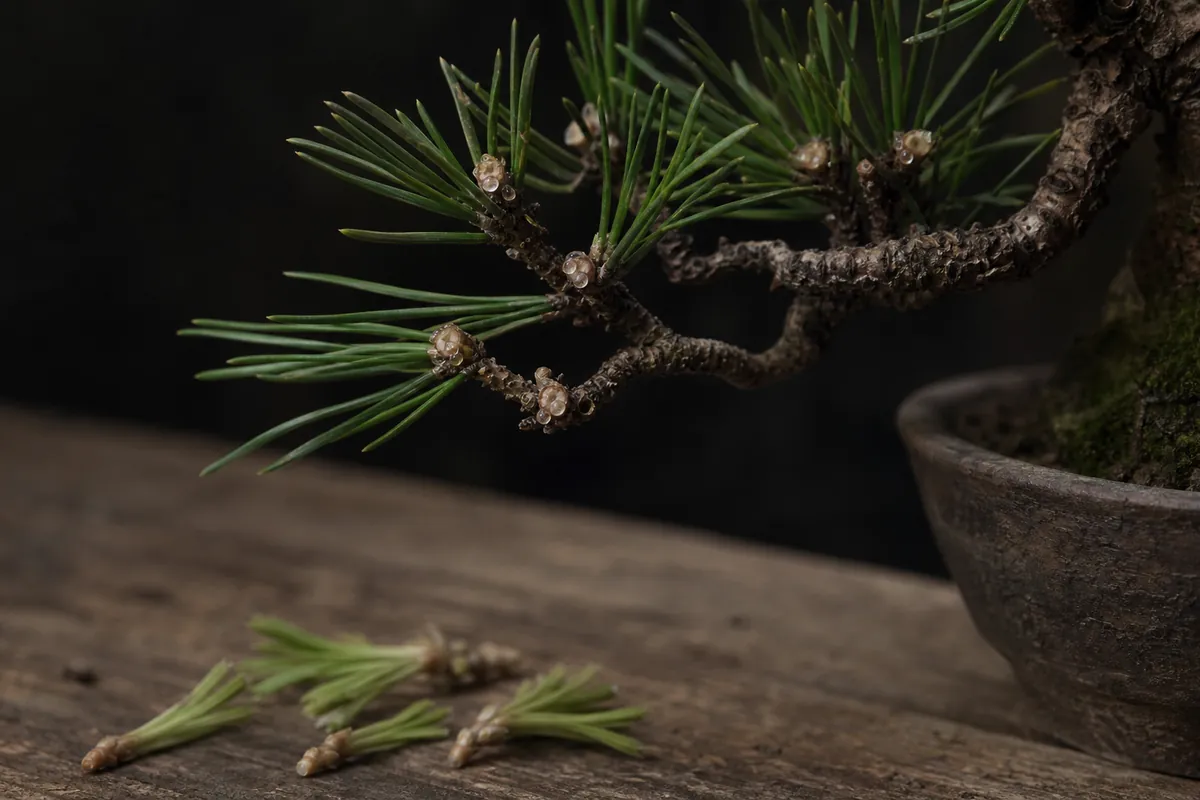
Reduce Buds at Summer's End
The second flush can produce three or four buds at a single point. From late August into September, keep about two that face in good directions and rub off the rest. Skip this and branches will radiate from that point like spokes the following year, swelling the trunk there.
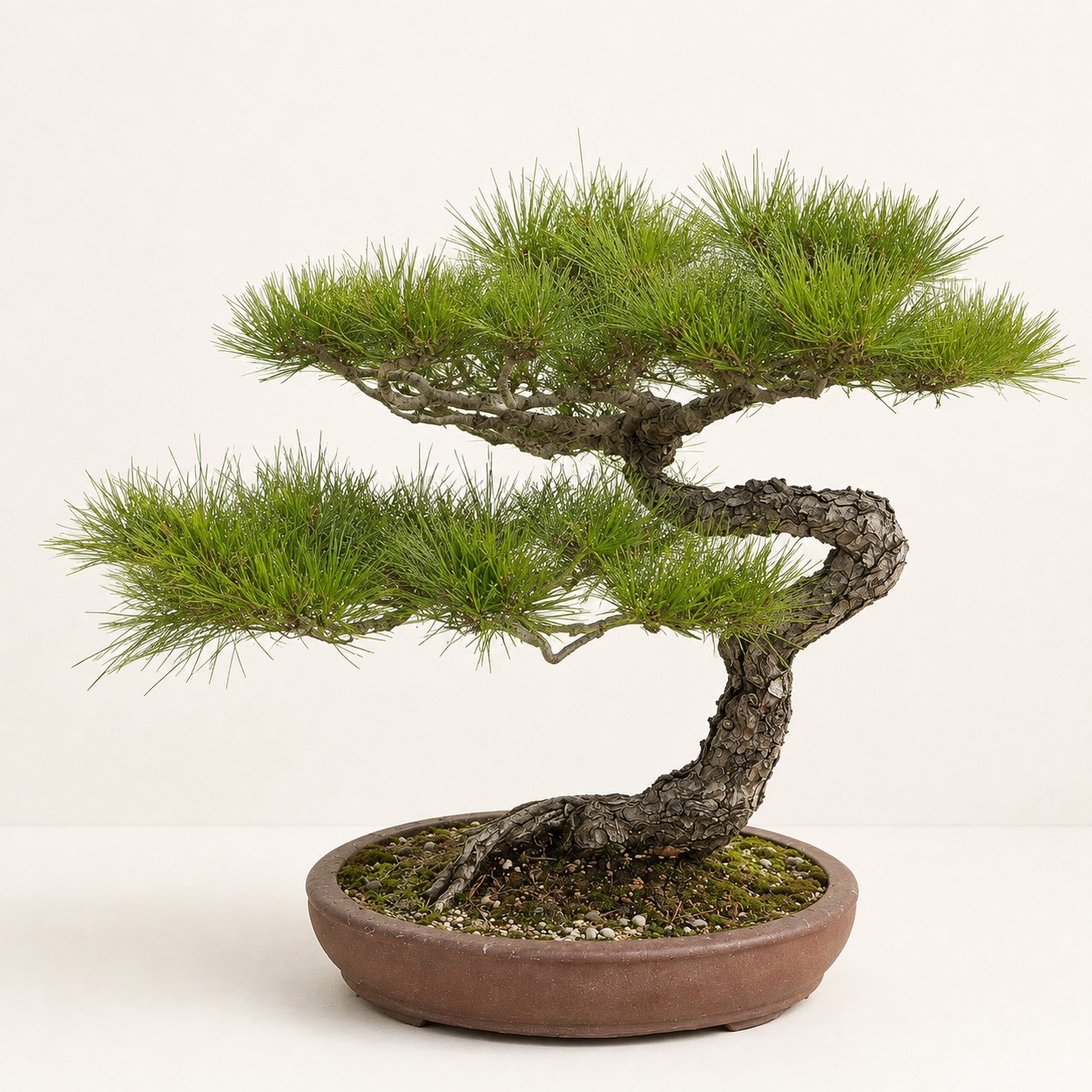
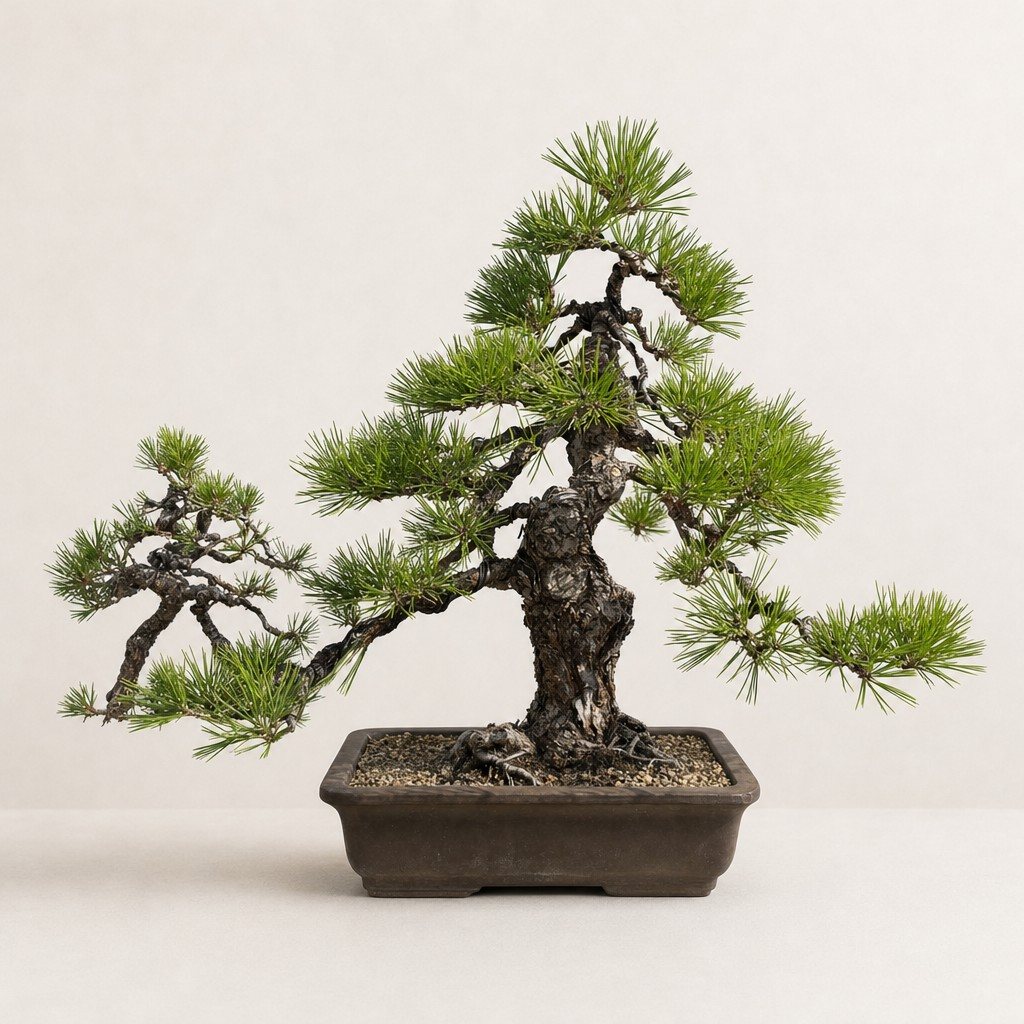
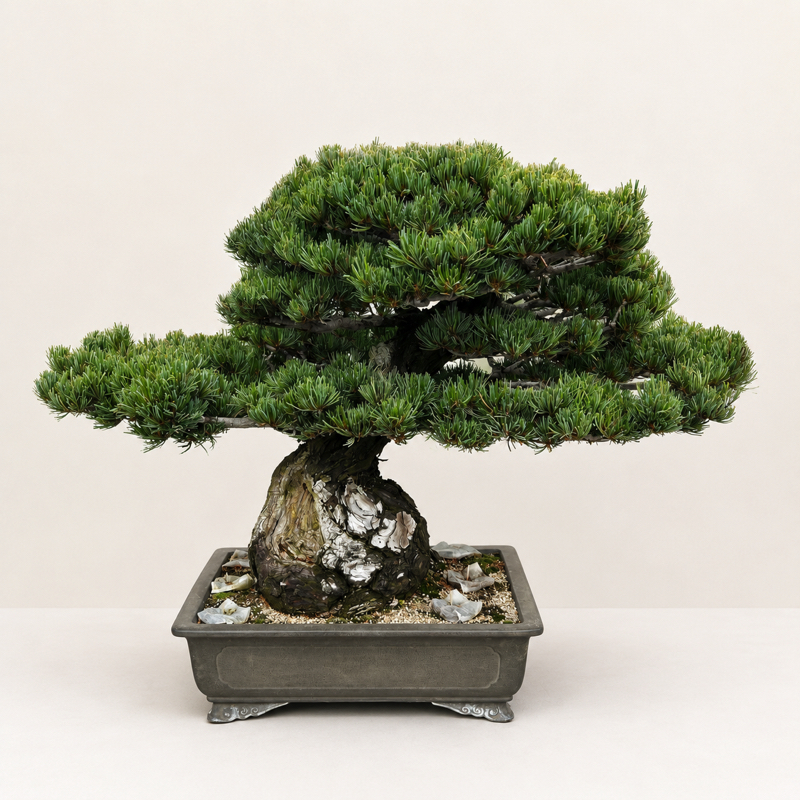
The full yearly cycle is in our black pine care guide. Our Japanese Black Pine (Candle-Pruned Once) (sold) is a tree that has been through this process.
The Species Decides Which Method You Use
Whether you pinch or cut is not a matter of preference; it follows from how the tree grows.
- Japanese black pine, red pine, Nishiki pine: candle cutting is the main technique. Spring pinching is used only to check extremely strong candles.
- Japanese white pine: pinching is the main technique. White pine has little capacity to push a second flush, and after cutting, the cut point may sit bare until the following year.
- Shimpaku juniper: a different kind of growth altogether. Extended shoots are usually trimmed back with scissors; repeated finger pinching can turn the tips brown.
For more detail, see our Japanese white pine care guide and shimpaku juniper care guide.
When Not to Cut Candles
Candle cutting asks the tree to spend the energy it stored in spring on a second round of buds. A tree without that energy will fail to push new buds, and branches can die back. Skip candle cutting for the year if the tree:
- was repotted this spring
- has pale needles, or produced noticeably short candles this spring
- has only just arrived and you have not yet seen a full year of its growth
That last point is often overlooked. A tree that has just moved may be temporarily weakened by the change of environment. Spend the first year reading its vigor through pinching and feeding, and move on to candle cutting the year after.
Pinching stops growth; cutting rebuilds it. Remember that, and you will never confuse the timing.
What You Can Do in November
Neither job is due for months. November is when you look at the results of spring and summer. On a black pine that was cut, check whether the second-flush needles are short and even, and whether the two buds you kept are plumping up. Pulling out old needles and tidying the branch tips now will make it obvious next spring which candles are pushing hardest.
For pruning in general, see bonsai pruning and pinching basics. If candle cutting is new to you, start with a tree whose care routine is easy to follow. Black and white pines are in our bonsai collection.
Frequently Asked Questions
Can I both pinch and cut candles in the same year?
On black pine, yes: lightly pinching only the very strongest candles in spring and then cutting in early summer is a recognized combination. Both, however, assume the tree has energy to spare. If it was just repotted or is lacking vigor, skip candle cutting that year.
Summer passed and I never cut the candles. Will the tree suffer?
No. Not cutting does not weaken the tree; the needles simply stay longer that year. Pull out old needles and tidy the branch tips in autumn, then cut between June and early July next year.
I bought a candle-pruned black pine. What should I do in the first year?
A tree that has just moved may be temporarily weakened, so in the first year keep it outdoors in full sun and read its vigor through watering and feeding. Candle cutting can wait until the following year. If anything is unclear, ask us through our contact form.