

Published Updated
Bonsai Pruning and Pinching: The Basics
Pruning and pinching are essential techniques for keeping a bonsai healthy and beautifully shaped over the long term. Leaving overgrown branches or unwanted new shoots unchecked doesn't just disrupt the tree's form — it can also reduce airflow and sunlight, affecting the tree's overall health. This guide covers the fundamentals for anyone trying pruning and pinching for the first time.
The Roles of Pruning and Pinching
Pruning involves cutting back overgrown or unnecessary branches with shears to shape the tree's overall balance and structural silhouette. Pinching, on the other hand, involves removing the soft tips of new shoots as they emerge in spring, preventing branches from stretching out too far while encouraging finer branching. Together, these two techniques form a complementary pair essential to maintaining a beautiful shape.
Basic Timing for Pruning
The ideal timing for pruning varies by species, but here are some general guidelines:
- Conifers (black pine, white pine, Chinese juniper, etc.): Major pruning is generally best done in autumn through winter, once active growth has settled down.
- Deciduous trees (maple, ginkgo, etc.): The dormant winter period after the leaves have fallen, when the branch structure is easiest to see, is ideal.
Avoid heavy pruning during periods when it would place too much stress on the tree. If you're unsure about your tree's condition, start with light shaping first.
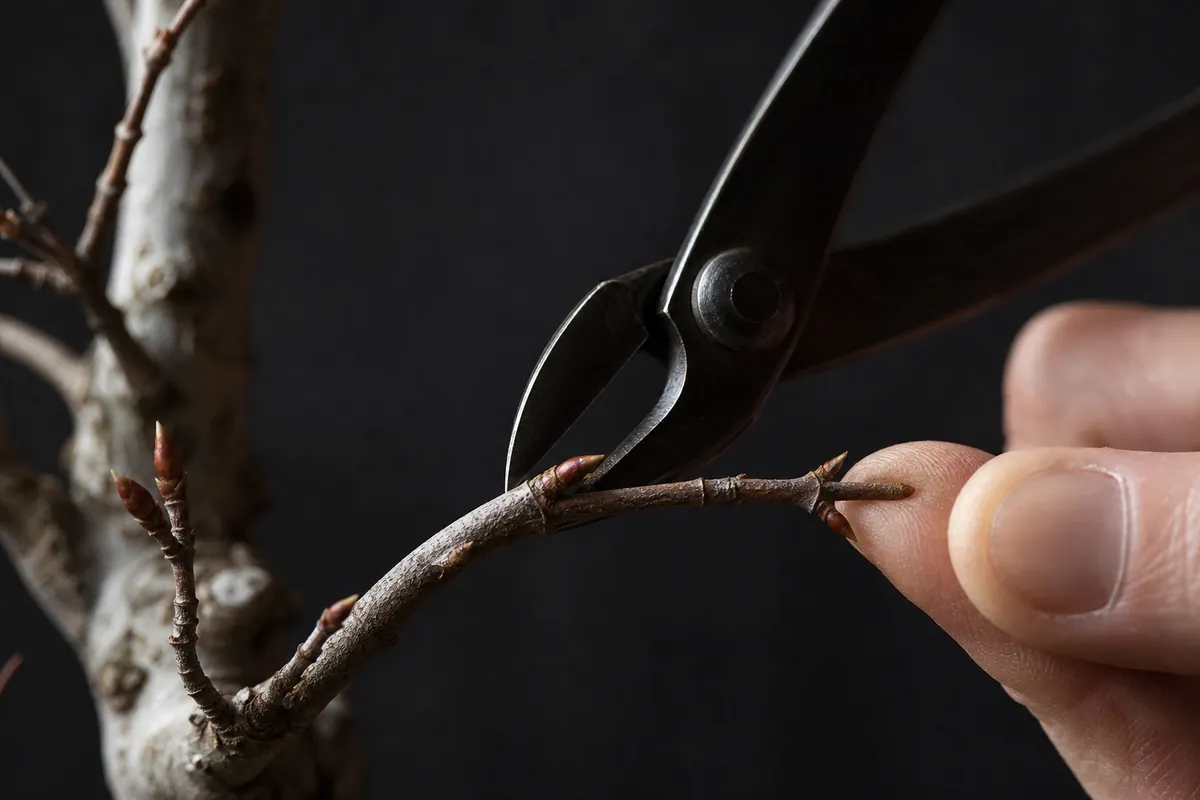
When you cut a branch, cut just above a bud or side branch you want to keep. As in the photo below, cutting a few millimeters above an outward-facing bud sends the next shoot outward from that bud.
Pinching: Timing and Technique
Pinching is done in spring, as new shoots begin to grow. Once a new shoot has extended a few centimeters, gently pinch off the soft tip with your fingers. Rather than pinching every single shoot, focus on the areas that are overly long or overcrowded, always keeping the overall balance of the tree's shape in mind.
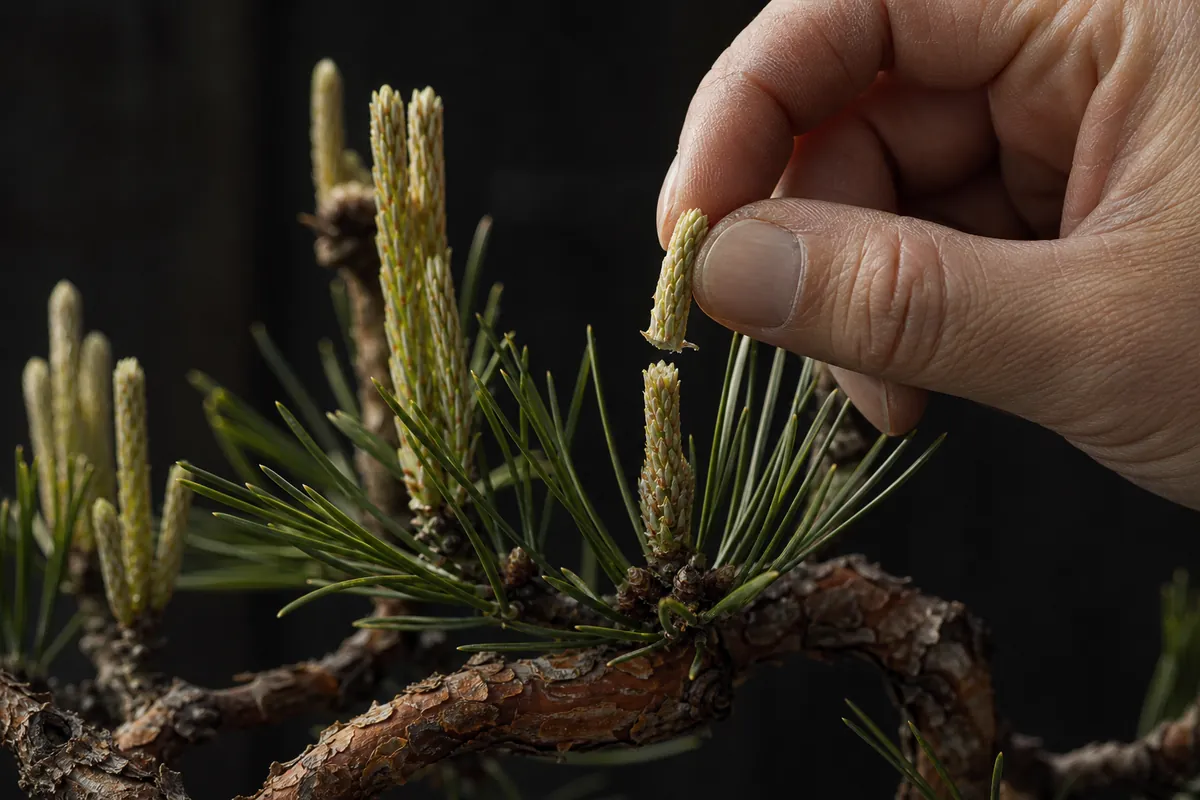
On pines, the spring shoots (candles) are snapped off partway with the fingertips, as shown below.
Three Key Tips for Beginners
- Don't cut too much at once. When in doubt, make small adjustments and observe the results — over-pruning can take a long time for the tree to recover from.
- Use clean tools. Dirty shears can introduce bacteria through the cut. Disinfecting your tools with alcohol before use is a good habit.
- Work with a finished image in mind. Picture the shape you want to achieve, and decide where to cut based on the natural flow of the branches.
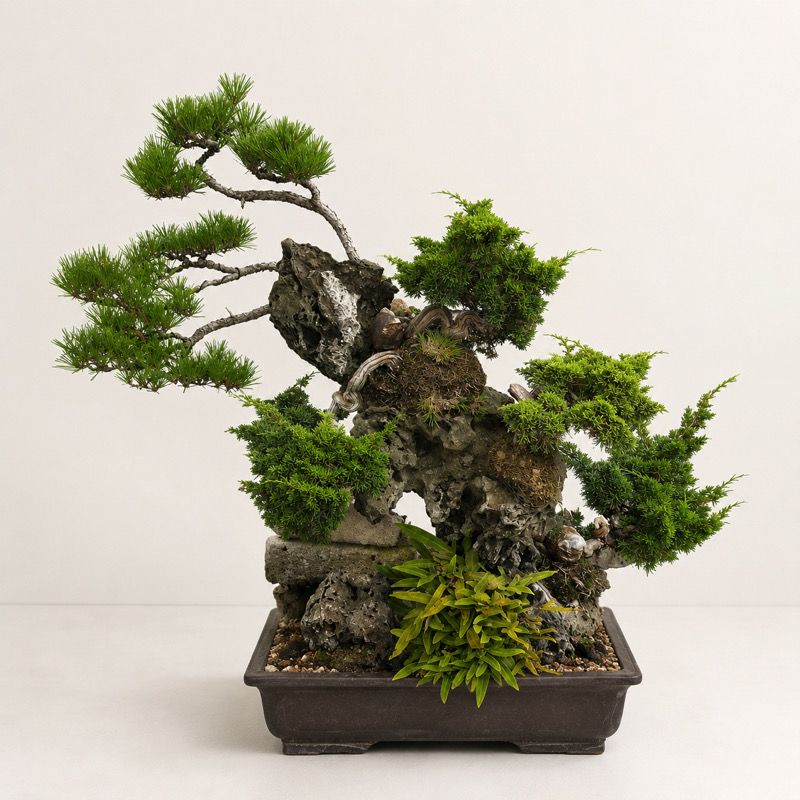
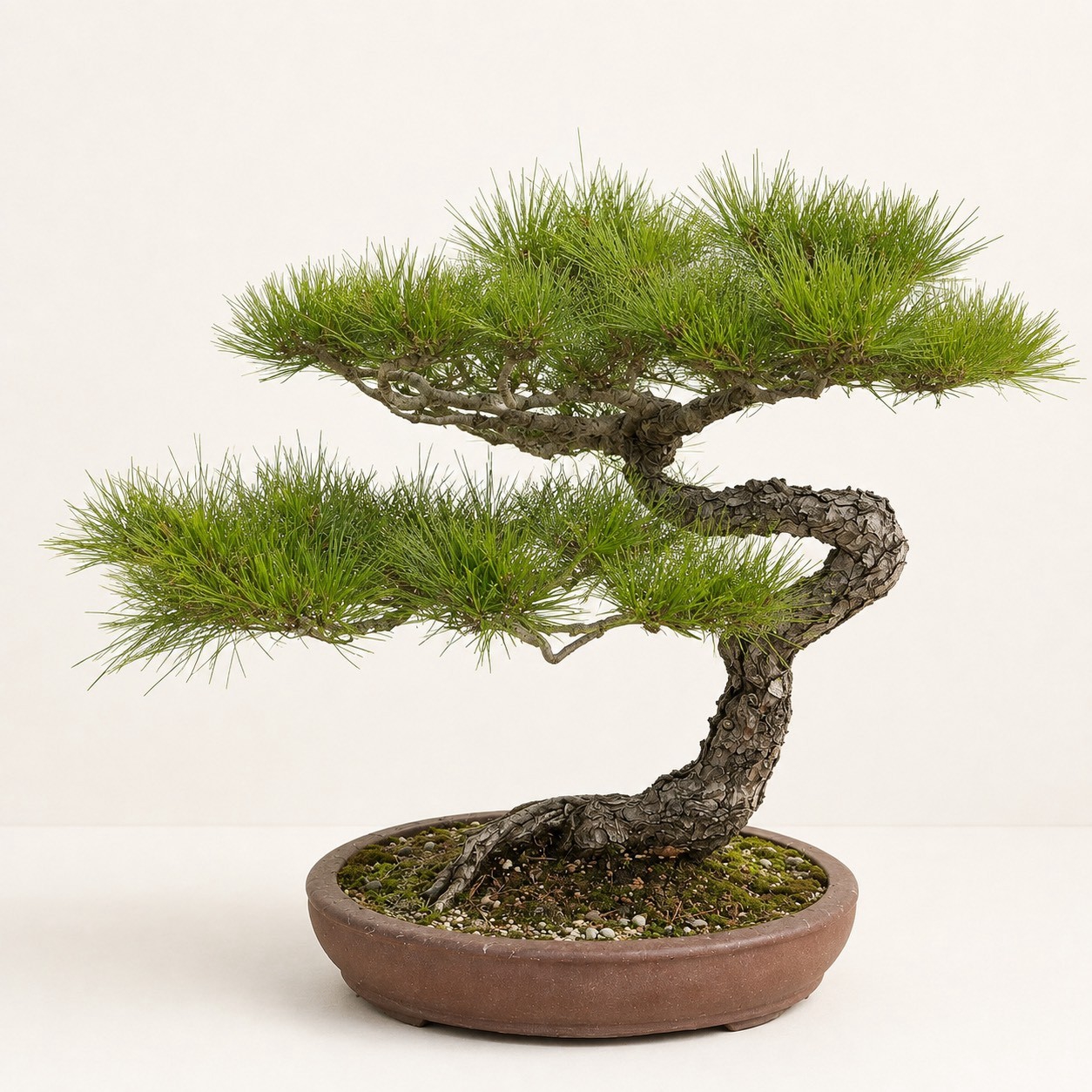
On a tree whose branches spread in tiers, such as our Japanese red pine (informal upright, two-tiered branches), keeping the open space between the tiers is a good guide for deciding where to cut and which shoots to pinch.
Tools You'll Need
Dedicated bonsai pruning shears make major cuts easier, while fine-tipped pinching shears are ideal for delicate new-shoot work. When cutting thicker branches, applying a wound sealant to the cut surface helps prevent drying out and disease.
When in doubt, resist the urge to make one big cut — instead, shape your tree gradually over time. A bonsai's form isn't completed in a single session; it's something you cultivate slowly, over many years.
Pruning and pinching let you experience the joy of shaping your bonsai's form with your own hands. Combined with the fundamentals in our watering basics guide, you'll be able to approach your daily care routine with much more confidence. For tips on spotting pests and disease early, see our bonsai pest and disease guide.
Frequently Asked Questions
No new buds appeared where I cut. Did I do something wrong?
Conifers tend not to bud back from wood that has no needles left on it, so the rule is to stop your cut where needles or buds remain. If the cut is already made, keep placement and watering steady and wait for the next budding season.
Should I prune a bonsai as soon as I buy it?
A newly arrived tree should first settle into its new spot. Leave major pruning until the tree has settled, and for conifers until the autumn-to-winter window. Until then, limit yourself to lightly trimming any obviously overlong shoots.
Can I use ordinary garden shears instead of bonsai shears?
Garden shears will cut thin twigs, but thick blades tend to crush the cut and struggle to reach between closely spaced branches. If you plan to keep at it, a pair of bonsai pruning shears makes the work much easier. Whichever you use, disinfect the blades first.