

Published Updated
How to Care for a Shimpaku Juniper Bonsai: Working With Jin and Shari
The shimpaku juniper offers more scope for carving and radical restyling than almost any other bonsai species, and each tree ends up with a strong character of its own. Bleached deadwood twisting around living bark produces a drama you will not find elsewhere. This guide covers how to care for one without losing what makes it compelling.
Three Terms Worth Knowing First
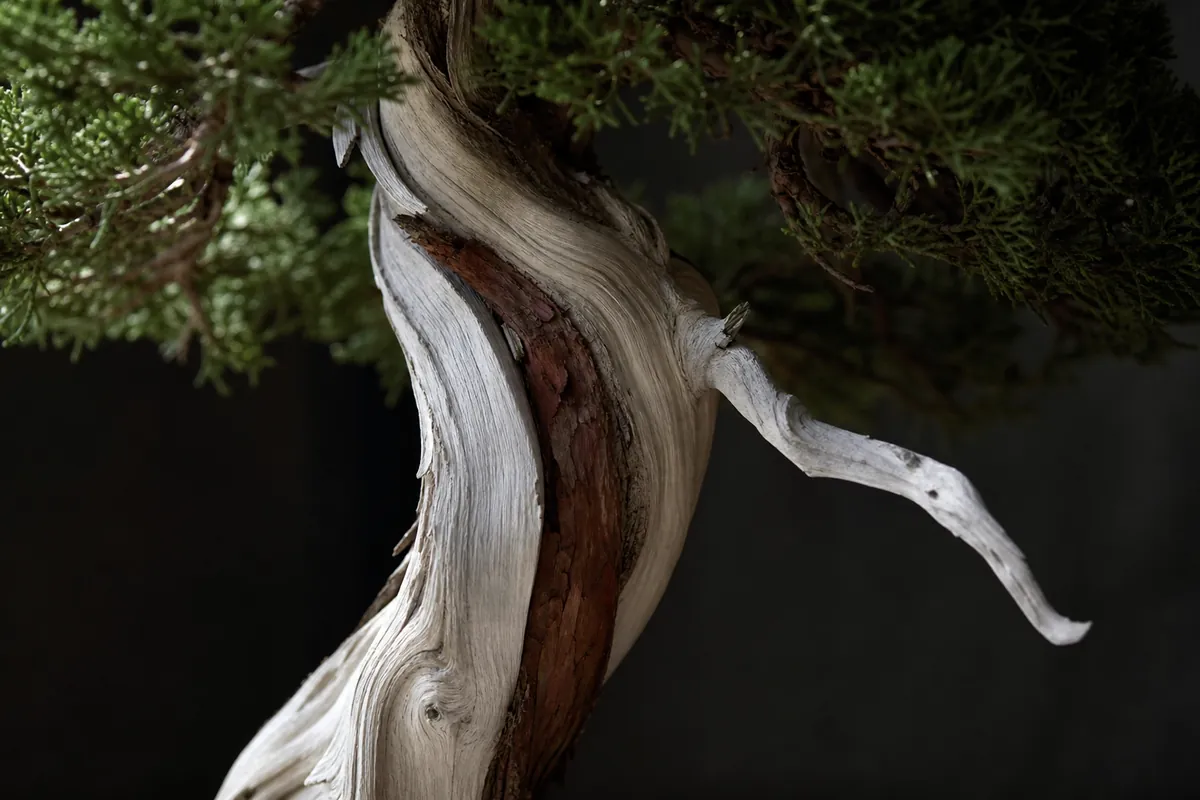
- Jin: a deliberately preserved dead branch, standing for years of wind and snow endured.
- Shari: a section of trunk where the bark has been stripped away to expose bleached heartwood.
- The live vein: the strip of living bark running alongside the shari. This is what carries water from roots to foliage.
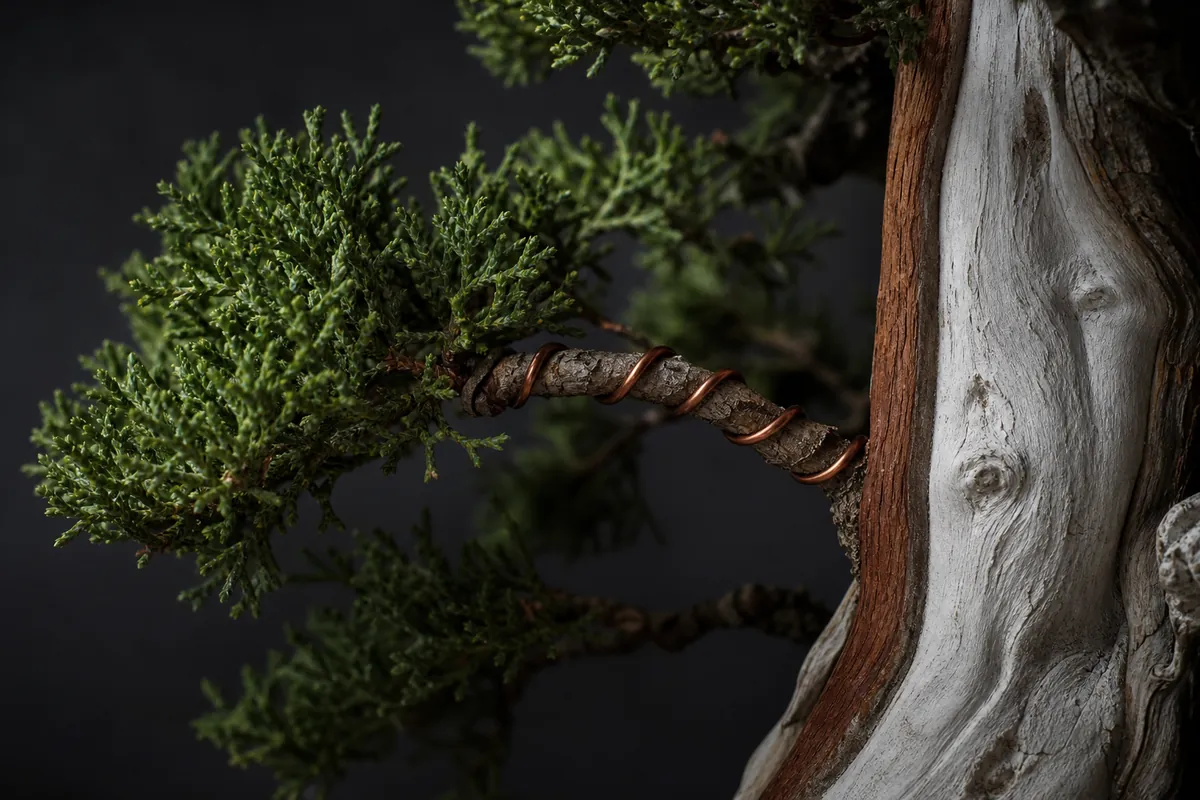
Understanding how these three relate to each other matters more than anything else when working on a juniper. In the photo below, a reddish-brown live vein climbs alongside the white shari, while a white jin juts out to the side.
Protecting the Live Vein Comes First
When a juniper branch dies back suddenly, the cause is usually damage to the vein feeding it. Wire wound too tightly, or a slip while cleaning up a shari that shaves into living bark, cuts off the water supply to everything above it. Before you start any work, get into the habit of tracing which vein feeds which branch. In the photo of our Shimpaku Juniper, you can see the reddish-brown vein rising beside the white shari and running out into the branches.
Placement and Watering
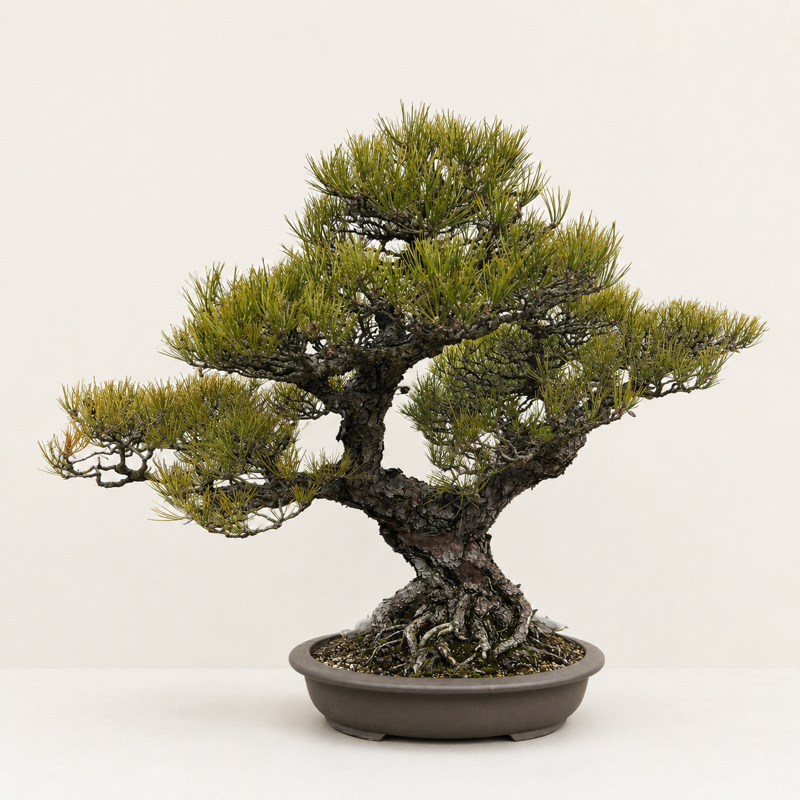
A sunny, well-ventilated outdoor position is the baseline. Junipers handle dry conditions reasonably well, but the limited soil in a bonsai pot still means dryness can catch you out. Water thoroughly once the surface dries. Foliage pads tend to grow dense on this species, so pay attention to keeping air moving through the interior.
Cut Back New Growth With Scissors
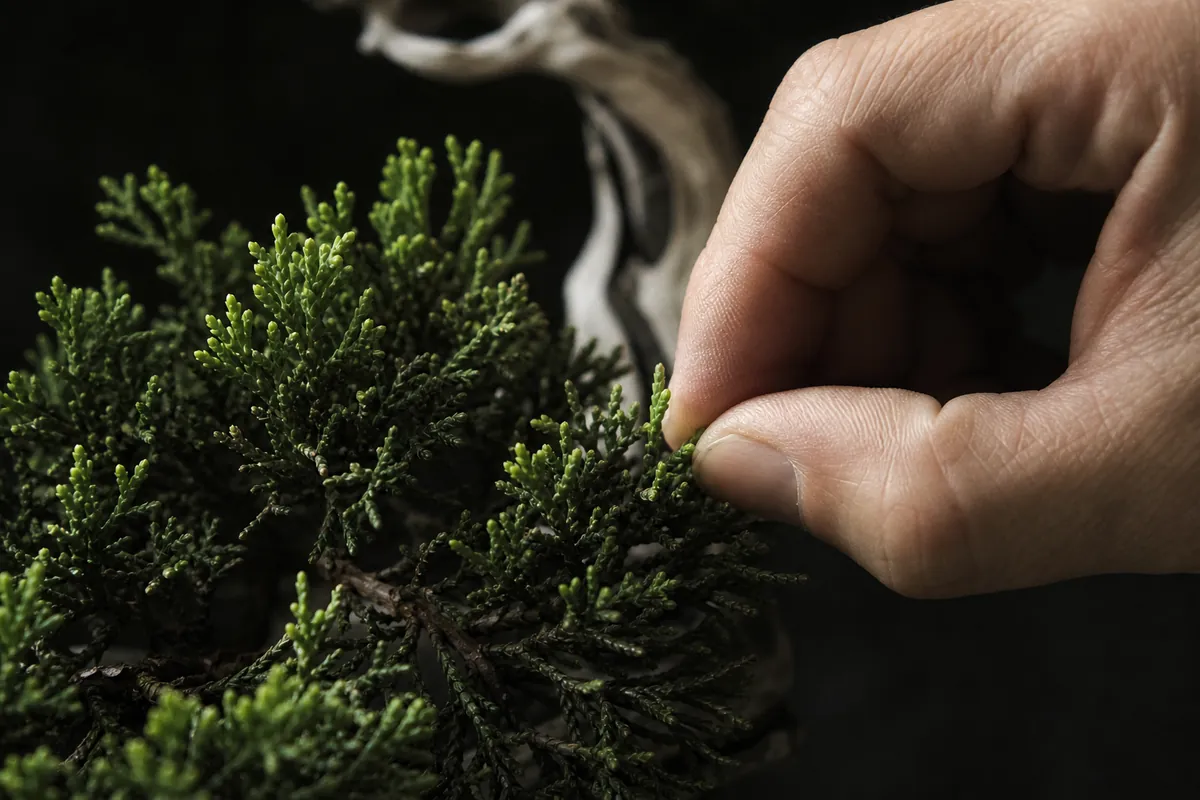
From spring through autumn, look at the shoots that have grown too long and cut them back with scissors on the woody part of the stem rather than through the foliage. Finger pinching used to be widely recommended, but it tends to leave the remaining foliage tips brown and can weaken the tree, so selectively cutting back with scissors is now the usual approach. Where growth has become crowded, thin out branches to let light and air into the interior.
Wiring for Shape
Juniper branches bend readily, which makes the species well suited to wiring. Autumn into winter, when growth has slowed, is the window. As noted above, take real care not to clamp wire tightly over a live vein. For technique, see the basics of wiring bonsai.
The Year at a Glance
- March to April: Repotting season.
- April to June: Cutting back shoots and feeding.
- July to August: Watch for dryness; stop fertilizing.
- September to October: Autumn feeding, cutting back continues.
- October to December: Prime time for wiring and pruning.
- January to February: Dormancy. Keep outdoors, protected from hard freezes.
Junipers show the results of your work plainly, which is exactly why it pays to resist transforming one in a single session. Build the tree over several years instead.
In Summary
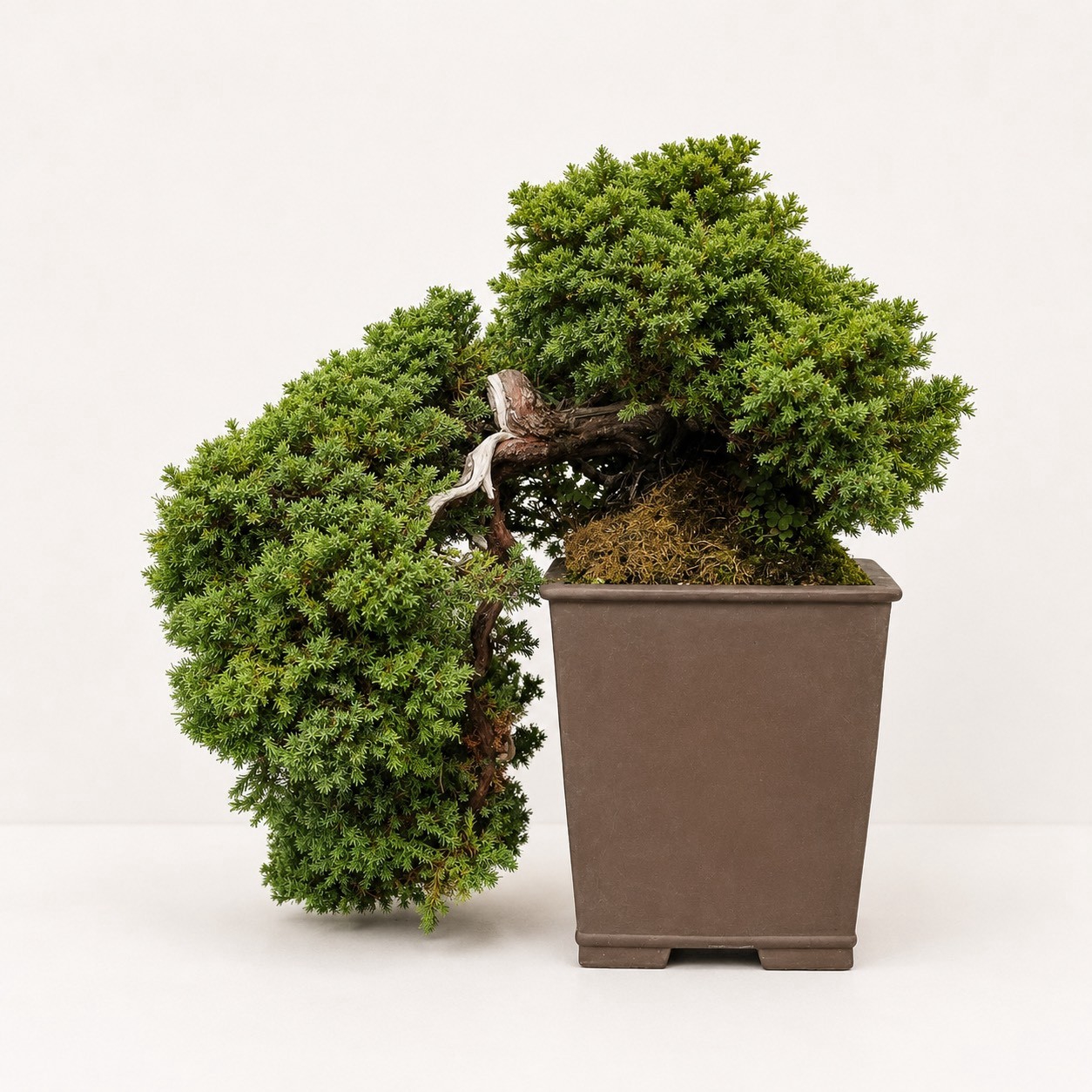
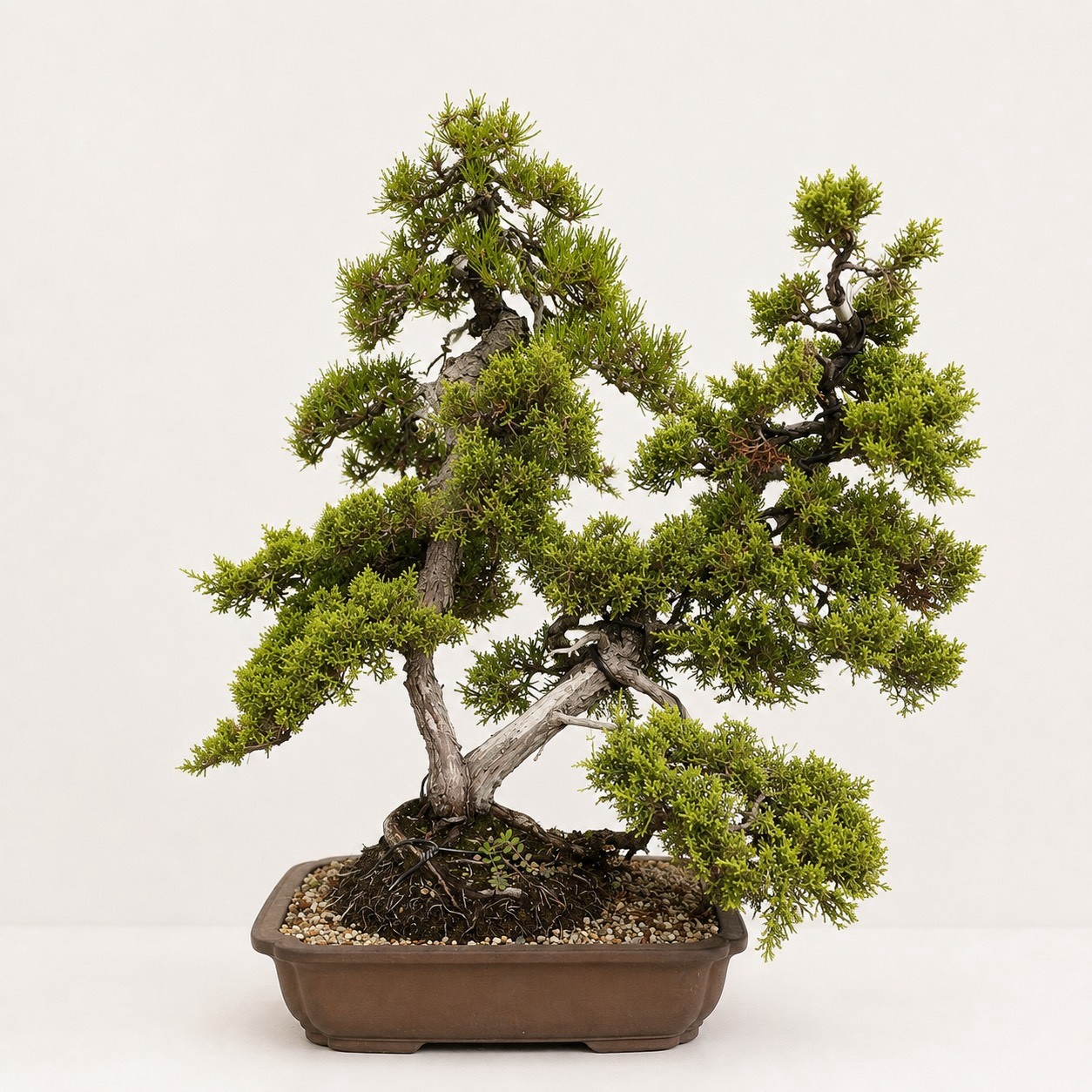
Protect the live vein and cut back long shoots with scissors, and juniper care becomes remarkably steady. For terms like rock-planted or twin trunk, see the styles of bonsai. Kagawa Bonsai carries junipers styled to showcase their shari, such as the Shimpaku Juniper (Twin Trunk, Shari Deadwood) below, all viewable in our bonsai collection.
Frequently Asked Questions
The foliage tips on my juniper are turning brown. Is it dying?
Brown cut ends left by scissors, or old interior foliage turning brown, are common and do not by themselves mean the tree is in trouble. If a whole branch browns at once, though, the vein feeding it may be damaged or the tree may have dried out. Check for wire biting in and how dry the soil gets.
How should I clean shari and jin when they get dirty?
Lightly scrubbing off dirt and moss with a soft brush and water is enough. If you carve or sand, put protecting the neighbouring live vein first. There are products for keeping deadwood white, but you do not need to use them until you are comfortable with the work.
How long does it take for a juniper to arrive?
We normally ship within five business days of confirming your payment, to addresses in Japan only. Each tree is one of a kind and arrives as you saw it in the photos; start by placing it outdoors in a sunny, airy spot.