

Published Updated
How to Care for a Japanese White Pine Bonsai
Named for the five needles that grow in each cluster, the Japanese white pine is sometimes called the queen of the conifers, a graceful counterpoint to the bolder black pine. It holds a trained shape for a long time, which has made it a lasting favorite among enthusiasts. This guide covers its care by comparing it with the black pine most people know first.
Understanding the Species
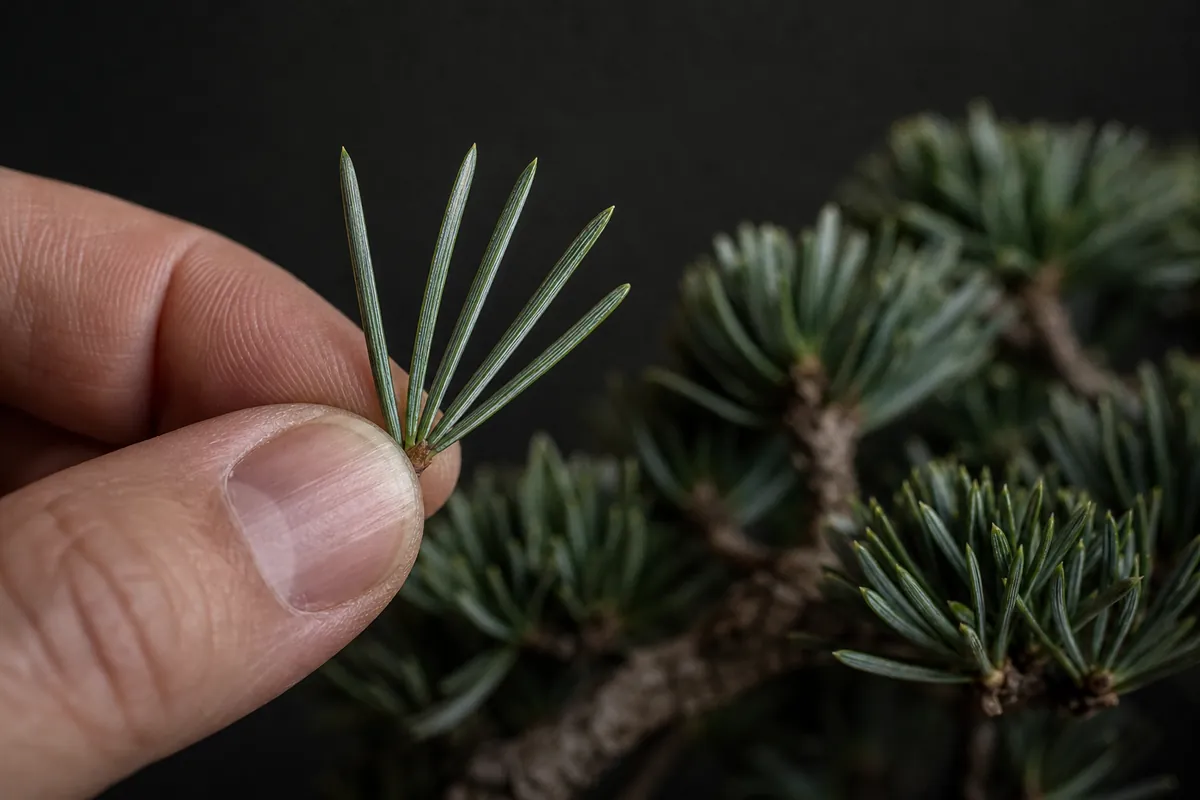
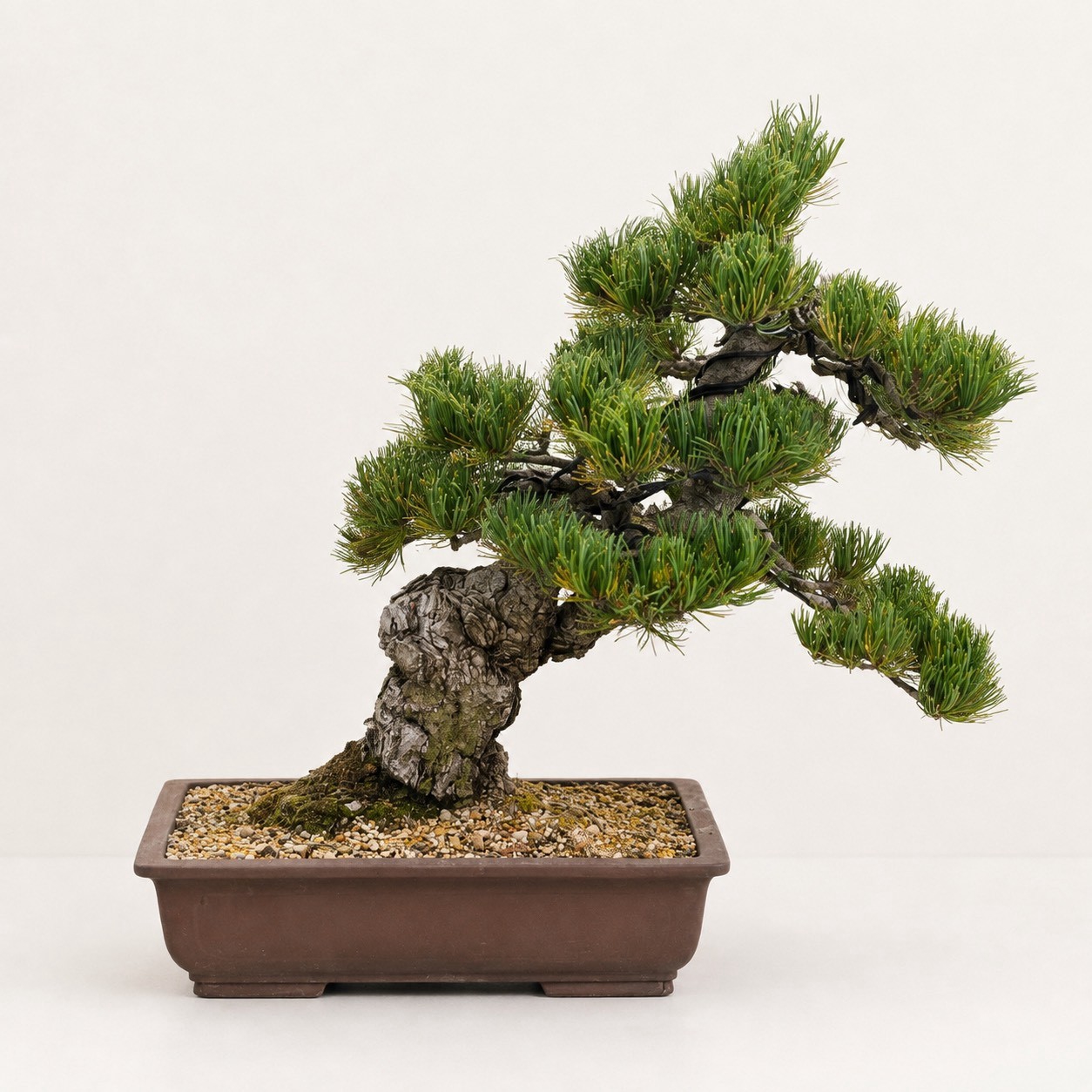
White pine grows slowly and rarely gets away from you, so a styled tree stays looking styled. The flip side is that once it loses vigor, recovery is slow. Its needles are also shorter and finer than black pine's; look at a single bundle, as in the photo below, and you can count the five needles. The mindset that suits this species is not "grow it strongly" but "keep it steady."
Three Ways It Differs From Black Pine
1. Pinch the Shoots, Don't Cut the Candles
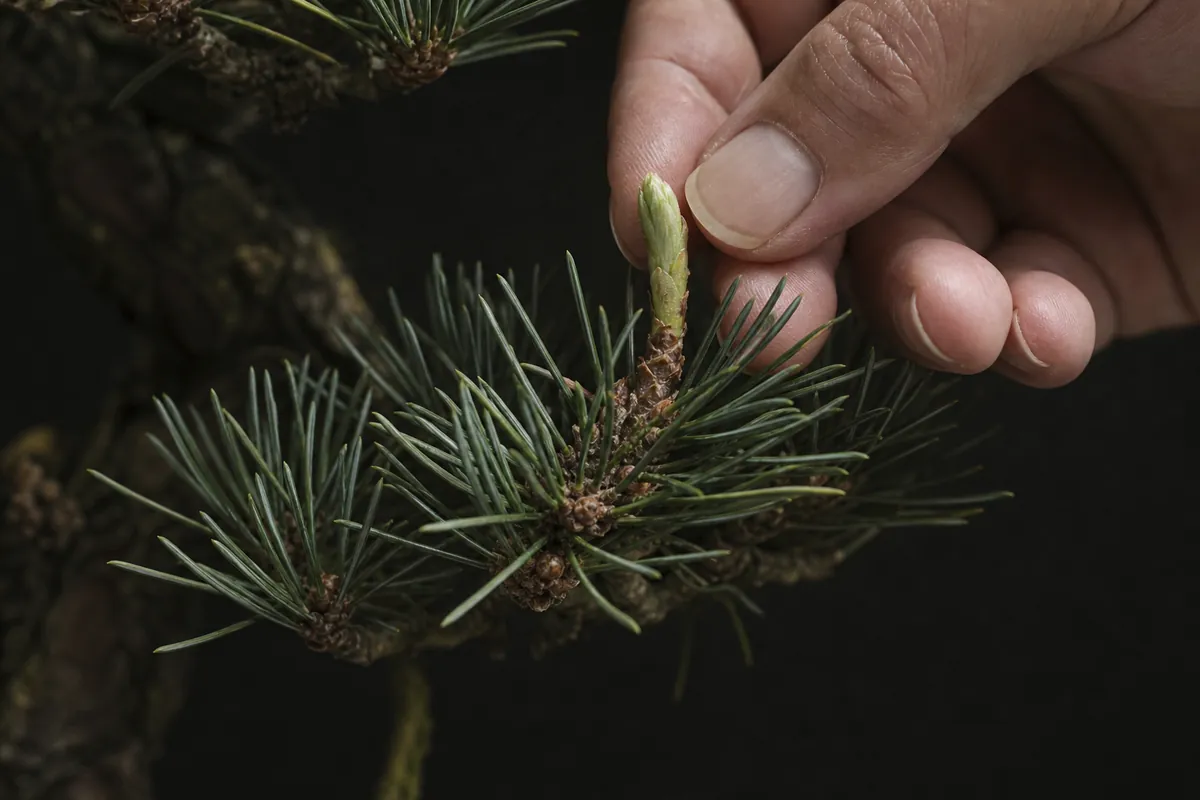
Black pines are candle cut in early summer to force a second flush. Because white pine grows far more slowly, that technique is generally not used. Instead, the new shoots are pinched with the fingertips in spring while they are still soft, which controls their length. Judge how much to remove by looking at overall balance, taking more from the strongest areas.
2. Water a Little More Sparingly
White pine dislikes constantly wet soil. The rule of soaking thoroughly once the surface dries still applies, but aim for a free-draining setup where the soil is never permanently damp. Lifting the pot to feel its weight is a useful way to calibrate.
3. Feed Lightly
Too much fertilizer lengthens the needles and costs you the fine foliage that makes this species beautiful. Small amounts in spring and autumn, adjusted to how the tree looks, are plenty. See choosing and applying bonsai fertilizer for detail.
Placement
As with other conifers, a sunny, well-ventilated outdoor position is the baseline. That said, long hours of harsh late-afternoon summer sun can scorch the foliage, so moving the tree into partial shade for the hottest weeks is a sensible precaution.
The Year at a Glance
- March to April: Repotting season, roughly every two to three years.
- April to May: Pinch new shoots while they are still soft.
- April to June: Light feeding to maintain vigor.
- July to August: No fertilizer. Watch for scorching sun and dry soil.
- September to October: Autumn feeding, plus a good window for wiring and light pruning.
- November to December: Clean up old needles and reassess the silhouette.
- January to February: Dormancy. Keep outdoors, protected from hard freezes.
A Shape That Lasts
A tree that holds its form is also a tree that looks good without annual restyling. For anyone who cannot devote long hours to their bonsai, that makes white pine an easy companion. Our Japanese White Pine (Wide-Spreading Form), for example, is an informal upright whose charm is its lateral spread, and keeping that spread is the goal of each year's care.
In Summary
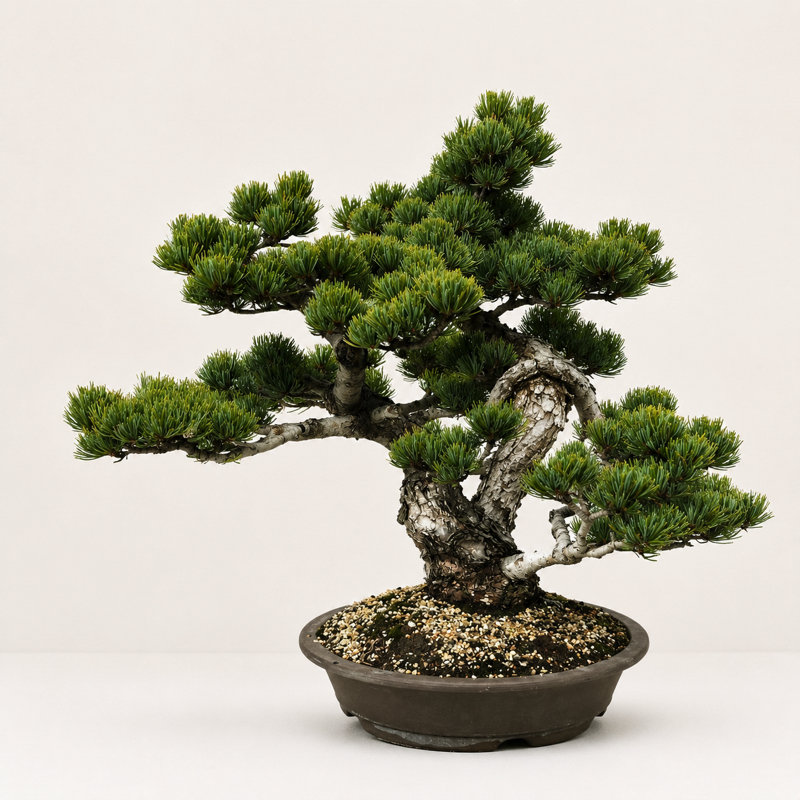
Modest water, modest fertilizer, and spring pinching are all it takes to preserve the elegance of a white pine. To compare approaches, read how to care for a Japanese black pine. Kagawa Bonsai carries white pines from thick-trunked specimens like the Japanese White Pine (Thick Trunk, Slanting Style) below to curved-trunk forms, all viewable in our bonsai collection.
Frequently Asked Questions
Can I keep a white pine indoors?
White pine is meant to live outdoors in a sunny, airy spot. Bringing it inside to display for a special occasion is fine, but as a guide, return it outside after a few days. Kept indoors for long, it gets too little light, the needles lengthen, and the tree loses vigor.
My tree's needles have grown long. How do I get them short again?
Long needles usually come from too much fertilizer or too little sun. Keep feeding to small amounts in spring and autumn and give the tree a sunny position. Pinch the new shoots next spring while they are soft, and the foliage will gradually tighten up again.
Can I send a white pine as a gift?
Yes. We can gift-wrap the tree and include a message card (we do not offer noshi wrapping or name engraving). Every tree is one of a kind, so the tree in the photos is the one that arrives.