


Published Updated
How to Care for a Japanese Black Pine Bonsai: The Yearly Cycle
For many people, the tree that comes to mind at the word "bonsai" is the Japanese black pine, with its thick trunk and deeply fissured bark. It is vigorous and forgiving, which makes it a popular first tree, but keeping that distinctive pine character takes an understanding of the yearly cycle and two techniques specific to the species. This guide walks through black pine care month by month.
Why the Black Pine Is Considered the King of Bonsai
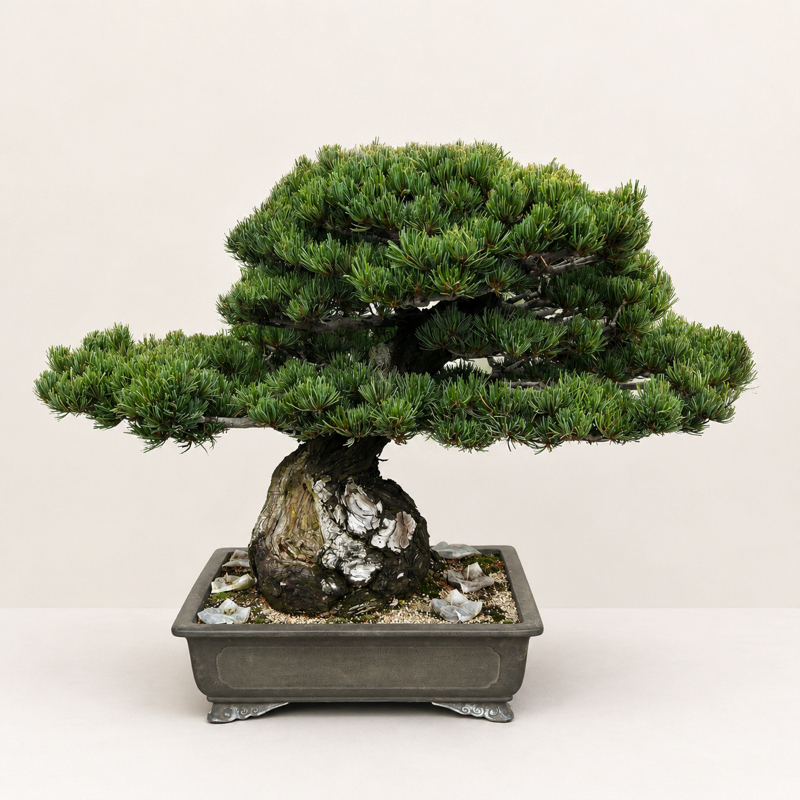
The appeal of black pine lies in bark that grows richer with age and surface roots that appear to grip the earth. It grows strongly and tolerates a certain amount of trial and error, rewarding the work you put in with visible results. It is also the species at the heart of the Kinashi and Kokubunji districts of Takamatsu, Kagawa, long known as a center of pine bonsai production. In our Japanese Black Pine (Exposed Root Style), the spread of roots at the base is the highlight.
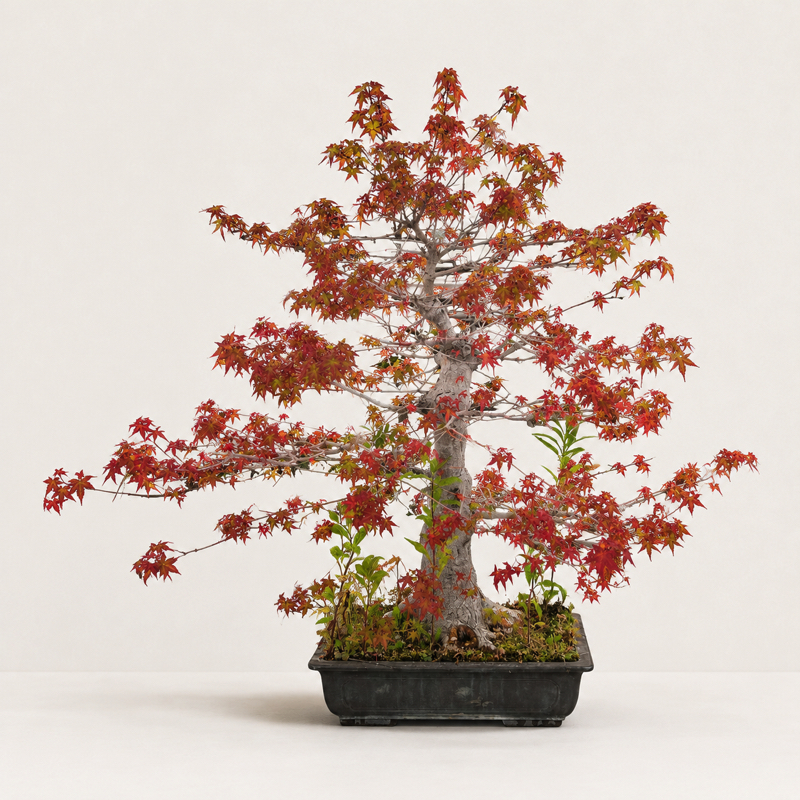
Placement: Outdoors, in Full Sun
Black pines are sun lovers. Without enough light, internodes stretch and needle color fades, so keep your tree outdoors in a bright, breezy spot year round. Raising the pot onto a bench or stand improves air circulation and helps prevent pests and disease. If you are hoping to keep a tree indoors, see Can bonsai live indoors? How to think about placement.
Watering: Dry Out, Then Soak Through
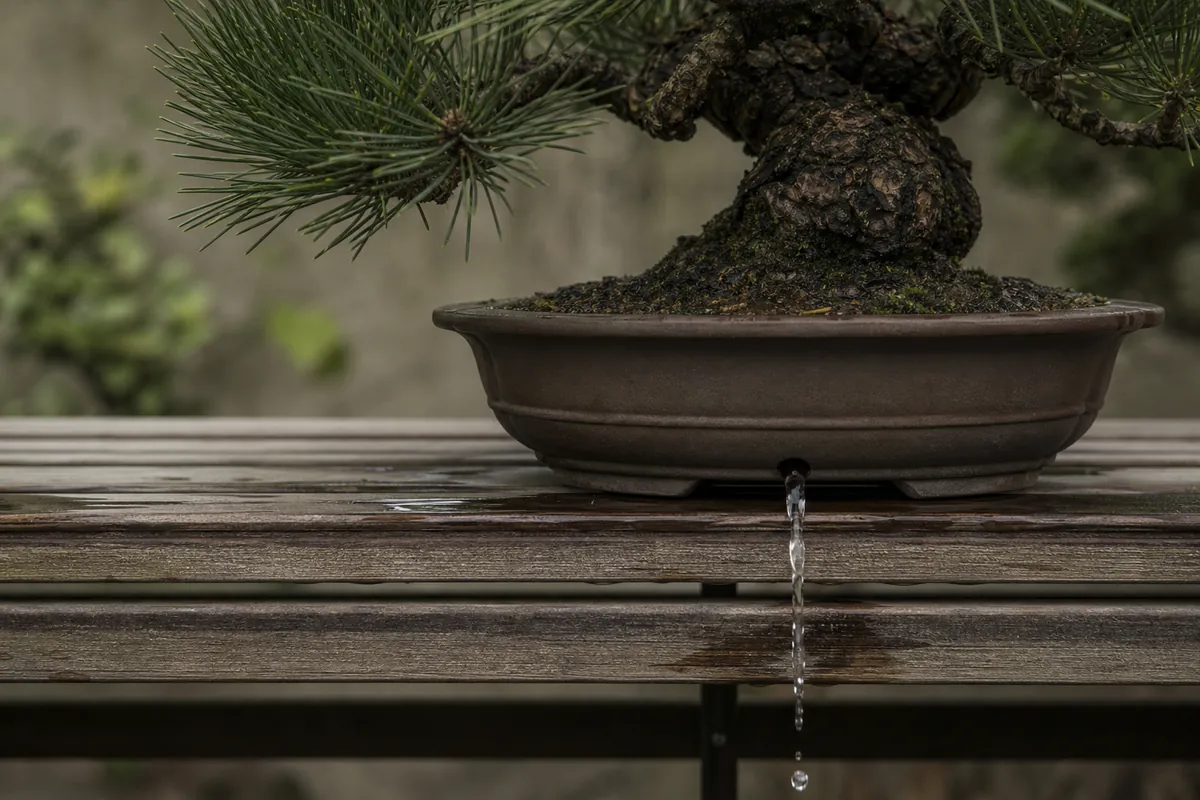
When the soil surface dries, water thoroughly until it runs from the drainage holes. Pines tolerate dry conditions reasonably well, but the small volume of soil in a bonsai pot means it can go from damp to bone dry quickly. For seasonal adjustments, see the basics of watering bonsai.
Two Techniques Unique to Black Pine
Candle Cutting (Mekiri)
In early summer, the spring shoots are cut back so that a second flush of buds pushes in their place. Those second shoots carry shorter needles and divide more finely, which gives the whole tree a tighter, more refined silhouette. The window is roughly June through the first part of July, and this single operation does much of the work of shaping a black pine.
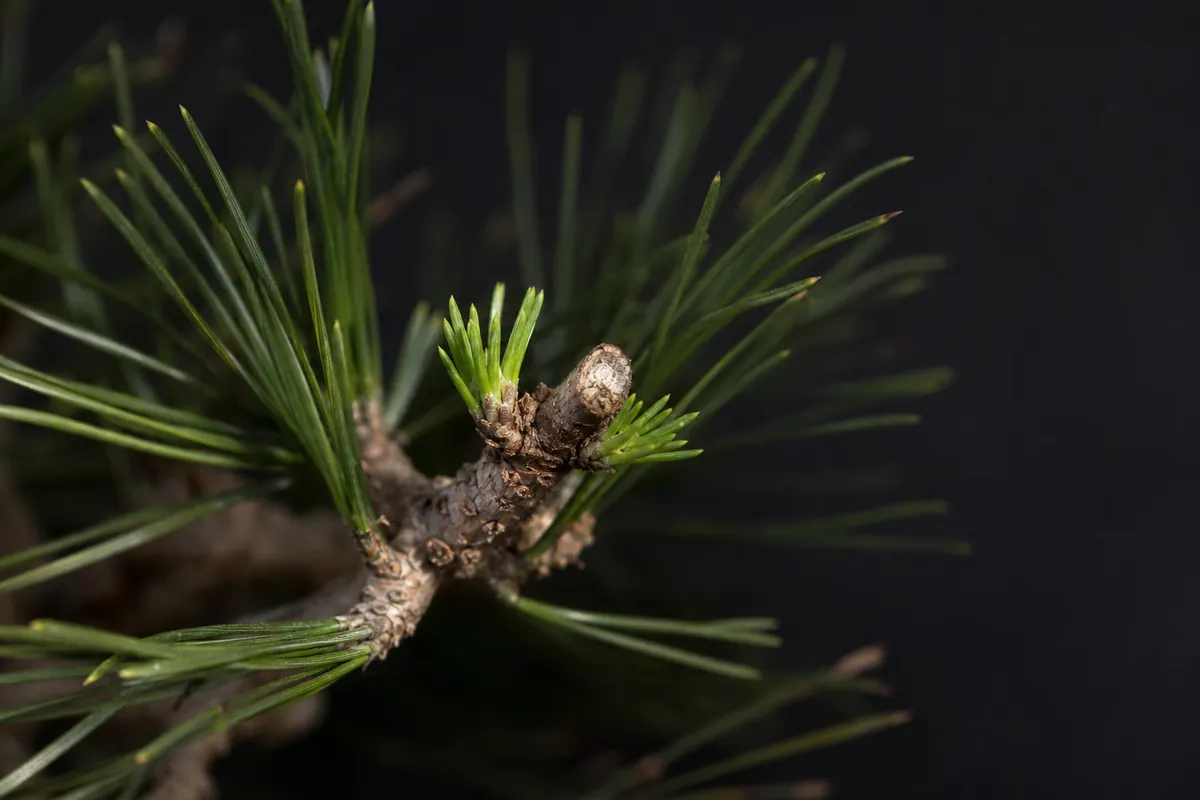
Candle cutting does draw on the tree's reserves, though. If your pine was repotted recently or is lacking vigor, it is safer to skip a year. On a vigorous tree, repeating it each year brings the needles shorter and more even. Our Japanese Black Pine (Candle-Pruned Once) has already been through one round of candle cutting.
Old Needle Removal (Kobatori)
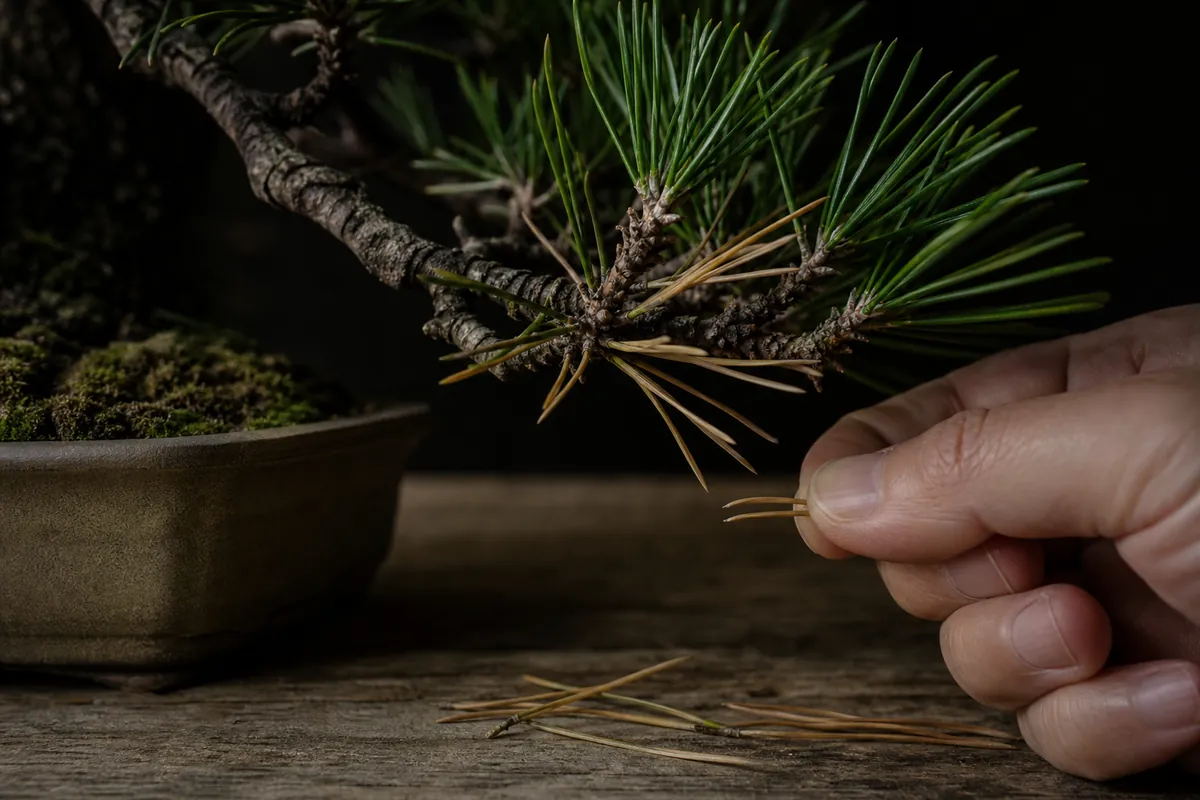
In autumn, the previous year's needles are pulled off by hand. Thinning the foliage lets light reach the inner branches and improves air movement, which encourages finer buds to develop. Rather than stripping everything at once, work gradually and judge by how strongly the tree is growing.
Fertilize Lightly, in Spring and Autumn
Feed mainly in spring (April to June) and autumn (September to October), placing solid organic fertilizer near the rim of the pot. Skip the peak of summer heat and the depths of winter. Overfeeding lengthens the needles and undoes the compact look that makes a pine a pine, so restraint is the guiding principle here. See choosing and applying bonsai fertilizer for more.
The Year at a Glance
- March to April: Best time to repot, just before buds begin to move.
- April to June: Shoots extend. Feed to build vigor.
- June to early July: Candle cutting.
- August: Peak heat. No fertilizer, and watch closely for dryness.
- September to October: Autumn feeding. A good window for wiring and pruning.
- October to November: Old needle removal.
- December to February: Dormancy. Water sparingly and protect against freezing.
Every one of these operations assumes the tree has energy to spare. Spending a year restoring vigor before styling again will usually get you to a beautiful tree faster than pushing a weak one.
In Summary
Get light and water right, then repeat candle cutting and needle removal each year, and a black pine will steadily gain character. For winter care, see bonsai winter care; for the vocabulary of tree forms, see the styles of bonsai. Kagawa Bonsai offers one-of-a-kind black pines trained by local growers, which you can view in our bonsai collection.
Frequently Asked Questions
What if I miss the window for candle cutting?
If you cut after mid-July, the second flush has less time to grow and the branch tips may not fill out before autumn. Rather than forcing it, tidy the tips with old needle removal in autumn and cut the following year between June and early July (timing varies with region and vigor, so treat this as a guide). Skipping a year only leaves the needles a little longer; it does not weaken the tree.
Can a complete beginner grow a black pine?
Black pine is tough and vigorous, and it is often chosen as a first bonsai. Start by keeping it outdoors in full sun and watering thoroughly whenever the surface dries. There is no hurry to candle cut; watching the tree through its first year with you is a fine way to begin.
How soon will a black pine I order be shipped?
We ship within five business days of confirming payment, as a rule. Delivery is within Japan only. Every tree we sell is one of a kind; there is never a second identical tree.


