

Published Updated
Bonsai Styles Explained: Informal Upright, Cascade, Literati and More
Browse bonsai for sale and you will keep meeting terms like informal upright, cascade, and literati. These describe the style, meaning the shape and attitude of the trunk. Once the vocabulary makes sense, you can read a tree's strengths straight from a photograph, and choosing becomes far more interesting.
Style Is Defined by the Trunk
Styles are classified by how the trunk rises and where it travels. It helps to think of each one as a landscape captured in a pot: a windswept outcrop, the face of a cliff, a tree reaching for light inside a dense wood.
The Main Styles
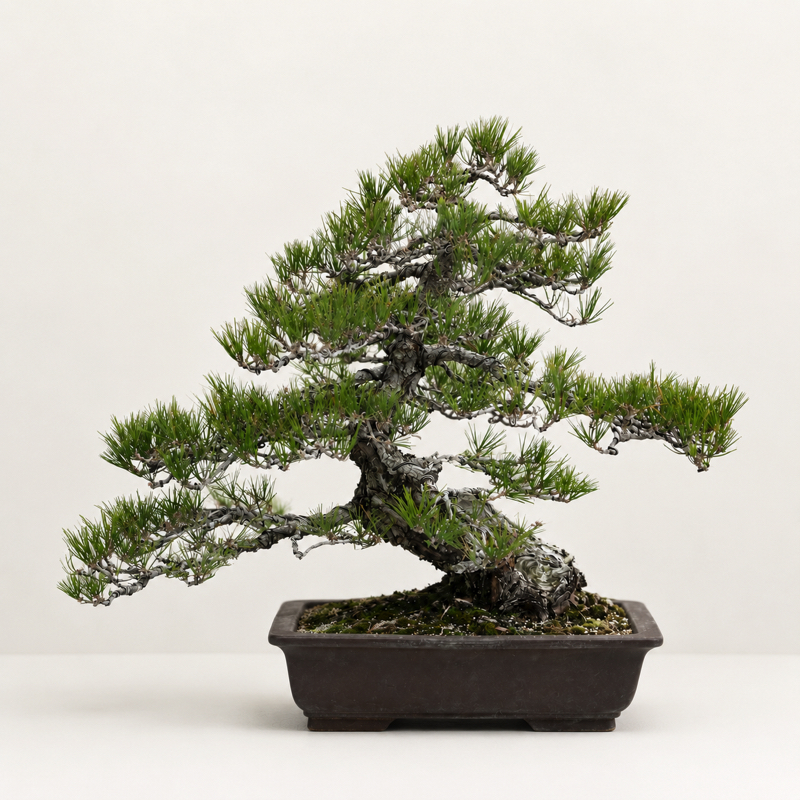
Informal Upright (Moyogi)
The trunk rises with gentle curves, and this is by far the most common style in bonsai. The measure of a good one is harmony between the movement of the trunk and the placement of the branches; seen from the front, the finest examples curve alternately toward and away from the viewer. Our Japanese Black Pine (Informal Upright) is one example.
Formal Upright (Chokkan)
The trunk rises straight toward the sky. There is nowhere to hide flaws, so even surface roots and well-placed branches carry the whole tree. Commanding and formal, it appeals to those who want dignity above all.
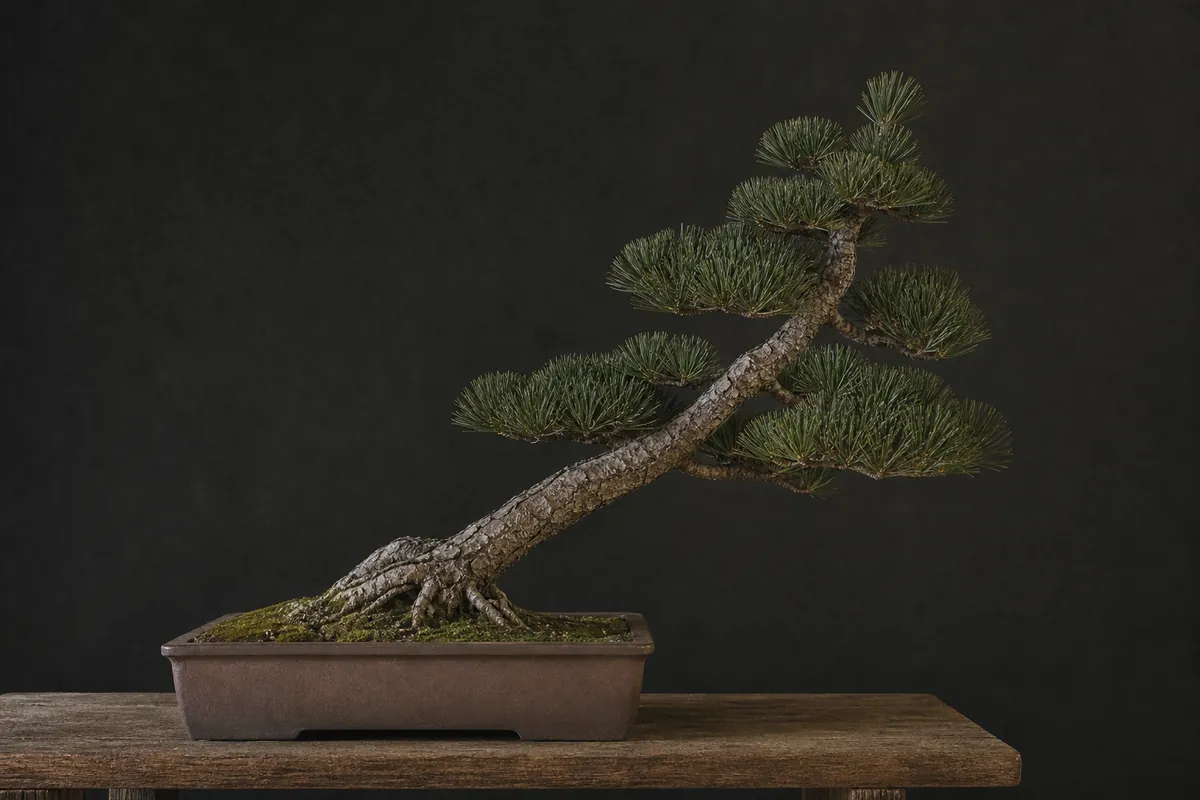
Slanting (Shakan)
The trunk leans decisively to one side, evoking a tree that has stood in prevailing wind for years. Branches extending on the leaning side bring the composition back into balance.
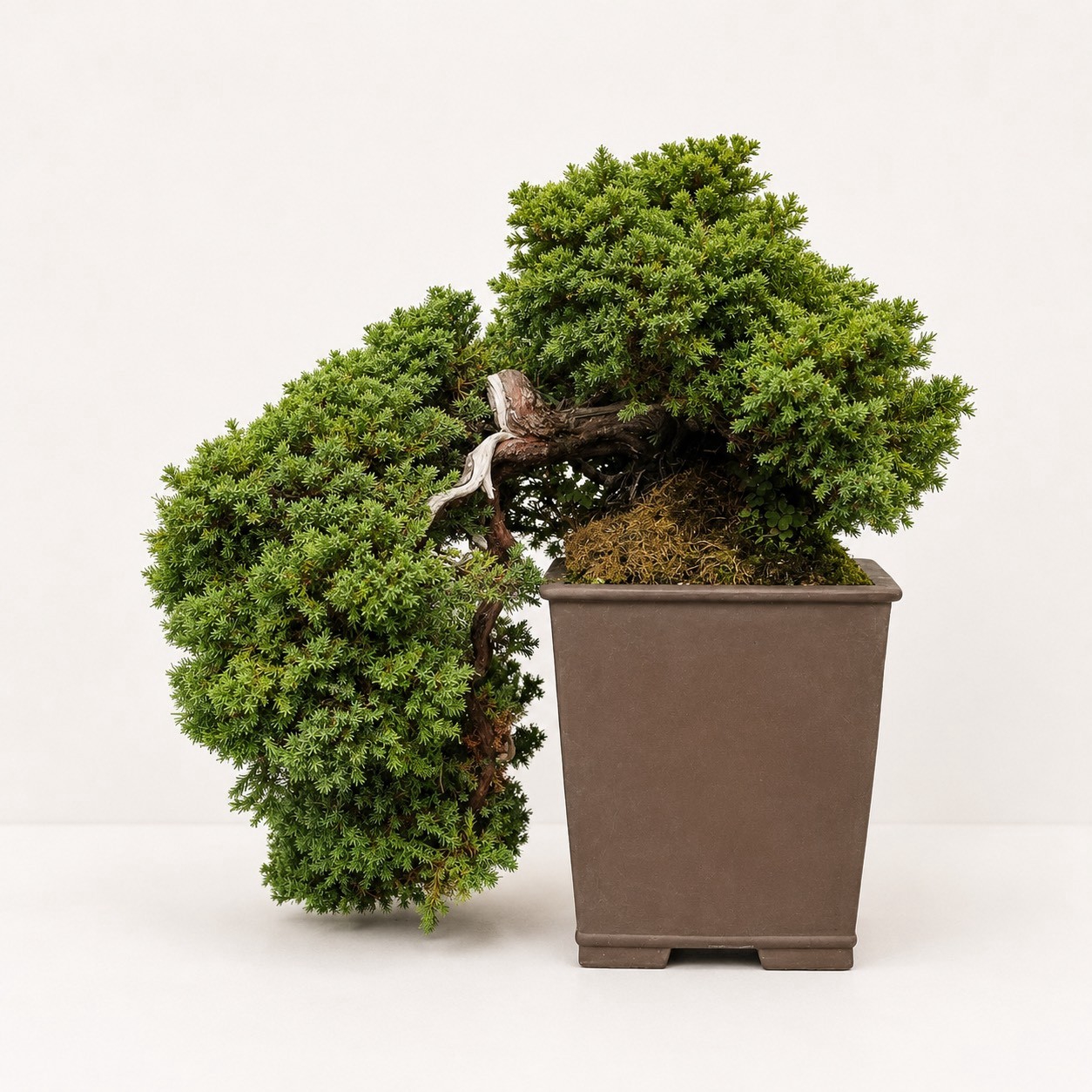
Cascade (Kengai)
Trunk and branches fall below the rim of the pot, portraying a tree growing out of a cliff face and reaching downward. Usually planted in a deeper pot, a cascade has real presence when displayed. Our Sonare Juniper (Cascade Style) is trained in this style.
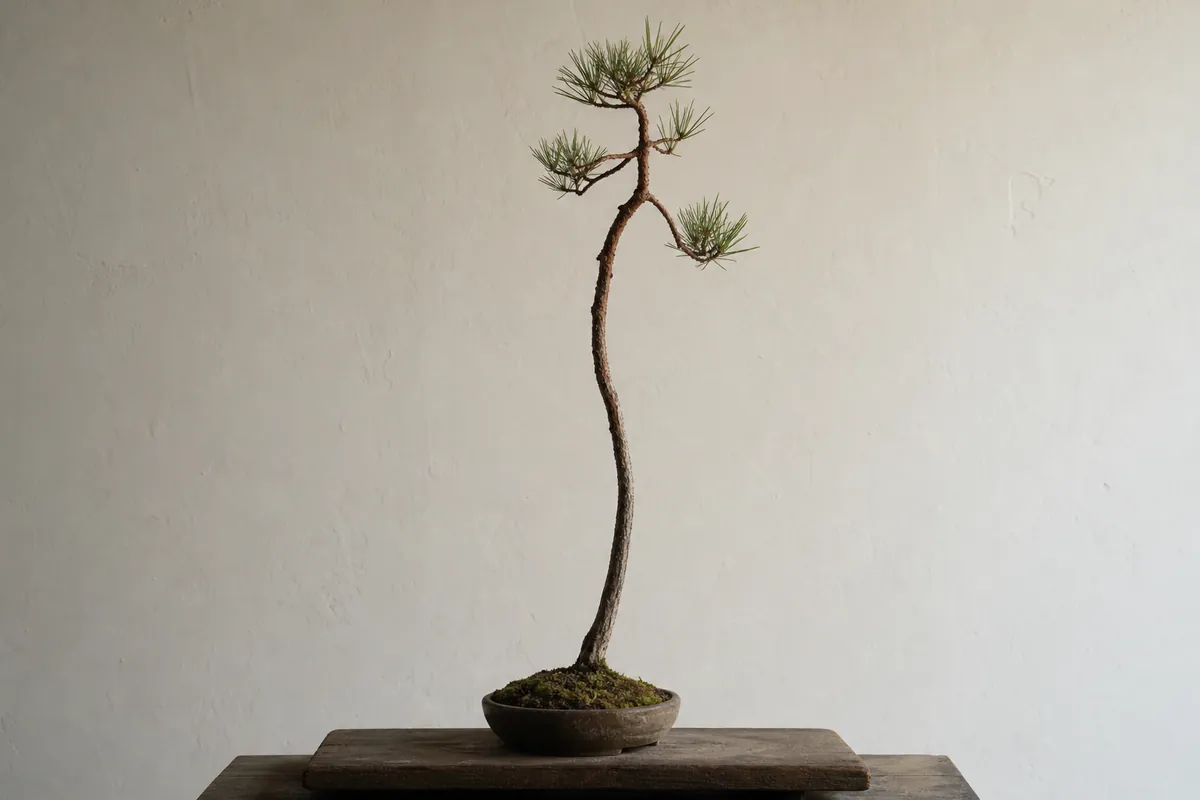
Literati (Bunjingi)
A slender, tall trunk carrying very few branches. Stripped of ornament, it is a style about restraint and the beauty of empty space.
Multi-Trunk (Kabudachi)
Several trunks rise from a single root base, giving one tree the spread of a small grove and a notably softer feel.
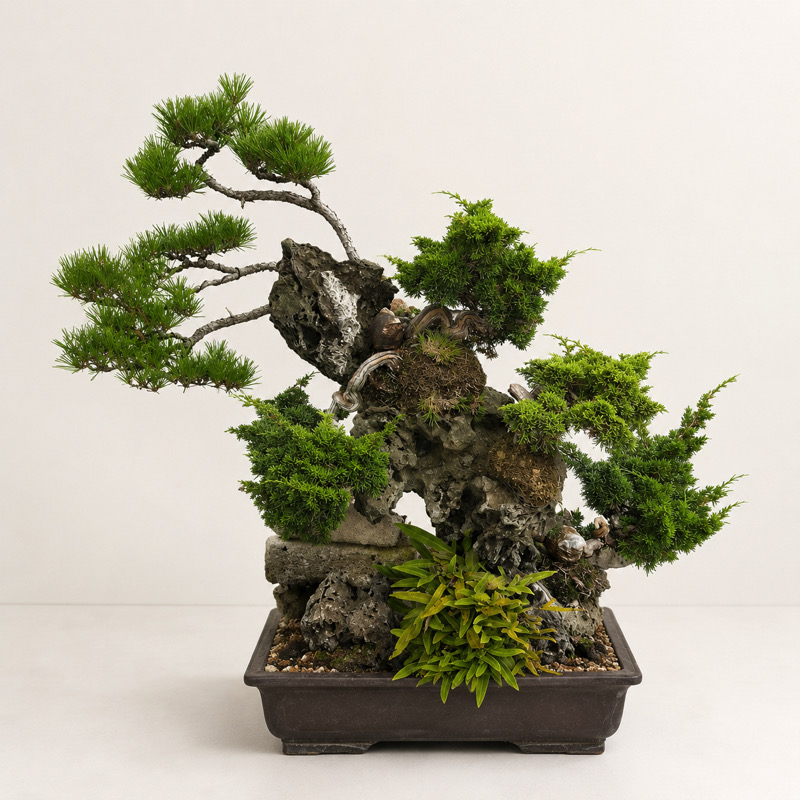
Rock Planting (Ishizuki)
Roots are trained over and around a stone, recreating a tree anchored in rocky ground. The pairing of tree and stone becomes the subject in itself.
Three Things to Look at in Any Style
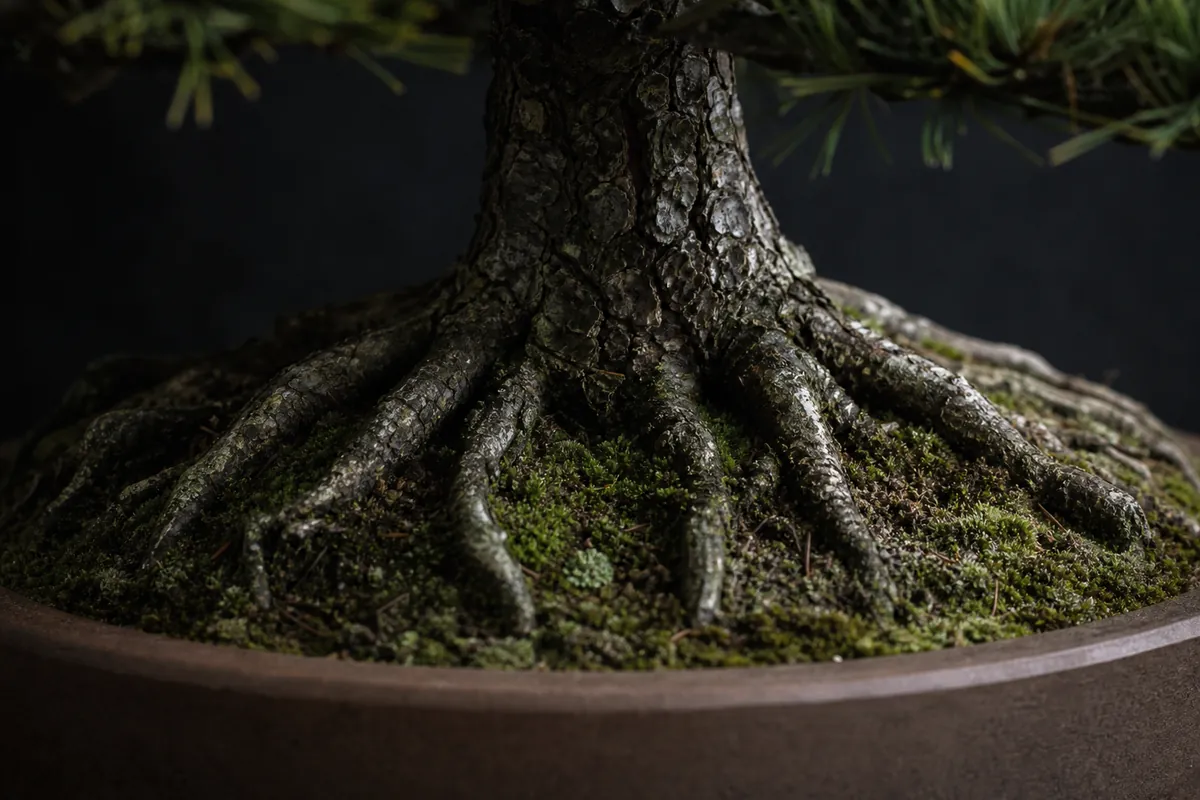
- Surface roots. Do they spread to either side and look as though the tree is gripping the ground?
- Trunk movement. Follow the line from the base to the apex and check that it flows naturally.
- The front. Every tree has one angle from which it looks best. Notice which angle a photograph was taken from.
Which Style Should You Choose?
Honestly, the right answer is whichever one stops you when you see it. If you want a practical criterion beyond that, consider where the tree will live. Informal and formal uprights sit well lined up on a bench; cascade and literati trees make the most of height on a display stand in an entryway or alcove.
In Summary
Learning the names of the styles gives you a language for looking at trees. For finding the front when you display a tree, see displaying and appreciating bonsai; for choosing in general, our beginner's guide. To compare styles side by side, browse our bonsai collection.
Frequently Asked Questions
What does it mean when a product name says "-style" or "-like"?
It usually means the tree does not fit the textbook form exactly but carries the feel of that style. Style categories have no strict rules, so judge by the trunk line and root spread in the photos rather than by the name alone.
Which style suits a first bonsai?
What matters most is whether you like it. Beyond that, informal upright and formal upright trees fit easily on a shelf or a display stand. A cascade looks best on a tall stand and a literati tree needs open space around it, so if you already know where it will go, choose to suit that spot.
Can I buy another tree exactly like one I see?
Each bonsai is one of a kind, so no two trees are the same. Even with the same style and species, every trunk bends and branches differently. To find something similar, browse the bonsai collection using the style names as a guide.