

Published Updated
How to Care for a Satsuki Azalea Bonsai: Pruning for Flowers Every Year
The satsuki azalea takes its name from satsuki, the old word for the fifth month, and flowers from May into June. Native to Japan, it has been selected and refined since the Edo period into a great many cultivars with distinct flower colors and forms. As the leading flowering bonsai, it asks for a rather different approach than pines and junipers.
What Makes Satsuki Special
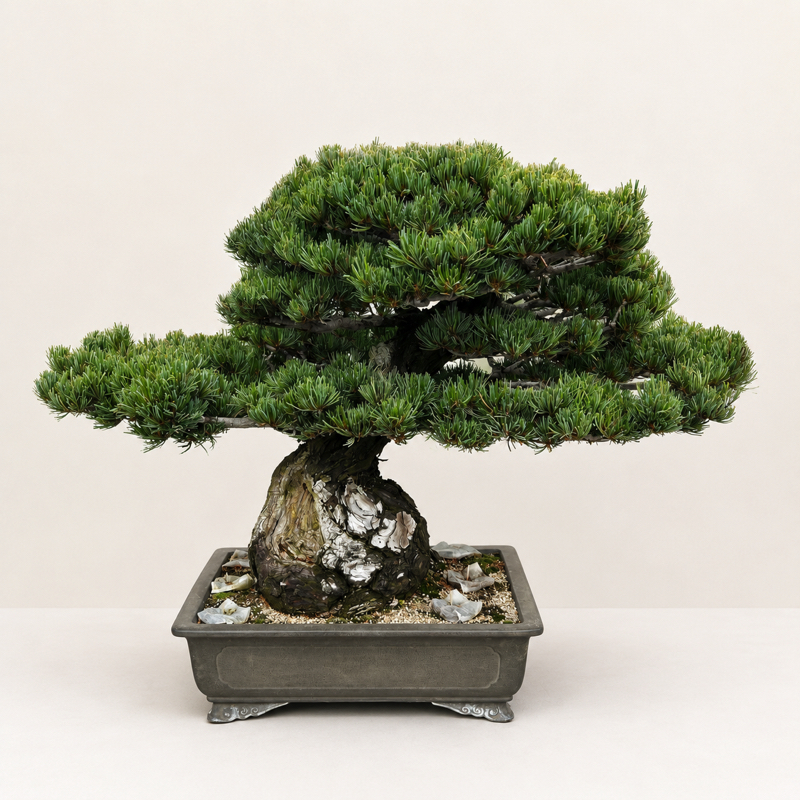
Satsuki thickens in the trunk readily, taking on the presence of an old tree as the years pass. In other words, one pot gives you both the drama of the flowers and the character of aged wood. Some cultivars also display sakiwake, where blooms of different colors and patterns appear on the same tree, so no two years look quite the same. Some are grown as multi-trunk clumps with several trunks rising from the base, like our Satsuki Azalea ‘Shinzan’ (Multi-Trunk, Spreading Form).
The Key to Annual Flowering: Prune Right After Blooming
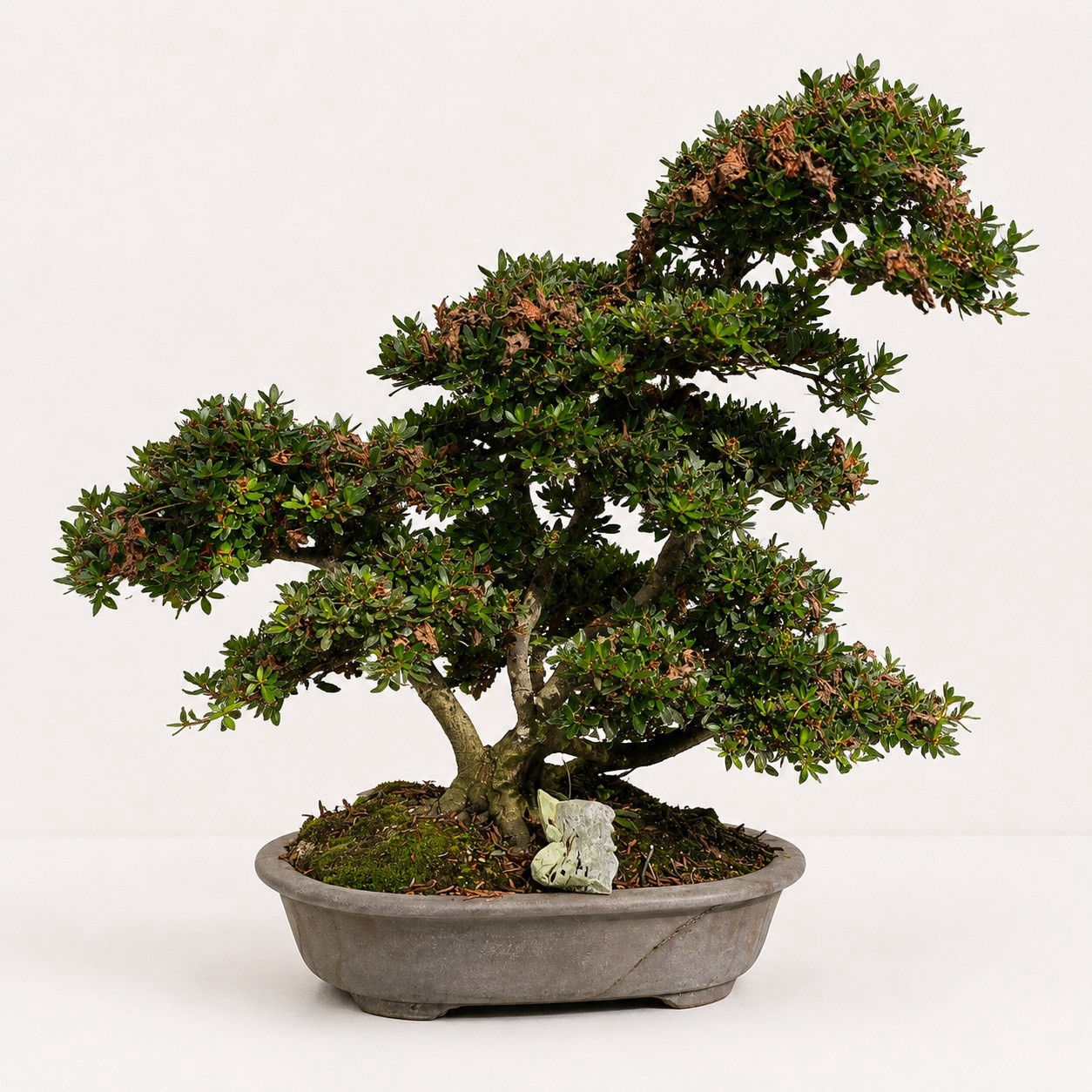
Timing is everything with satsuki. The tree sets next year's flower buds over the summer, once flowering has finished. That makes it a firm rule to complete all pruning between the end of flowering and the end of June, or into early July in some regions. When pruning, cut extended shoots back to just above a cluster of leaves.
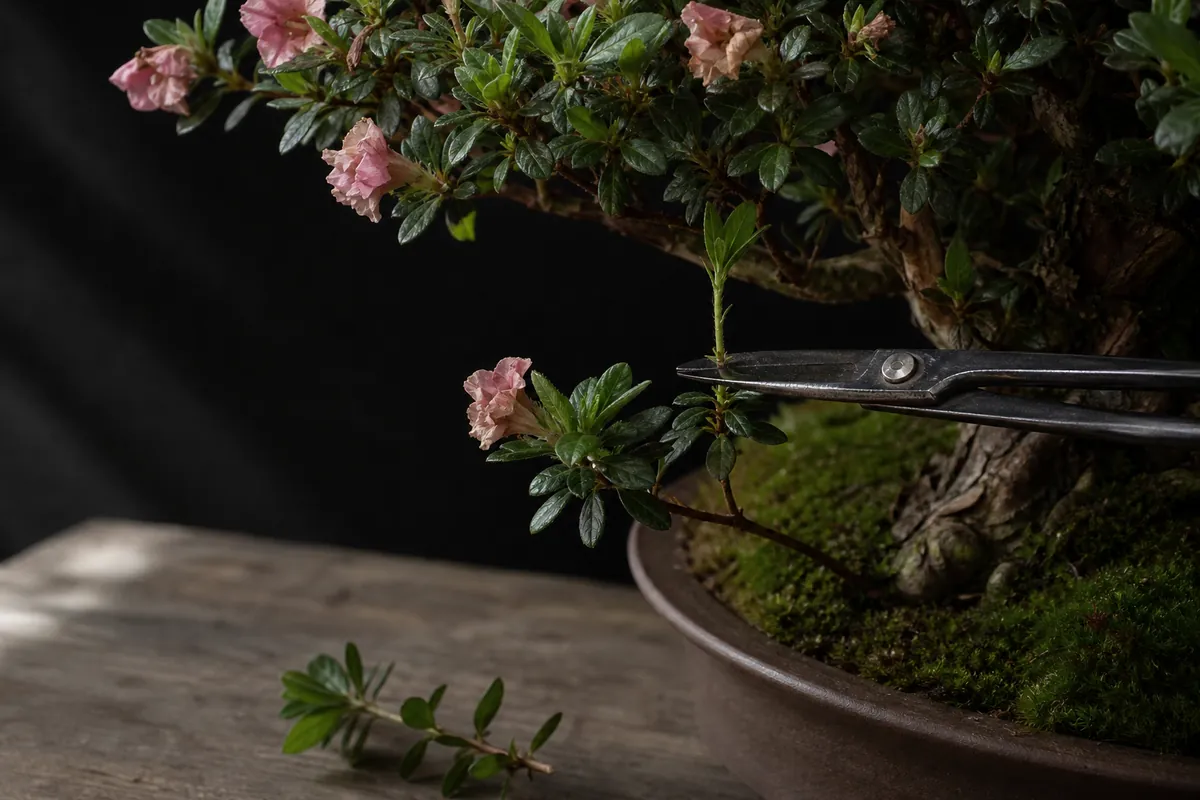
Cut branches after that window and you remove the flower buds that were already forming, which is exactly how a tree ends up not flowering the following spring. "I'll tidy the shape up in autumn" is a decision to avoid with this species.
Deadhead the Spent Flowers
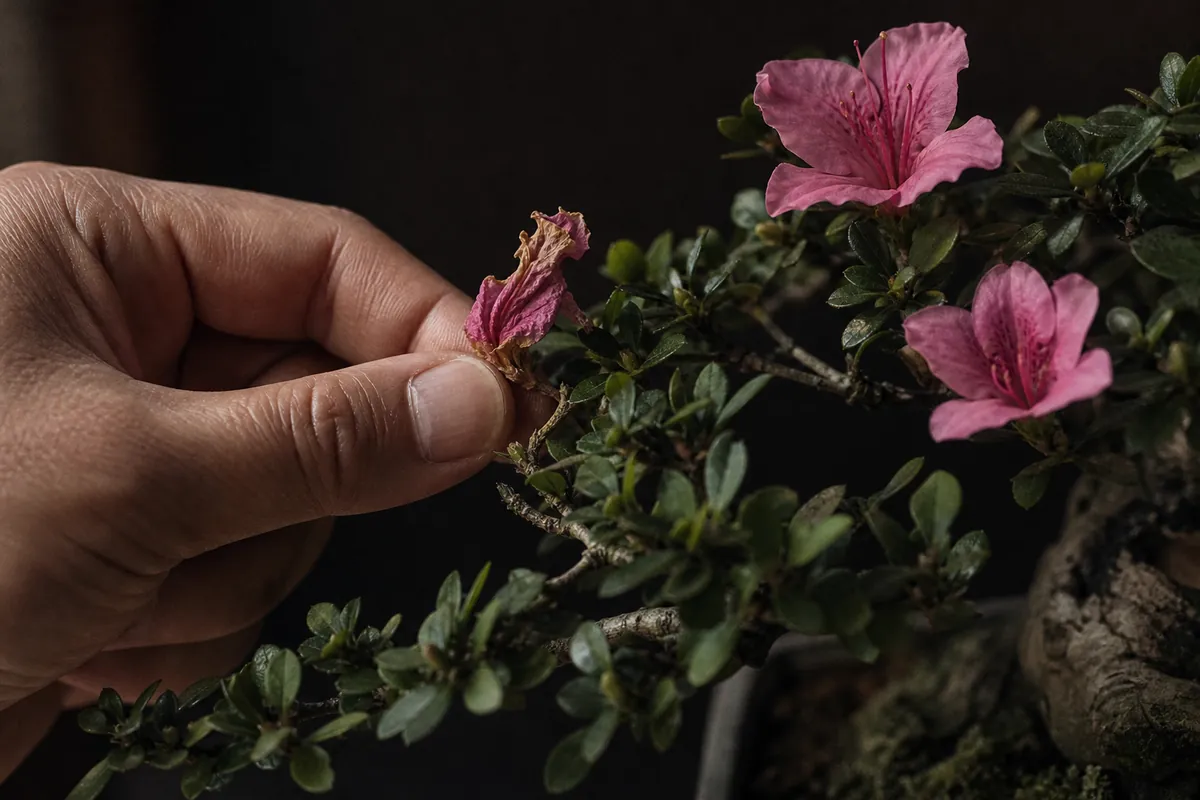
Remove faded blooms promptly. Left in place, they divert the tree's energy into setting seed, at the expense of next year's display. Pinch them off at the base with a gentle twist.
An Acid-Loving Species: Kanuma Soil
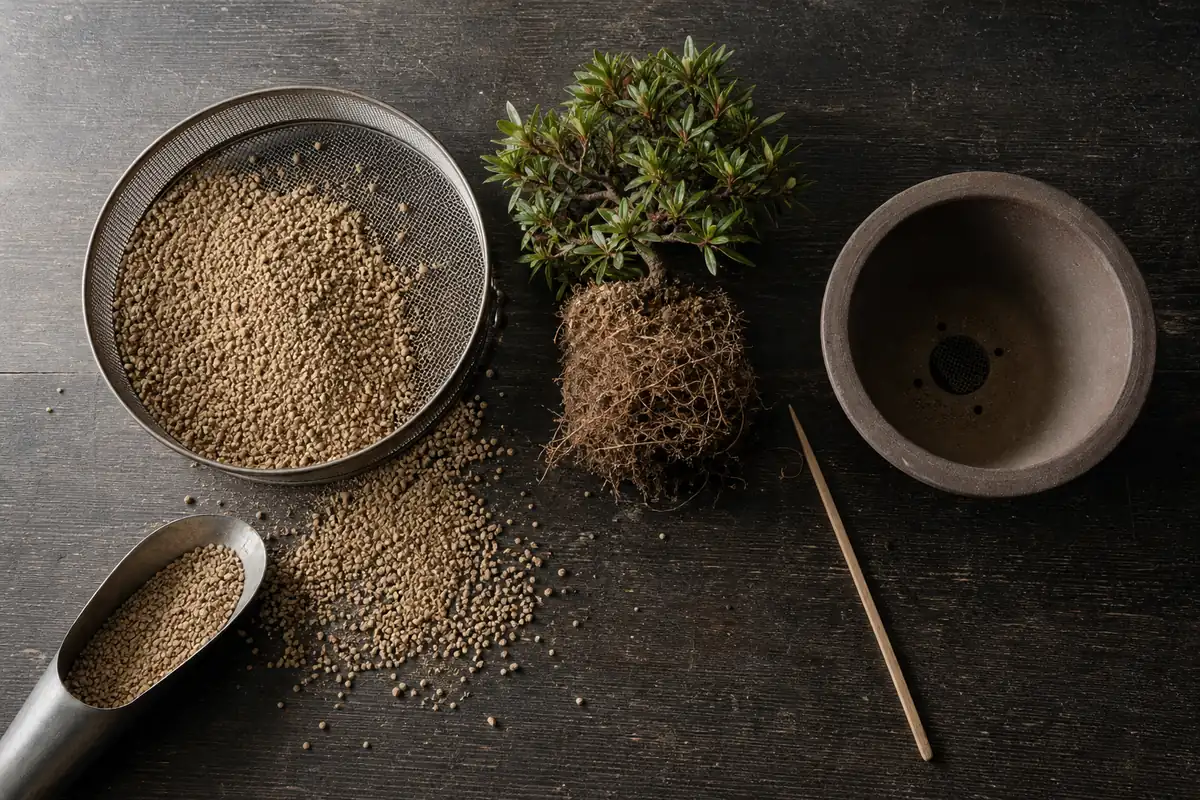
Satsuki prefers acidic soil, which is why kanuma, a volcanic soil, is the standard medium for repotting. It strikes a good balance between drainage and moisture retention and suits satsuki roots well. Repotting is usually done between the end of flowering and the rainy season. For general technique, see repotting and choosing a pot.
Watering and Feeding
Satsuki is less tolerant of dryness than conifers and is especially thirsty while in flower. Once the soil surface dries, water thoroughly until it runs from the drainage holes. Feed mainly just after flowering, as a thank-you feed, and again in autumn, pausing through the peak of summer. See choosing and applying bonsai fertilizer for detail.
The Year at a Glance
- May to June: Flowering. Deadhead as blooms fade.
- End of flowering to late June: Prune and repot. The most important weeks of the year.
- July to August: Flower buds are forming. Do not cut, and watch for dryness.
- September to October: Autumn feeding.
- November to February: Dormancy. Shelter from hard frost and drying winds.
The satsuki year begins the moment the flowers finish. Get pruning and repotting done then, and all that is left is watering while you wait for next spring.
In Summary
Honor that one rule about pruning after flowering, and satsuki will reward you every year. To see how differently conifers are handled, compare how to care for a Japanese black pine. Kagawa Bonsai lists satsuki with named cultivars in our bonsai collection.
Frequently Asked Questions
Branches have grown out of shape by autumn. Can I cut them?
By autumn, next year's flower buds have already formed at the branch tips, so any cut removes flowers. Leave shaping until after flowering and limit autumn work to removing dead twigs. If you do cut a branch that really bothers you, accept that it will flower less.
My satsuki did not flower this year. What went wrong?
The usual causes are pruning too late and removing the buds, leaving spent flowers so the tree spends energy on seed, and letting it dry out in summer while buds are forming. Next year, finish pruning right after flowering and keep up with summer watering.
Can I repot in kanuma soil alone?
Yes, kanuma on its own is a common choice for satsuki. It balances drainage and moisture retention well and suits the acid-loving roots. The grains break down over time and drainage suffers, so repot roughly every two to three years.