


Published Updated
Choosing and Applying Bonsai Fertilizer: Timing, Amount, Placement
Fertilizer for bonsai is not about pushing growth the way you would in a vegetable bed. In a small volume of soil, the goal is to supply only what the tree needs to stay healthy and to build fine branching. This guide covers the types, the timing, and how to avoid the most common mistake, which is feeding too much.
Why Bonsai Feeding Is Different
A bonsai pot holds very little soil, so nutrients are depleted quickly and need topping up. At the same time, overfeeding sends out long, coarse shoots that undo years of careful shaping. The target is the minimum needed for good health, not maximum growth.
Types of Fertilizer
Solid Organic Fertilizer
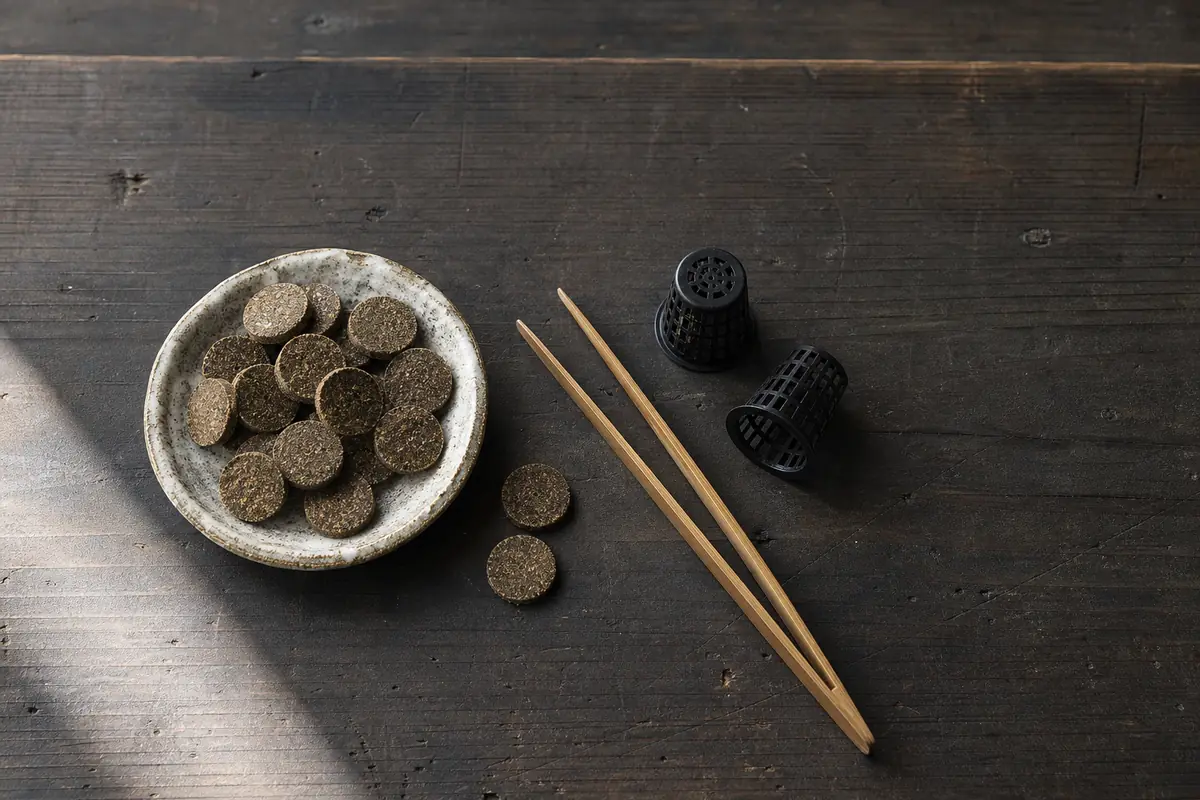
Usually pressed cakes or pellets of rapeseed meal and similar ingredients, placed on the soil surface to break down slowly. It acts gently and rarely causes root burn, which makes it the standard choice for bonsai (pictured below).
Liquid Fertilizer
Diluted in water and fast acting, useful when you want to restore vigor promptly. Because a stronger mix than directed will damage roots, always follow the stated dilution.
Chemical Fertilizer
Concentrated and effective in small doses, but harder to judge. Until you have some experience, solid organic feed is the more forgiving place to start.
The Two Feeding Windows
- Spring (April to June): Support the season's new growth.
- Autumn (September to October): Help the tree recover from summer and store energy for next spring.
- Midsummer (July to August): Stop feeding. The tree is under heat stress.
- Deep winter (December to February): Stop feeding. Dormant roots take up very little.
Where to Place Solid Fertilizer
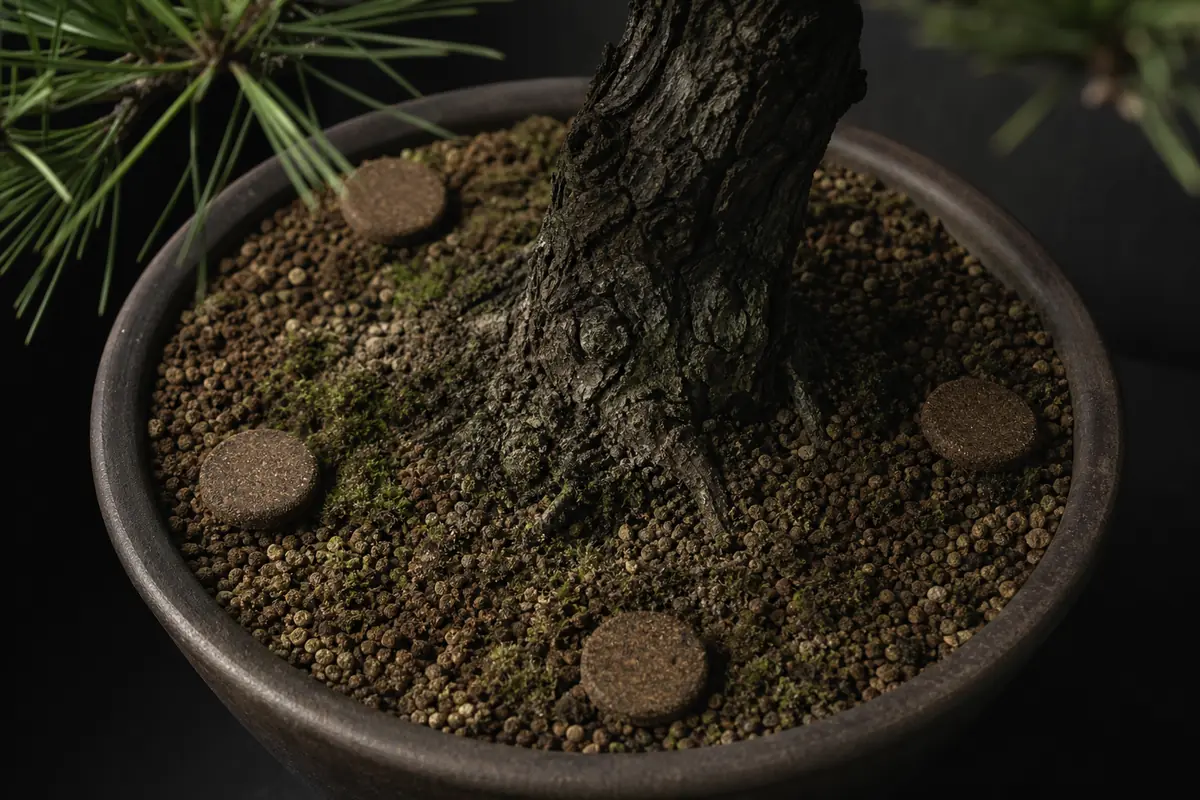
Set the pellets near the rim of the pot, spaced apart, rather than piled around the base of the trunk. Concentrating fertilizer at the trunk can burn the roots directly beneath it. Start with one or two pieces in a small pot, a few in a larger one, and adjust based on how the tree responds.
Signs You Are Overfeeding
- Shoots suddenly extending long and leggy
- Leaves growing larger, with an unnaturally dark color
- Needle or leaf tips browning off
If you see these, remove the fertilizer and let the tree settle with normal watering. With conifers in particular, overfeeding is what costs a tree its tight, characteristic pine silhouette.
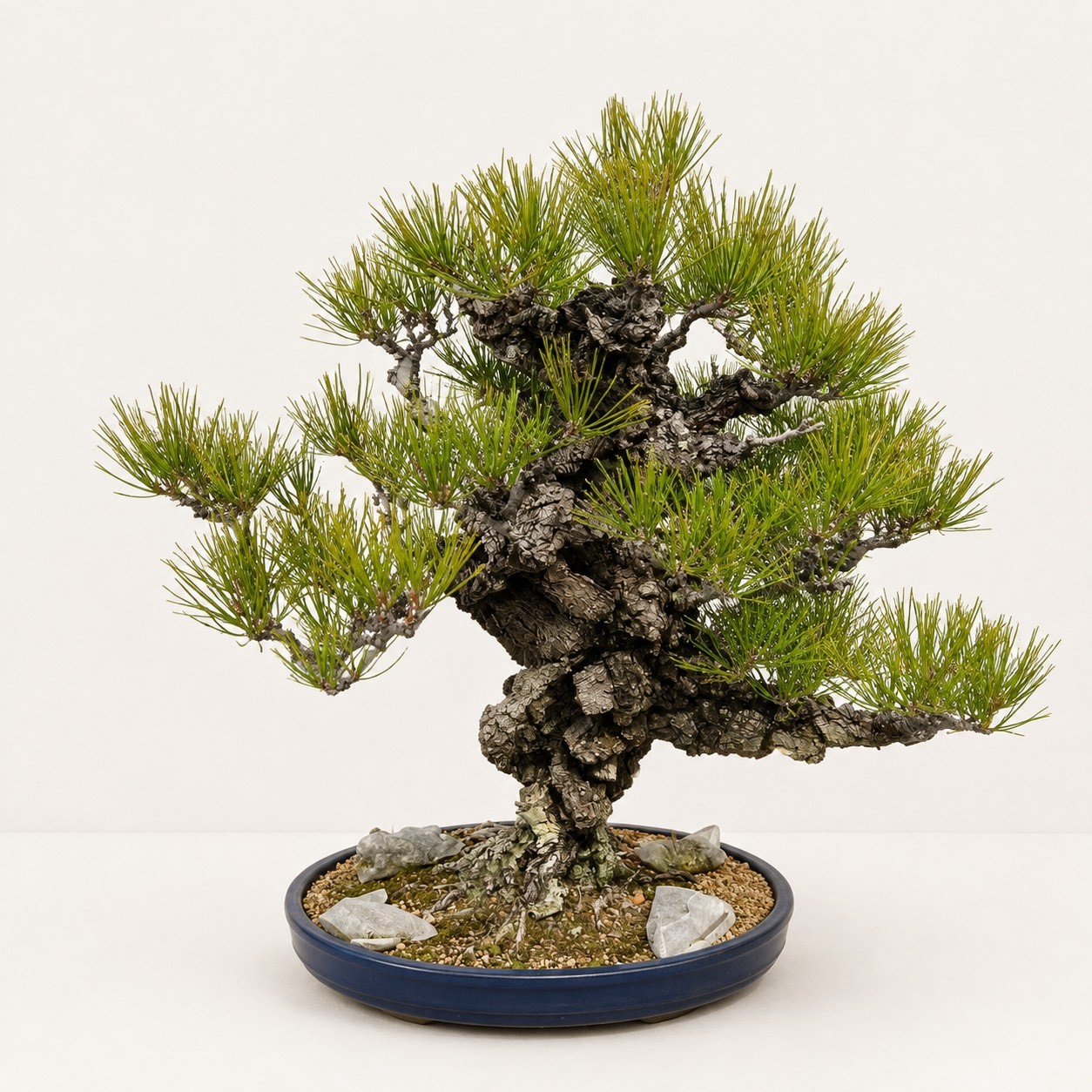
Take a pine like our Nishiki pine (rugged bark, thick trunk): keeping the feed light keeps the needles short and tidy, which lets the thick, rugged-barked trunk stand out.
When Not to Feed
Hold off for one to two months after repotting, until cut roots have recovered. And if a tree looks unwell, with poor color or no new buds, resist the urge to fertilize it back to health. Review placement and watering first. Why bonsai die, and what you can do about it covers how to narrow down the cause.
In Summary
Feed in spring and autumn, feed lightly, and keep it near the rim. Those three habits prevent most fertilizer problems. Read alongside the basics of watering and repotting and choosing a pot for the full picture of a year's care.
Frequently Asked Questions
Should I replace solid fertilizer once it has broken down?
About a month after placing it is the usual time to replace it. Even if a cake has crumbled, remove the old one when the time comes and set a fresh one near the rim. Do this within the spring and autumn feeding windows, and do not put new cakes down in midsummer or deep winter.
What if mold grows on the fertilizer or it attracts insects?
Organic fertilizer cakes can grow mold in damp weather. White mold on its own is common, but if it bothers you, remove the cake and replace it with a fresh one. If insects are a problem, covering the cakes with small cage caps keeps them from being scattered.
Should I fertilize a bonsai as soon as I buy it?
A newly arrived tree first needs to settle into its new spot and watering routine. Watch it for a few weeks, and if new growth and leaf color look steady, start feeding lightly within the spring or autumn window. If the tree has just been repotted, hold off for one to two months.


