

Published Updated
Bonsai Pests and Diseases: A Complete Guide
Catching pests and disease early is the best way to keep a bonsai healthy. Problems caught early are often easy to fix, while problems left unnoticed can seriously weaken the entire tree. This guide covers the pests and diseases most commonly seen on bonsai, along with how to treat each one.
Early Detection Matters Most
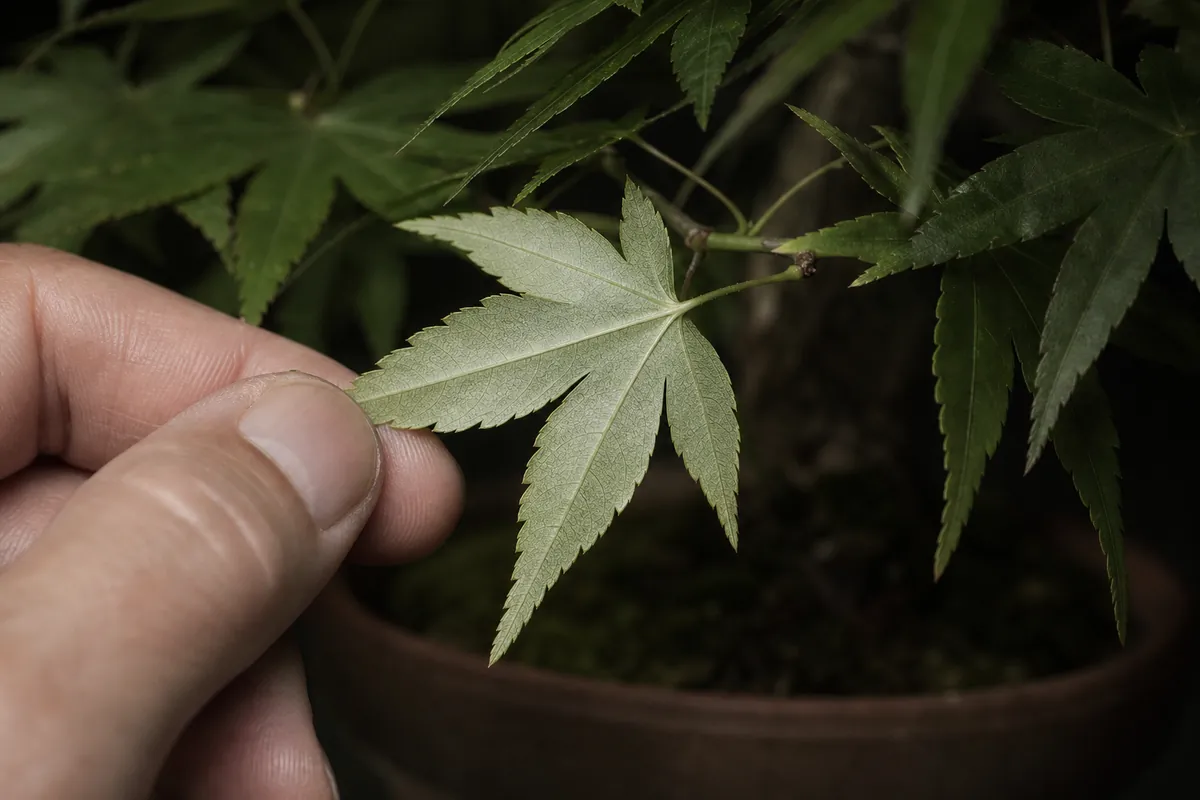
Making a habit of glancing at the undersides of leaves, branch joints, and new shoots each time you water is often all it takes to catch most pests and diseases early. If something looks off, take a moment to examine the whole tree closely.
Common Pests and How to Treat Them
Aphids
These cluster on new shoots and tender branch tips, feeding on the tree's nutrients. In small numbers, simply removing them by hand, with a tissue, or rinsing them off with water is often enough. If the infestation grows, a garden-store insecticide may be worth considering.
Scale Insects
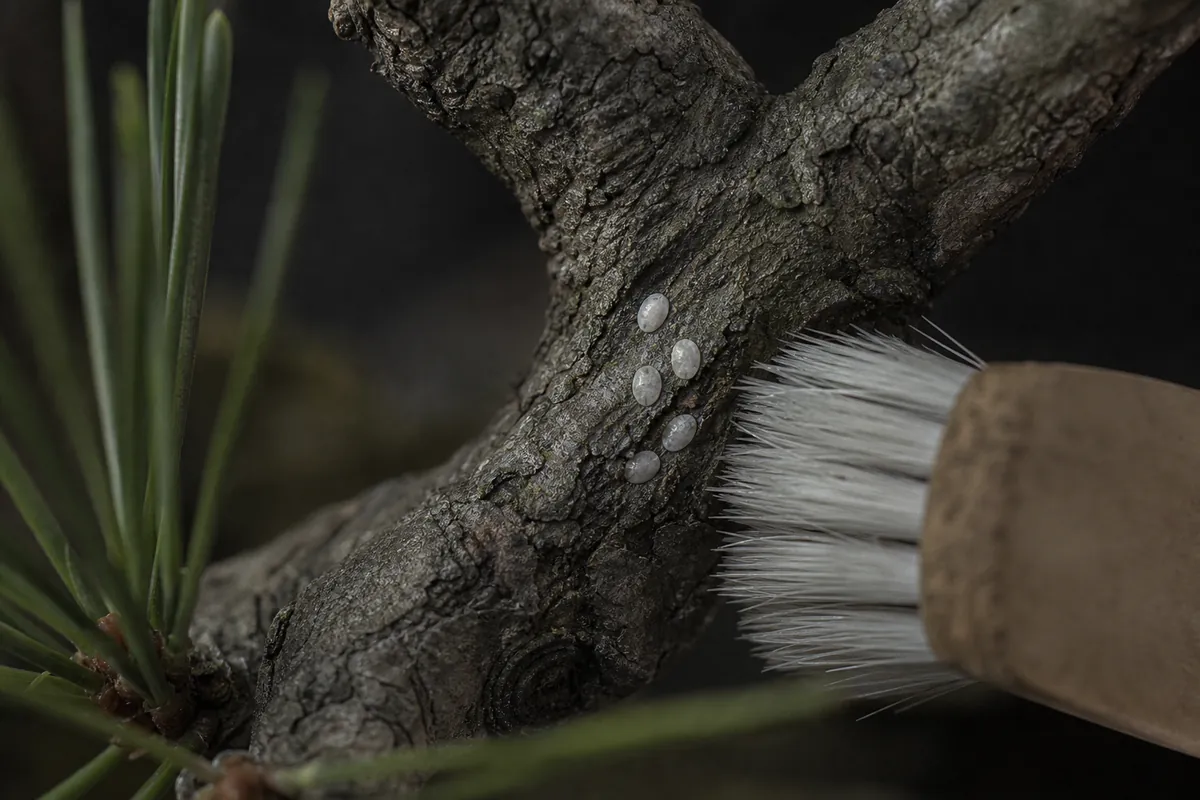
These appear as small, whitish, shell-like bumps on branches and trunks. They barely move, which often means they go unnoticed for a while. Their hard shell also makes them resistant to most sprays, so scrubbing them off directly with an old toothbrush is the standard treatment.
Spider Mites
These cause leaves to take on a pale, speckled appearance, and are visible as extremely tiny specks on the underside of leaves if you look closely. They thrive in dry conditions, so regularly misting the foliage ("leaf watering") is an effective preventive measure.
Common Diseases and How to Treat Them
Powdery Mildew
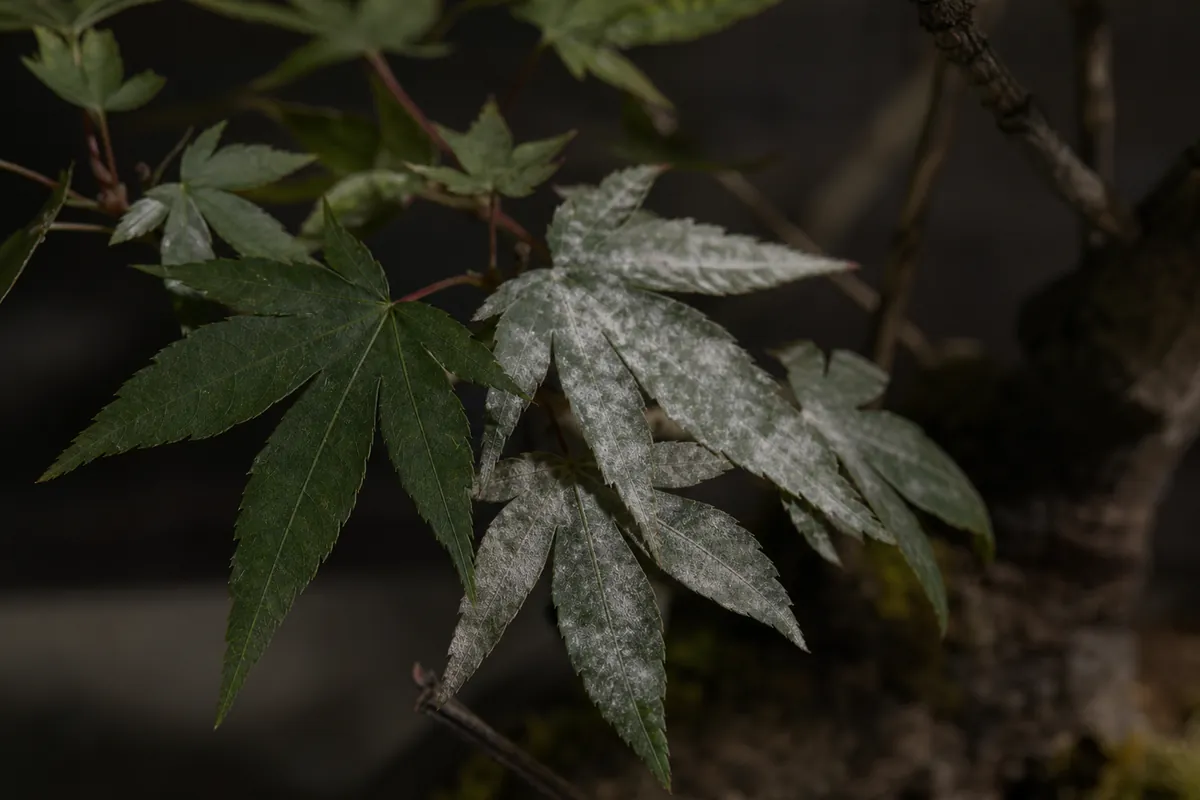
This appears as a white, powder-like coating spreading across the leaf surface. It is often caused by poor airflow and excess humidity, remove affected leaves and improve ventilation around the tree's placement.
Sooty Mold
This covers leaves and branches in a black, soot-like residue, and is usually a secondary result of aphid or scale insect infestations, caused by the sticky waste these pests leave behind. Treating the underlying pest problem first is the real fix.
Root Rot-Related Disease
When root rot from overwatering progresses, fungal or bacterial disease can follow. Adjusting your watering frequency and improving airflow around the tree are the primary preventive measures. For more on identifying root rot, see our guide on reviving a struggling bonsai.
Daily Habits That Help Prevent Problems
- Keep airflow good. If branches have become overly dense, a light thinning can help discourage pests and disease.
- Make observation a habit. A quick glance at the whole tree every time you water goes a long way toward early detection.
- Water correctly. Both excessive dryness and excessive moisture can invite pests and disease.
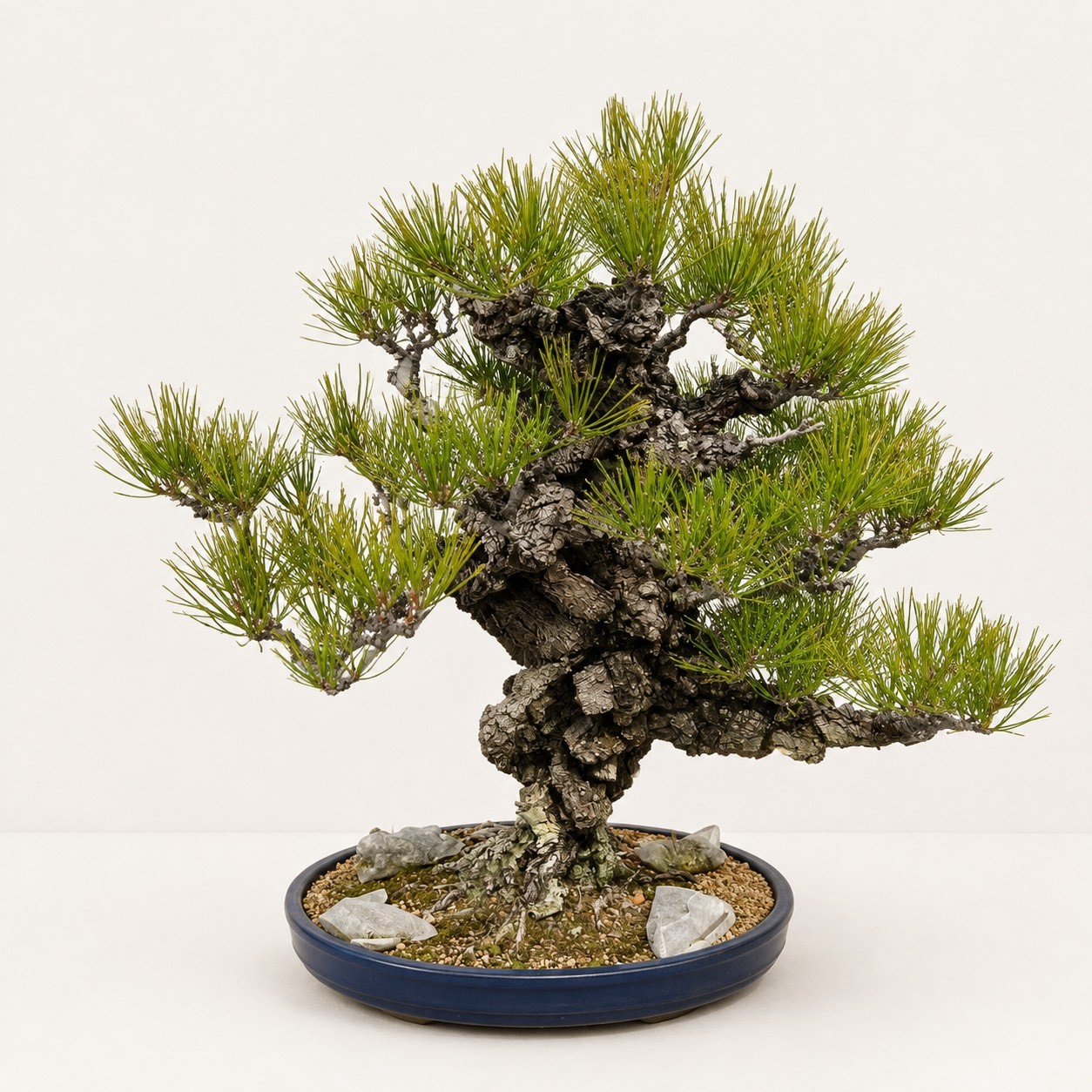
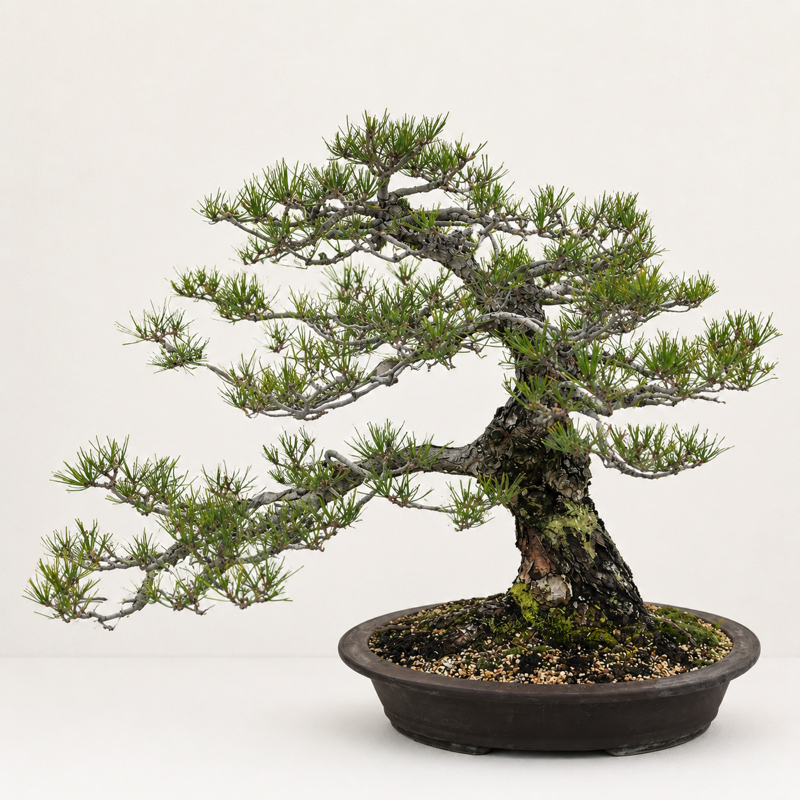
Pines carry dense foliage at their branch tips, so the interior can lose airflow if left alone. With a tree like the red pine below, thinning crowded branches and old needles makes scale insects and sooty mold much less likely.
A Note on Using Pesticides
If you use a garden-store insecticide or fungicide, choose one suited to the specific pest or disease you are dealing with, and always follow the dilution ratio and instructions on the label. Applying treatments under strong direct sun can damage the leaves, so early morning or evening is usually the best time.
In Summary
With early detection and a habit of regular observation, the damage from pests and disease can usually be kept to a minimum. If you notice something unusual, use this guide to narrow down the likely cause and address it calmly.
Frequently Asked Questions
I'm worried a newly arrived bonsai might have pests. Where should I look?
Check three places: the undersides of the leaves, the bases and forks of the branches, and around the new shoots. Small white shells that don't move are likely scale insects, and tiny insects clustered on new shoots are likely aphids. If you find anything that worries you, please ask us through the contact form.
Should I spray pesticides regularly as prevention?
If you keep a few trees at home, using a suitable product when you actually find a problem is easier on the tree than spraying on a fixed schedule. While numbers are small, picking them off, rinsing with water or scrubbing with a toothbrush is often enough. When you do spray, dilute exactly as the label says and do it in the cool of morning or evening.
My leaves have turned whitish. How do I tell spider mites from powdery mildew?
If the leaf surface looks dusted with white powder, it is powdery mildew. If the color has faded into a speckled, washed-out look and you can see tiny creatures on the undersides, it is spider mites. Spider mites thrive in dry weather, so misting the leaves helps prevent them. For powdery mildew, remove the affected leaves and improve airflow where the tree is kept.