

Published Updated
The Basics of Wiring Bonsai: How to Wrap and How to Avoid Scarring
Alongside pruning, wiring is the other essential in shaping a bonsai. By holding a branch in a chosen direction until the tree accepts it, wiring is where the flowing branch lines of a good bonsai come from. This guide sets out the basics for anyone wiring a tree for the first time.
Wiring Teaches a Branch, It Doesn't Force It
Wire is not a tool for wrenching a branch into place. You guide the branch toward where you want it, hold it there, and wait for it to thicken in that position. That is why how tightly you wrap, and when you remove the wire, matter so much.
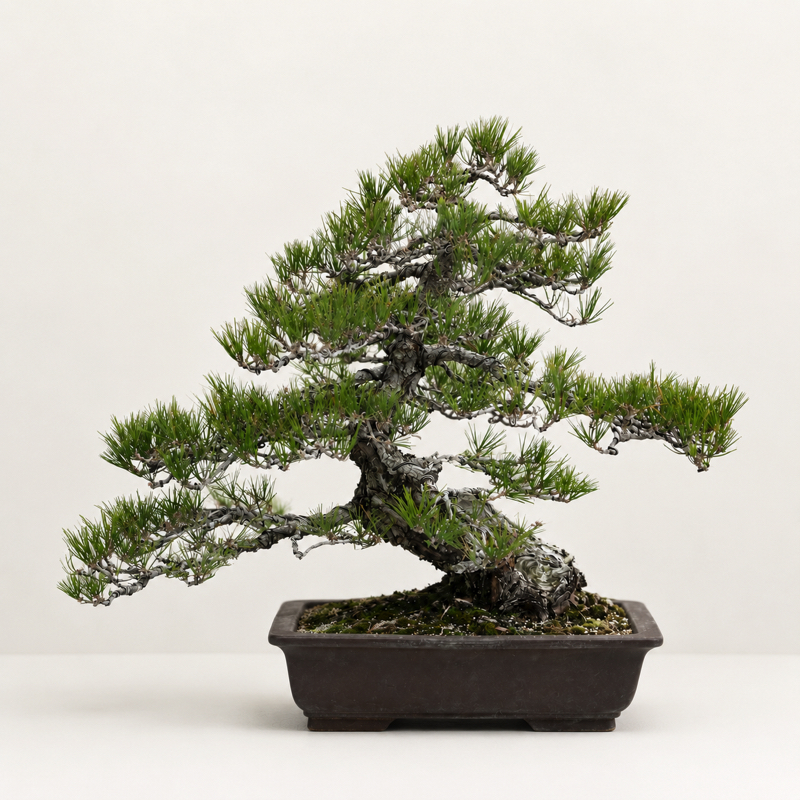
The balanced spread of branches along a curving trunk, as on our Japanese black pine (informal upright, balanced form), is the result of this kind of wiring and pruning repeated over many years.
Wire Types and Gauge
- Aluminum: soft and easy to handle, ideal for beginners, and simple to rewrap if you are unhappy with a first attempt.
- Copper: harder, with greater holding power, suited to thicker branches and stronger bends. It takes some practice.
As a guide, choose wire around one third the thickness of the branch you intend to bend. Too thin and the branch springs back; too thick and you risk damaging it. If in doubt, practice on an inconspicuous lower branch before committing.
When to Wire
For conifers such as black pine, white pine, and shimpaku juniper, autumn into winter, when growth has slowed, is the window. Deciduous trees are easiest to work on once the leaves have dropped and the branch structure is visible. Avoid the height of summer, and avoid working on a tree that has just been repotted.
How to Wrap
- Decide on the finished shape before you touch the wire, so you know where each branch is going.
- Work from the trunk outward, anchoring at the trunk or a thick branch and wrapping toward the tip.
- Keep a consistent angle of about 45 degrees. Coils that are too tight together, or too far apart, both lose holding power.
- Bend only after wrapping is finished. Bending as you go concentrates force in one spot and snaps branches.
- Move in small increments, supporting the branch with your fingers as you go.
The Biggest Mistake Is Letting Wire Bite In
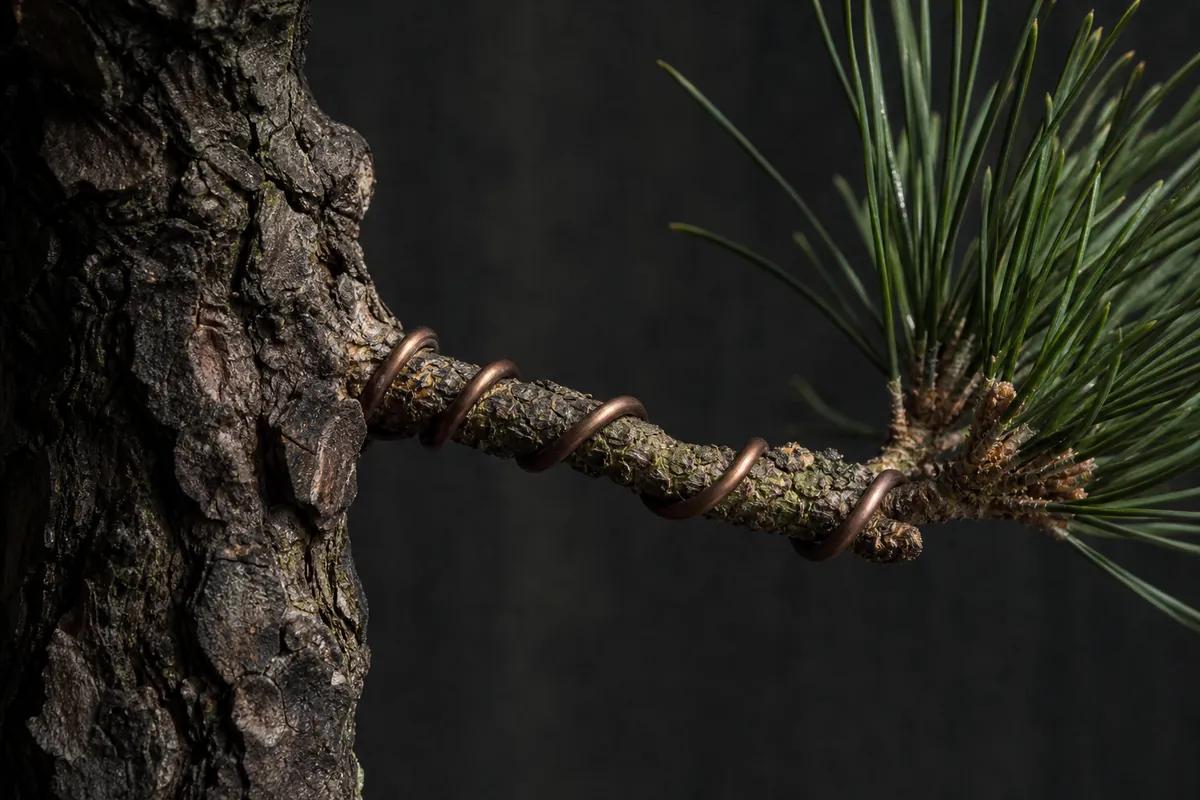
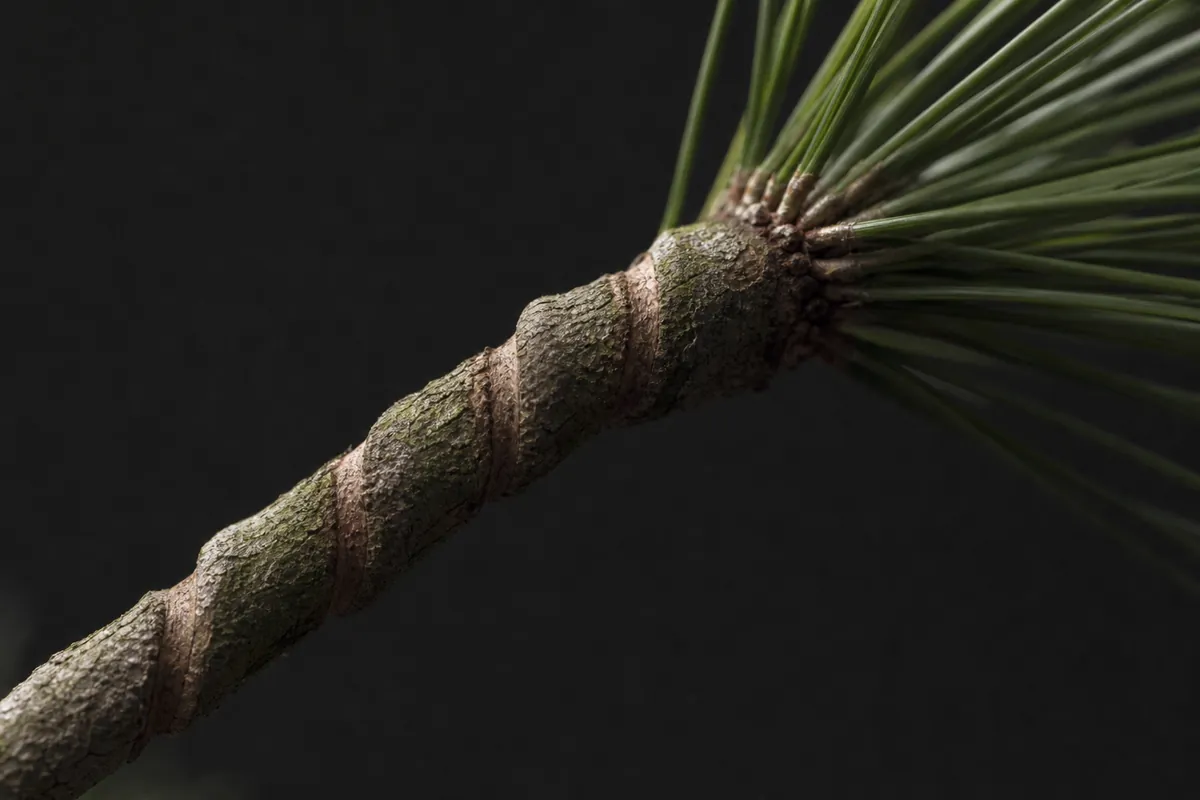
Leave wire on too long and the thickening branch grows into it, leaving a permanent spiral scar. Six months to a year is typical for conifers, a few months for fast-growing deciduous trees, but it varies with vigor, so check every couple of months for any sign of the wire biting.
Cut Wire Off, Don't Unwind It
Unwinding wire in reverse is how branches get broken and foliage stripped. Snip it away piece by piece with wire cutters instead.
When in Doubt, Do Less
Putting a major bend into a thick trunk carries both a heavy cost to the tree and a high chance of failure. Start by adjusting the direction of thin branches, watch how the tree responds, and build up from there.
In Summary
Wire at the right time of year, at one third the branch thickness, wrap before you bend, and remove before it bites. Follow those four points and serious mistakes are rare. Read alongside the basics of pruning and pinching for the complete picture of shaping a tree.
Frequently Asked Questions
Aluminum or copper: which should I buy first?
For a first attempt, aluminum is the easier choice because it is soft and easy to rewrap. Once you want to hold thicker branches or strong pine branches firmly, move on to copper. With either, choose wire about one third the thickness of the branch.
Should I change watering or placement after wiring?
Normal care is fine. Bent branches can be slightly damaged, though, so for a few days it helps to keep the tree out of strong wind and harsh midsummer sun. Keep checking for wire bite every couple of months after that.
What if the wire has already left a slight mark?
Cut the wire off as soon as you notice. A shallow mark usually becomes less visible over the years as the branch thickens. If you rewire the same branch, wrap in the opposite direction so the new coils do not sit in the old groove.


