

Published Updated
Buying Bonsai From Kagawa: Inside the Kinashi and Kokubunji Growing Region
If you are looking for bonsai from Kagawa, or for a shop that sells directly from a growing region, this guide introduces the Kinashi and Kokubunji districts of Takamatsu and explains what buying from the source actually means.
Why Buying From a Growing Region Matters
A bonsai is a tree shaped over decades from seed or seedling. Across those years, pruning, pinching, wiring, and repotting are repeated again and again. A growing region carries the accumulated skill of generations doing that work, along with a trained eye for what makes a tree worth developing.
Two trees of the same species and size can differ enormously in how carefully they were built, and that shows in branch placement and the quality of the surface roots. Choosing a tree from a growing region means choosing that accumulation. The black pine from our shop below, for example, is an informal upright whose surface roots are its highlight.
About Kinashi and Kokubunji
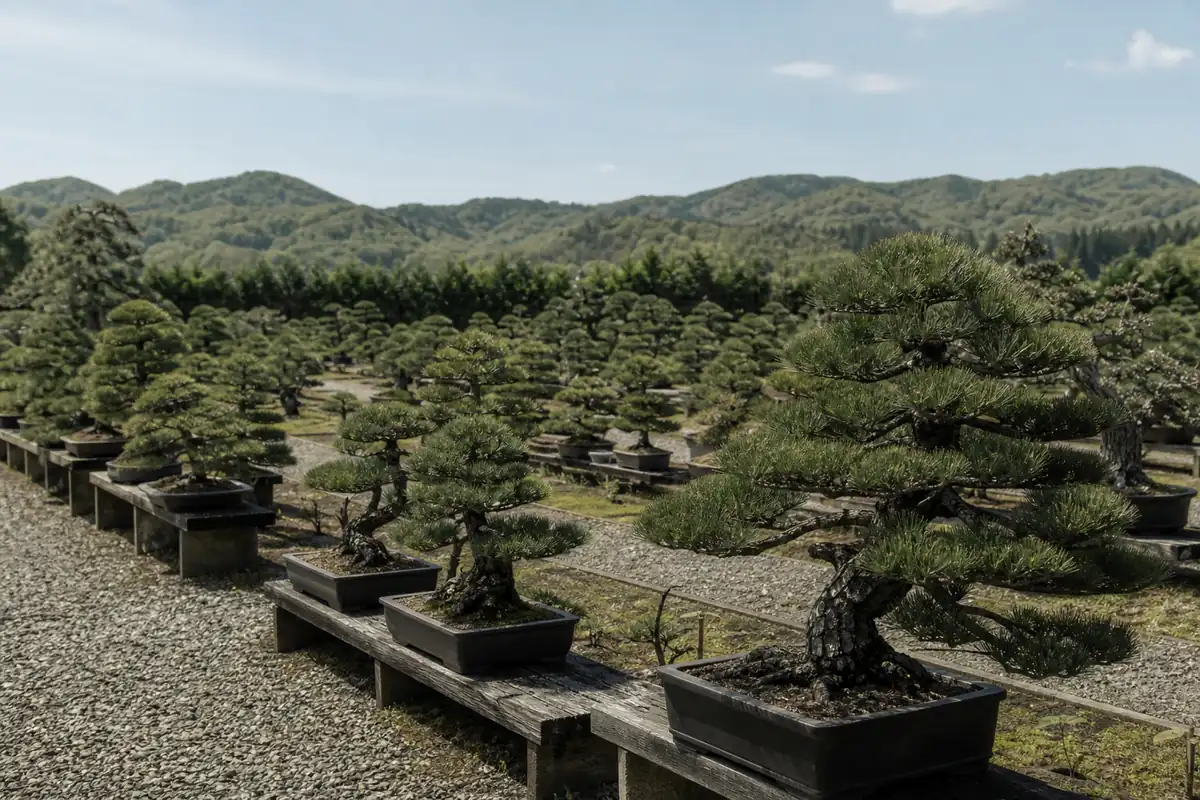
These neighboring districts in western Takamatsu have long been known nationally for pine bonsai and bonsai stock. The trade traces back to Edo-period production of garden trees and pine seedlings; propagation techniques advanced through the Meiji and Showa eras, and eventually the work shifted toward styling trees as bonsai. For the fuller history, see why bonsai cultivation took root in Kagawa.
Why the Seto Inland Sea Climate Suits Bonsai
- Mild, with relatively little rainfall, which suits conifers that resent constantly wet soil.
- Few hard frosts and little snow, so trees carry less stress through winter.
- Free-draining soil, which keeps roots healthy.
A stable climate also means trees grow to a predictable rhythm each year, and styling can be planned years ahead. For work measured in decades, that consistency counts for a great deal.
The Nishiki Pine, a Kagawa Specialty
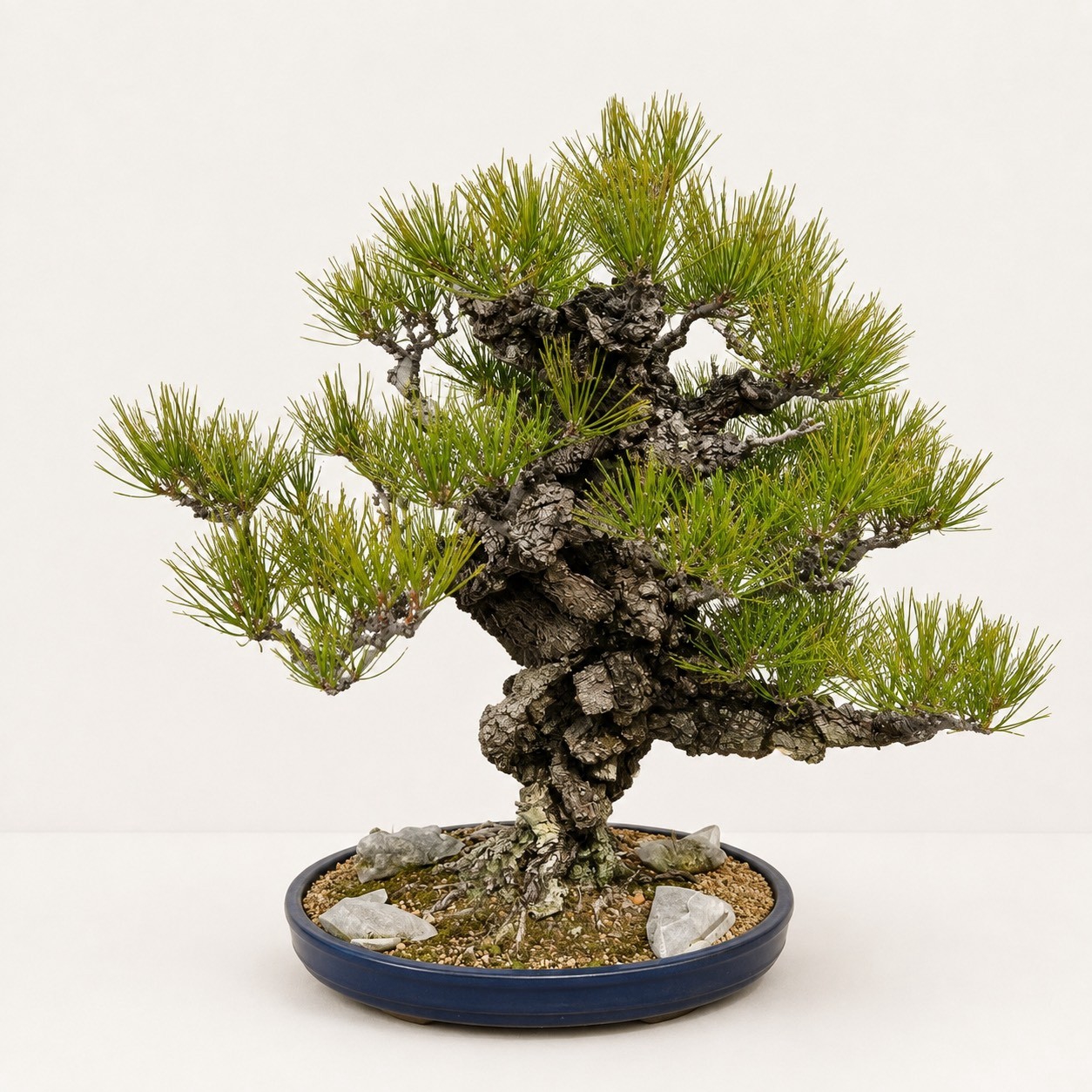
A variety of black pine, the nishiki pine is prized above all for bark that splits into dramatic, cork-like plates. Kokubunji has been known as the birthplace of the nishiki pine since the Meiji era, and the variety remains closely tied to Kagawa. It combines the dignity of a pine with a rugged surface texture found in few other trees. The nishiki pine in our shop, shown below, is all about that rugged bark and a thick trunk.
One Thing to Know When Your Tree Arrives
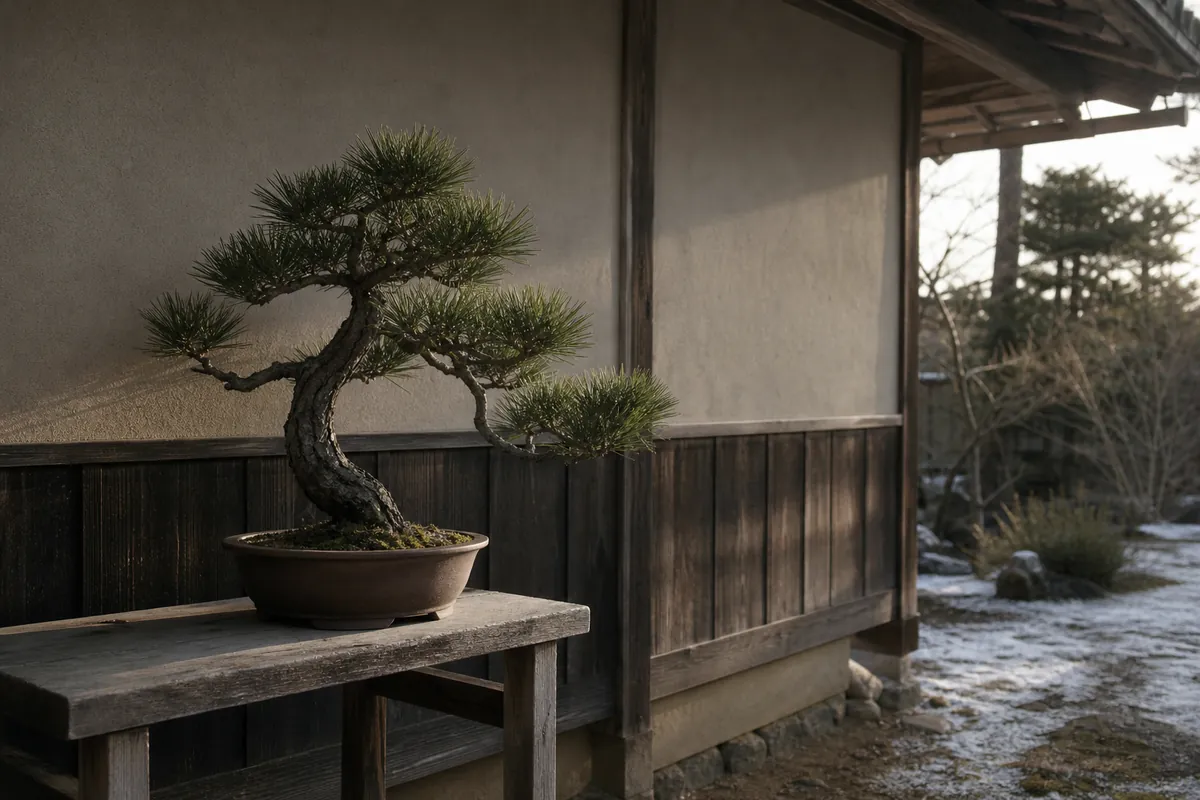
If you live somewhere considerably colder, give your tree a little extra attention through its first winter. Setting the pot on a shelf off the ground so it cannot freeze solid, as in the photo below,, and finding a spot out of the wind, is generally enough. See bonsai winter care and cold protection for specifics.
Photographed Individually, Sold Individually
Every tree at Kagawa Bonsai is a one-of-a-kind piece trained in this region, presented with photographs of the actual tree (we edit the background and color tones, but never the shape of the tree). Since no two trees share the same form, we would encourage you to study the photos and description before choosing. For more on evaluating an online shop, see how to choose a bonsai shop online.
In Summary
Choosing bonsai from Takamatsu means choosing trees shaped where climate and craft have accumulated together. If you would rather start with species, read our beginner's guide to choosing your first bonsai; to see the trees themselves, visit our collection of bonsai from Kagawa.
Frequently Asked Questions
I live somewhere cold. Can I still grow a tree from Kagawa?
Yes. The time to take care is the first winter after the tree arrives. The basics are to set the pot on a shelf off the ground and keep it out of the wind; where winters are severe, moving it under the eaves or into an unheated space is a reasonable guide. See bonsai winter care and cold protection for details.
Does a Nishiki pine need different care from a black pine?
Since the Nishiki pine is a variety of black pine, the basics are the same: keep it outdoors in sun and fresh air, and water when the soil surface dries. Its prized cork-like bark flakes off easily, though, so avoid gripping or rubbing the trunk hard when repotting or wiring.
Can you ship to areas far from Kagawa?
We ship within Japan only, normally within 5 business days after payment is confirmed. If you have any questions about your delivery address, please ask through our contact form.