

Published Updated
A Beginner's Guide to Choosing Your First Bonsai
If you're thinking about starting your bonsai journey, here are the key things to know before you choose. Because every bonsai is one of a kind, understanding the fundamentals of selection ahead of time will help you find a tree you'll be genuinely happy with.
1. Start With an Easy-to-Grow Species
If you're new to bonsai, starting with a hardy, low-maintenance species can put your mind at ease.
- Japanese black pine & red pine: Hardy and easy to care for, these have long been classic favorites in the bonsai world.
- Japanese white pine: Prized for its soft, delicate foliage and refined, elegant appearance.
- Chinese juniper (shimpaku): Known for its bold, powerful form and distinctive character.
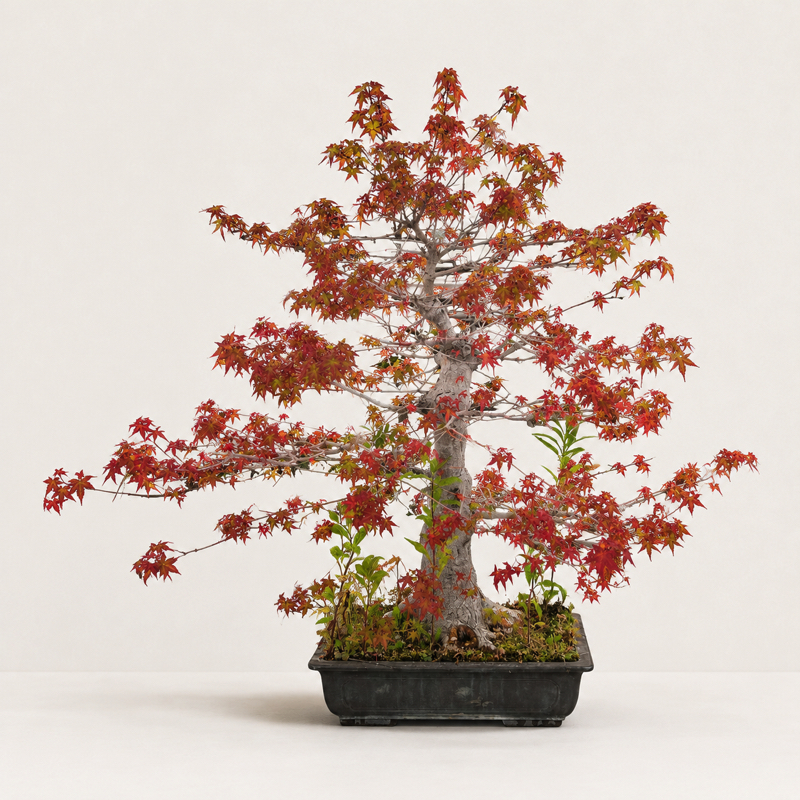
- Maple: A deciduous tree that lets you enjoy the changing seasons, especially its beautiful autumn color.
2. Choose a Size That Fits Your Space
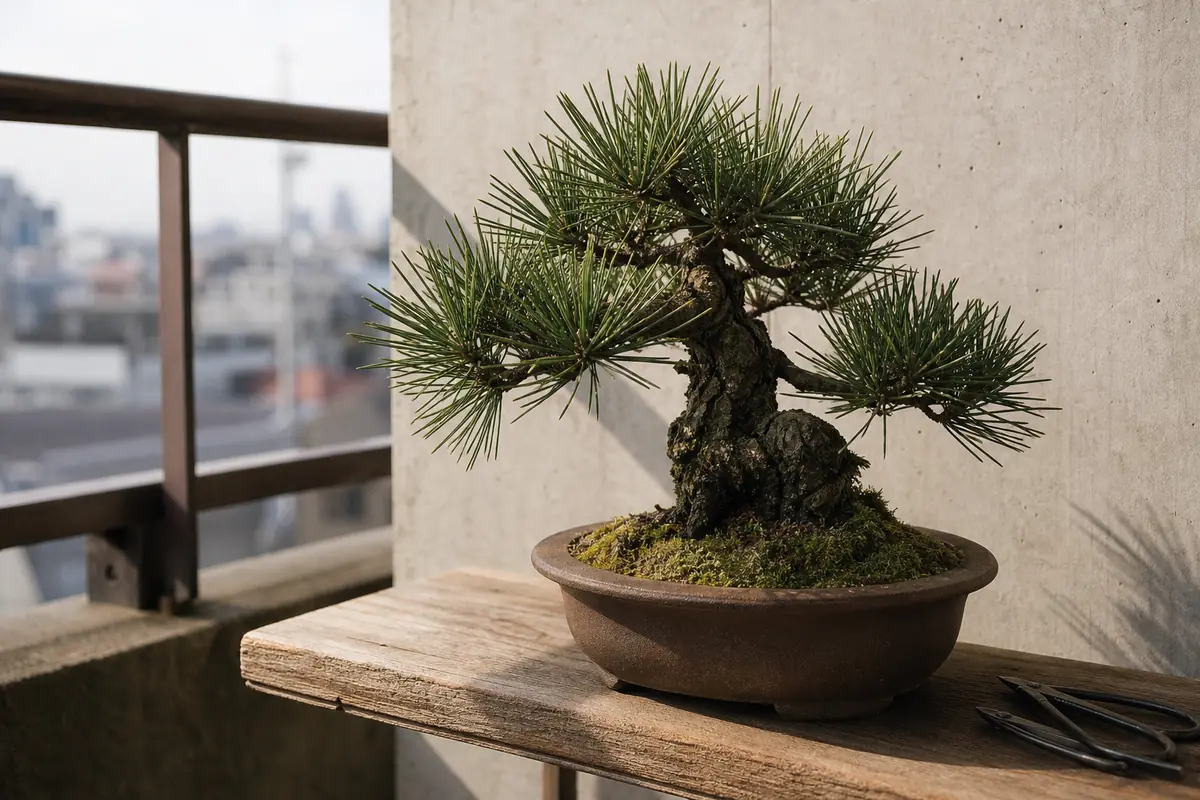
Bonsai are generally grown outdoors, where they receive natural sunlight and airflow. Think about whether you can provide a spot with good light and ventilation — a balcony or entryway, for example — and choose a size that fits comfortably. If space is limited, such as on an apartment balcony, starting with a more compact bonsai is a great option. A small tree like the one below gets plenty of sun and air from a single shelf.
3. Understand the General Price Range
Bonsai prices vary widely depending on the species, age, and how refined the tree's form is. From approachable price points to dignified, mature trees cultivated over many years, there's a wide range to choose from. Weigh the price against the quality of the form to find a tree that fits your budget.
4. What to Look for in Shape and Health
- Leaf color and shine: Deep green, glossy leaves are a good sign the tree has been well cared for.
- Branch structure: Check whether the branches are evenly distributed and the overall form feels balanced.
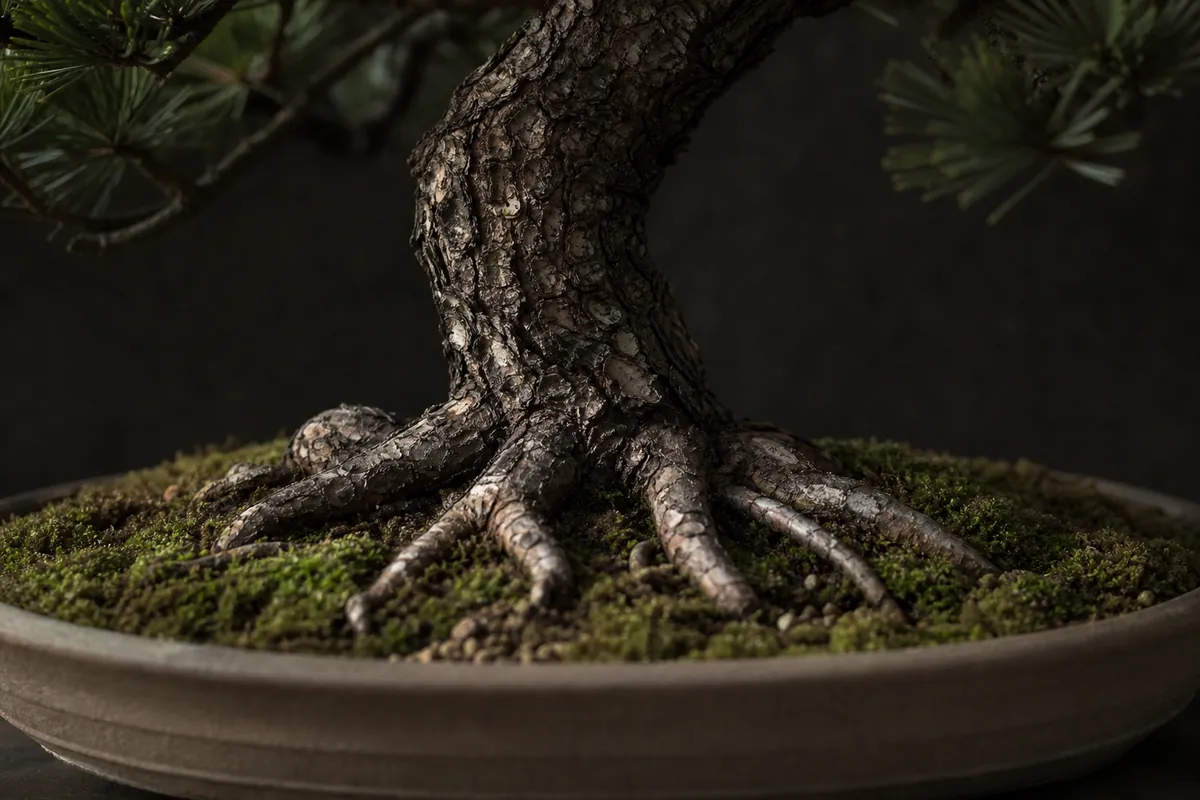
- Base and trunk: Make sure the base is firmly rooted and doesn't look unnaturally raised out of the soil. Roots that spread in several directions, and a trunk that narrows gradually from the base upward, give a tree a settled, stable look.
5. Choose a Form You Love
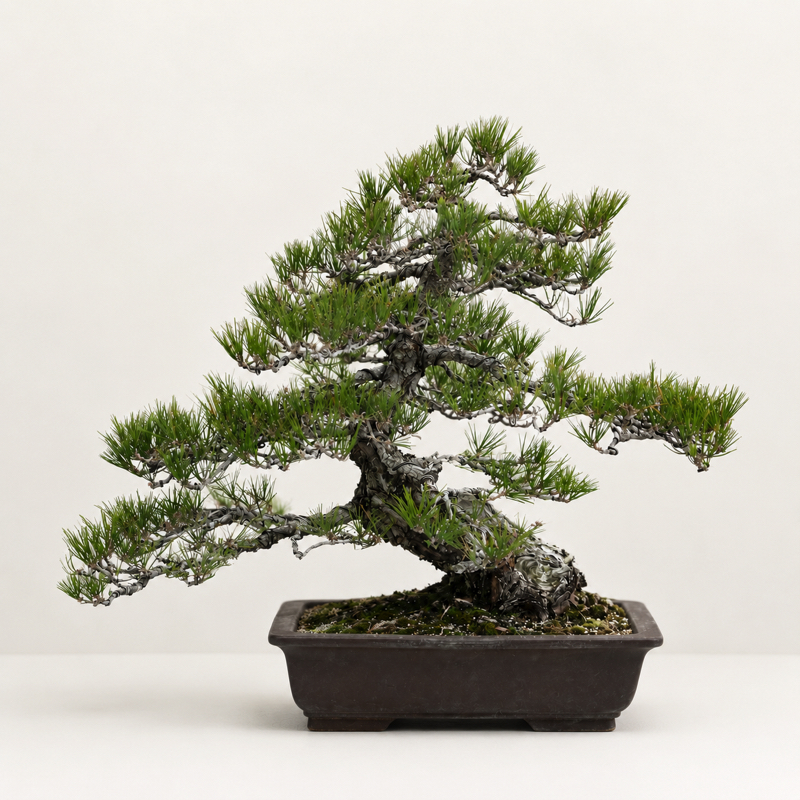
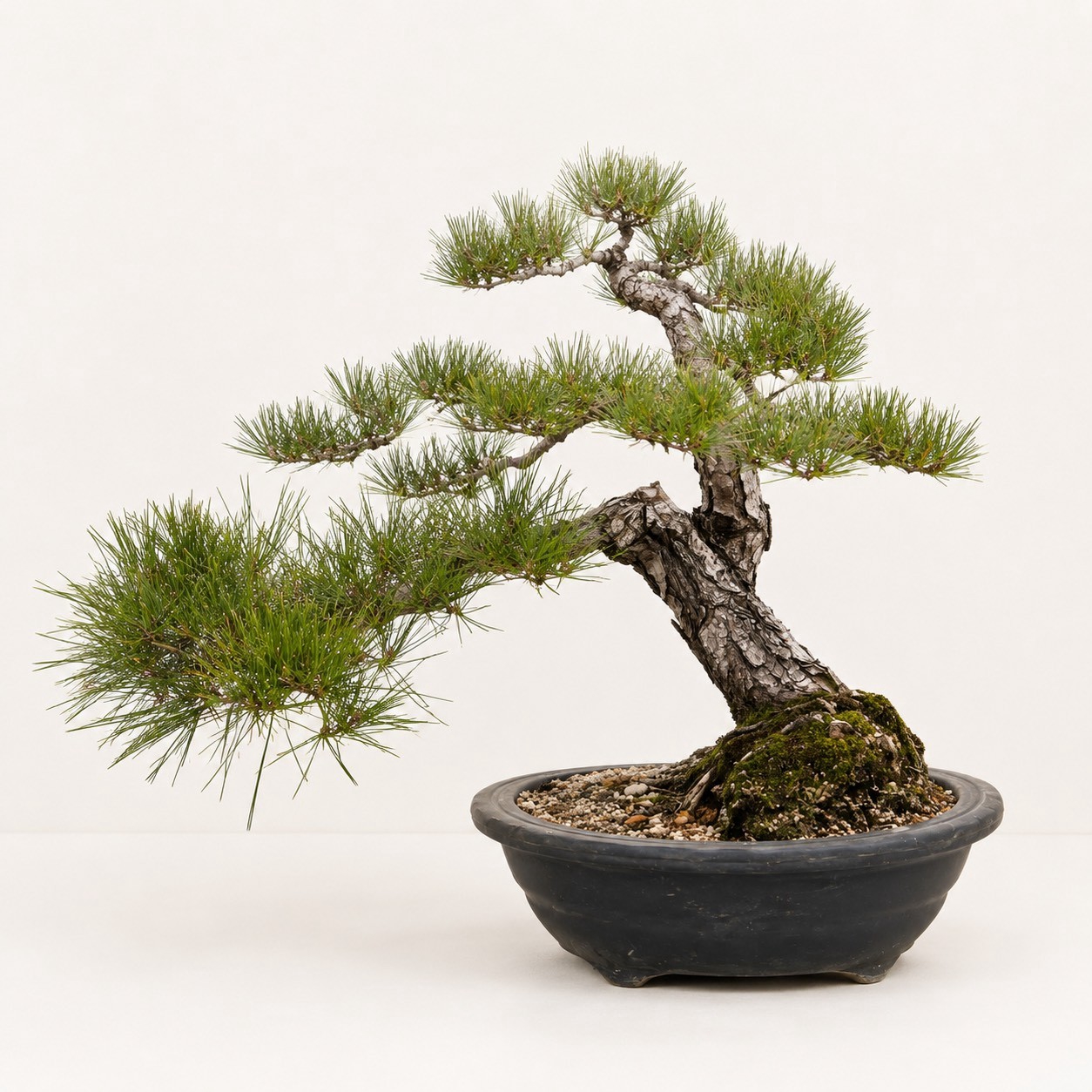
Every bonsai is one of a kind. Rather than relying on photos alone, look closely at the branch structure and overall form, and choose the one that truly speaks to you — that's the key to a relationship you'll enjoy for years. Even trees of the same species can have very different characters, so take your time comparing them closely. The two trees below, for example, are both black pines from our shop, yet an informal upright trunk that curves as it rises and a slanting trunk with one long sweeping branch leave completely different impressions.
What to Know After You Bring Your Bonsai Home
Once you've brought your bonsai home, ongoing care will include daily watering, seasonal pruning and pinching, and repotting every few years. For more detail, see our guides to watering basics, pruning and pinching basics, and repotting and pot selection. Knowing the fundamentals ahead of time will help you enjoy your new bonsai life with confidence. For a breakdown of pricing by budget, see our bonsai price guide, and for tips on choosing a trustworthy online shop, see how to choose a bonsai shop online. Ready to find your first tree? Browse our full bonsai collection.
Frequently Asked Questions
Which species is easiest for a beginner to keep healthy?
The black pine and red pine mentioned above are hardy and have long been bonsai staples. Keep the tree outdoors somewhere sunny and airy, and water thoroughly once the soil surface dries; with those basics, even a first-time owner can grow one well. See watering basics for more detail.
Can I keep my bonsai indoors?
Bonsai are basically grown outdoors in sunlight and fresh air. Bringing a tree into the entryway or a room for guests is fine for a few days as a rough guide, but return it outside afterward. We cover this further in our article on enjoying bonsai indoors.
Can I buy another tree identical to the one in the photos?
Every bonsai is one of a kind, so no two trees are the same. If you like the tree in the photos, that particular tree is the one you would be buying. If there is anything the photos do not show, please ask us through our contact form before purchasing.